Hanny’s Voorwerp – now in HST!
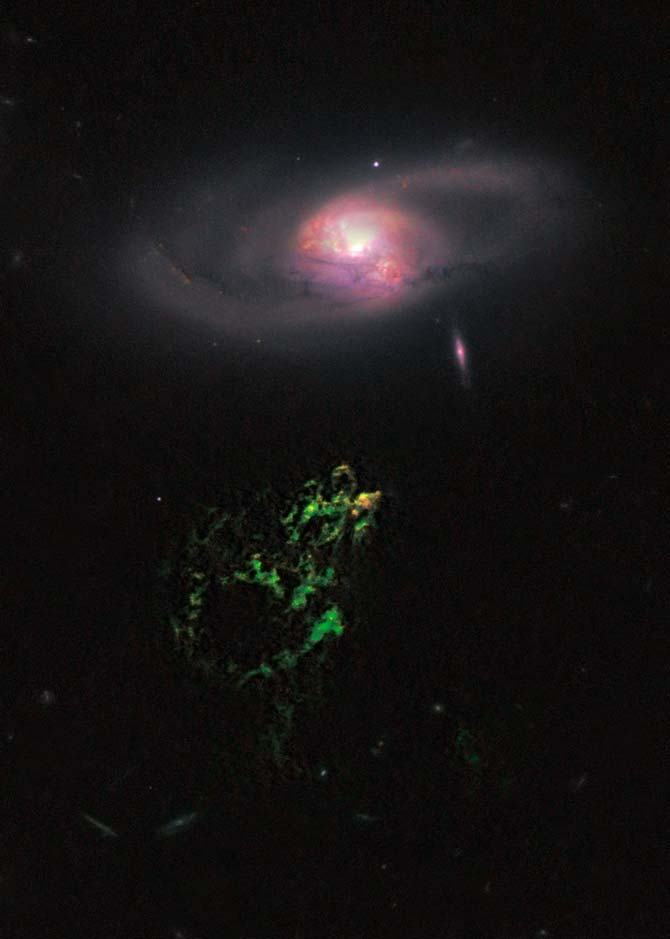
Hanny's Voorwerp as seen by HST. Courtesy: NASA, ESA, W. Keel, and the Galaxy Zoo Team

In the vein of astronomical objects discovered by amateurs, I’ve got to mention the newly released Hubble image of Hanny’s Voorwerp.

I’ll tell you the story, but first a couple important links:

  • Galaxy Zoo (where the Voorwerp was discovered, and you can make discoveries of your own)
  • Hanny’s Voorwerp in Hanny’s words
  • The comic book (yes, there is now a comic book), Hanny and the Mystery of the Voorwerp

The Story

Once upon a time in 2007, Hanny von Arkel, a Dutch schoolteacher, logged into Galaxy Zoo to help scientists classify some galaxies. She hadn’t been at it very long when she found the picture at left.
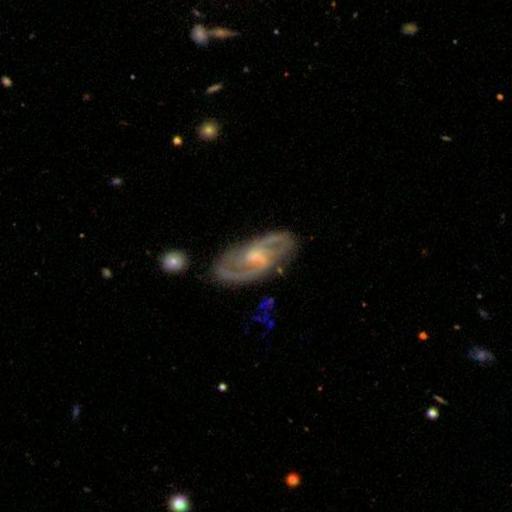
Original SDSS image from Galaxy Zoo

She was not the first person asked to classify this galaxy, and not the first person to notice the blue tangled smudge. But she asked what it was – and no one knew the answer.

Another site user suggested calling it Voorwerp – “Object” in Dutch. And thus, Hanny’s Voorwerp was discovered.

In Short

Hanny’s Voorwerp is a light echo. There is a long streamer of gas in and beyond the area of the Voorwerp. When light from a nearby active galaxy hit the gas, it lit up. That’s what we’re seeing now, illuminated gasses.

Hubbly has discovered some new things in the Voorwerp. Notice the orange tip? That’s a collection of previously-unseen star clusters.

The dark “hole” in the Voorwerp is possibly just a shadow cast by something much closer to the galaxy, not a feature of the Voorwerp.

It is located in Leo Minor – R.A. 09h 41m 03s.80, Dec. +34° 43′ 34″.21

In Detail

Light Echoes –

Light echoes are awesome, and if you check back this evening, I should have a little animation.

Animated Explanation of a Light Echo - Distances/Sizes/Time NOT to scale, and this is an explanation of a light echo, not necessarily exactly the scenario for the Voorwerp. Animation by me.

Light, albeit the fastest traveler in the universe, takes a while to get between places. The light left the galaxy on its way to the Voorwerp, and while it was still in transit, the source “turned off.” That’s fine, and didn’t affect the light that was already in transit. As soon as that light reaches the Voorwerp it lights it up or excites the gas in the Voorwerp. So the Voorwerp starts emitting light too. A little later, on Earth (probably before people were observing the sky), the original light from the galaxy arrives, and we can see the galaxy (but not the Voorwerp). The light from the Voorwerp is still travelling towards up. At this point, there is no longer any light lighting up or exciting the Voorwerp, so it to goes dim. A bit later the light from the Voorwerp finally reaches Earth, long after we have observed the galaxy dimming to normal levels, leaving us with a picture of an illuminated Voorwerp, and no apparent source of illumination.

V838 Mon is another example of a light echo.

Want More?

NASA’s Hubble Press Release

Galaxy Zoo

Hanny’s Voorwerp

The comic book

Hubble Fast Facts

~ A l i c e !

Science with a Twist, Astronomy Day, and Carnival of Space

First off Astronaut Greg Johnson will be at this week’s Science with a Twist on Thursday April 15th at Pacific Science Center. The event is also on Facebook. I’ll be there too, holding a brief discussion about false color, and Toni Meyers, director of Hubble 3D will be speaking about the film.

“Science with a Twist will celebrate Hubble 3D. Toni and Greg will circulate during the event and introduce the film and answer questions after the film. Pacific Science Center’s resident NASA Solar System Ambassador, Alice Enevoldsen, will  also lead you through an explanation of astronomical images: What do you see vs. What’s really there? Tickets for staff are only $17 (21 +, ID required)”

Toni Myers is the director and producer of Hubble 3D and one of the few women directors in the history of IMAX filmmaking. Toni has worked on IMAX documentaries since 1971. She has worked on every IMAX space film and has worked directly with over 120 astronauts and cosmonauts in the making of the IMAX space films. She has an extensive background in a variety of films in addition to  IMAX filmmaking .  In addition to documentary projects she has a background in the music world having worked on music projects for the Beatles’ company, Apple; and individual features and videos for John Lennon and Yoko Ono. The IMAX documentaries that Toni has worked on have been among the most successful here at the Science Center including Under the Sea 3D.   For her work on Hubble 3D  the astronauts of the STS-125 crew presented her with the Silver Snoopy Award in recognition of her excellence and

achievements in bringing the space experience to IMAX audiences around the world.

Greg Johnson graduated from West Seattle High School and from the UW  with a degree in aerospace engineering.  He received his Naval Aviator wings in December 1978.  He served as a senior research officer in Office of Naval Research. He has logged over 9500 flying hours in 50 aircraft and has over 500 carrier landings. In 1990, he was accepted as an aerospace engineer and research pilot at NASA . He joined the astronaut program in 1998. He was the pilot the final Space Shuttle mission to the Hubble Space Telescope. On this mission he logged almost 13-days in space—–traveling 5,276,000 miles in 197 Earth orbits at 17,500 miles per hour. And he was an IMAX cinematographer on the mission.

Next, April 24th will be Astronomy Day at Pacific Science Center. Here’s a copy of that e-mail:

Calling all astronomy enthusiasts!

Celebrate the 20th anniversary of the launch of the Hubble Space Telescope at Pacific Science Center on April 24th.

What: Pacific Science Center presents Astronomy Day

When: Saturday, April 24th 10am-6pm

Where: Pacific Science Center

Astronomy Day this year will be in style at Pacific Science Center! With planetarium shows, hands-on exhibits in Facing Mars, facilitated space-themed activities with our onsite Science Interpretation staff, crafts, and the eagerly-anticipated IMAX film Hubble 3D this day of science just won’t end.

IMAX FILMS

Hubble 3D

Showing April 24th at 10:30am & 11:45am

The perfect way to celebrate the 20th Anniversary of the launch of the Hubble Space Telescope is to take in a screening of this new IMAX film which is gaining rave reviews! Today’s Seattle Times review calls Hubble 3D an “extraordinary spectacle” and an “out of this world documentary.” http://seattletimes.nwsource.com/html/movies/2011381515_mr19hubble.html

Roving Mars

Showing April 24th at 11:30am, 1:30pm, 3:30pm and 5:30pm

Go behind the scenes with NASA scientists and engineers as they worked to design Mars Rovers, Spirit and Opportunity, to travel millions of miles to Mars and report back!

FEATURED EXHIBIT

Facing Mars

Open 10am-6pm

Here’s your chance to experience the sensations, emotions and conditions of a real trip to Mars without ever leaving Earth! Build your own simple rocket, take a “Mars Walk,” see firsthand what microgravity does to the human body and so much more!

Last, you should go look at Carnival of Space #149!

Okay, enough advertising. I’ll tell you more science-y stuff next week.

~ A l i c e !

Hubble 3D vs Life

I went to see the press preview of  Hubble 3D at Pacific Science Center’s Boeing IMAX Theater. It’s opening on March 19th (2010) – tickets here. Full disclosure, in case you were unaware, I am employed by Pacific Science Center but my comments here are my own.

I have been looking forward to this film for months, and I was struck by the similarity to some of what I do. So, if you will excuse the conceit, I would like to share a double story with you.

Hubble

Hubble 3D is partially just plain fun: fly-throughs of actual beautiful Hubble images, three-dimensionalized by some very talented folks who worked with some very intelligent astronomers to be as accurate as possible. As much as I love Hubble images, the other part of the movie is what I enjoyed most. The story of how to fix an ailing telescope, 350 miles above the Earth’s surface. I’ll give you some hints – but go see the movie for yourself to get the full story of the repairs to Hubble.

A Day in the Life

Then there’s what I do. In November, the planetarium projector also chose to show its age. On its way down the elevator shaft it slipped the last six inches and refused to budge. This was extremely scary for all of us, and after several calls to the techs in Pennsylvania we decided we needed to winch it up.

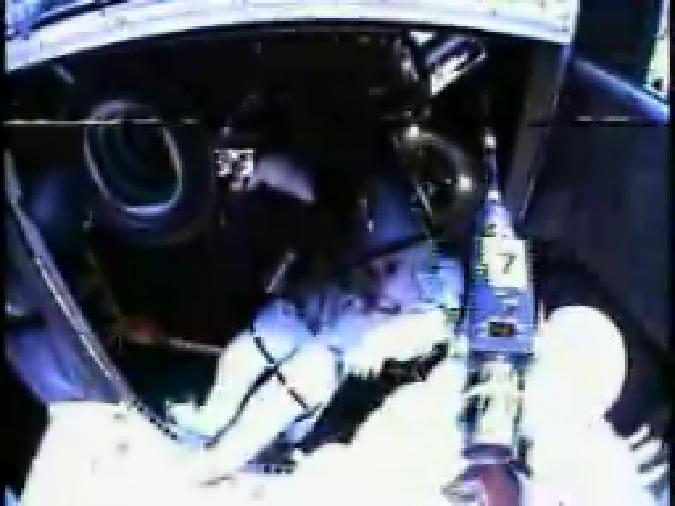
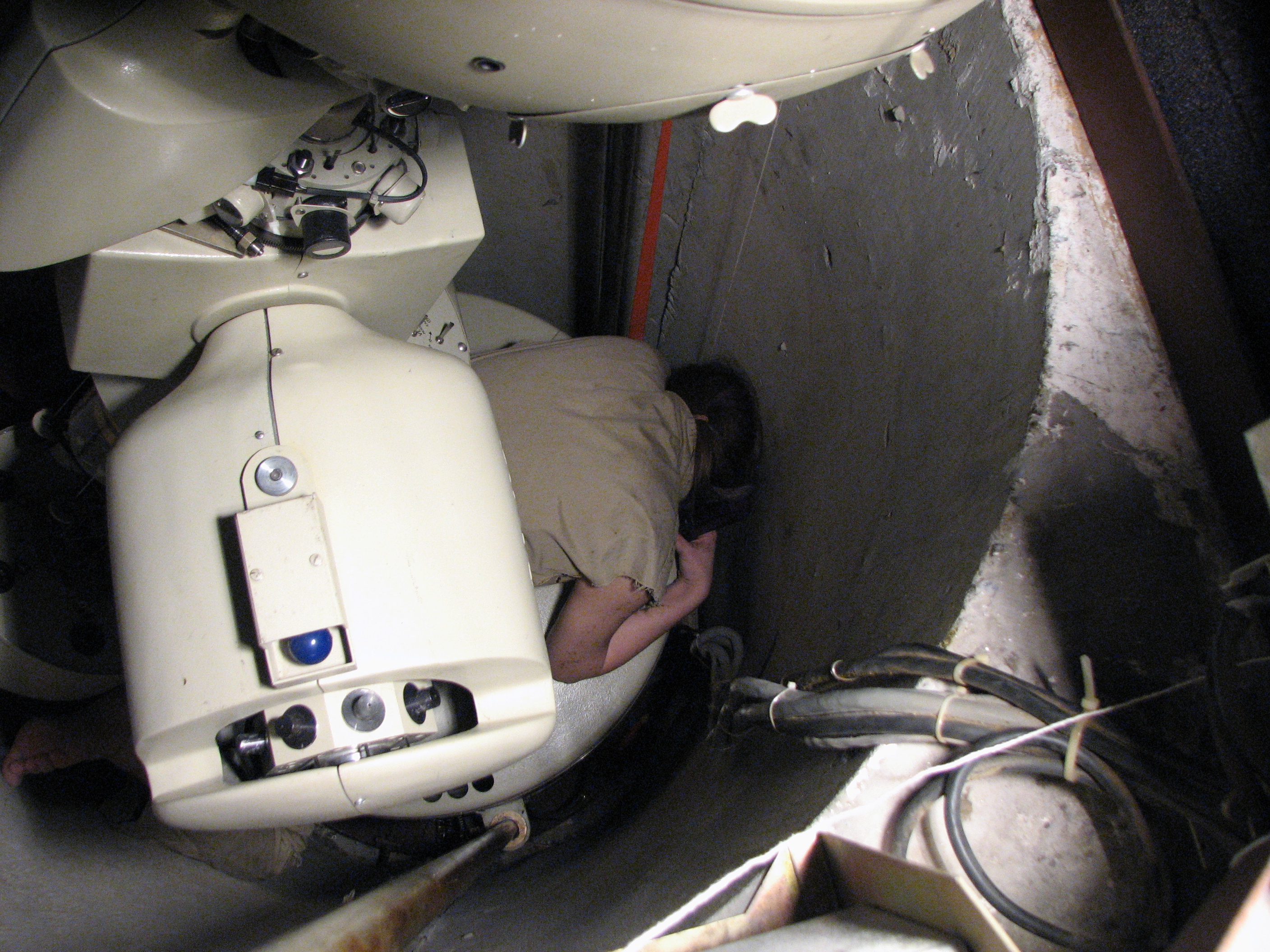
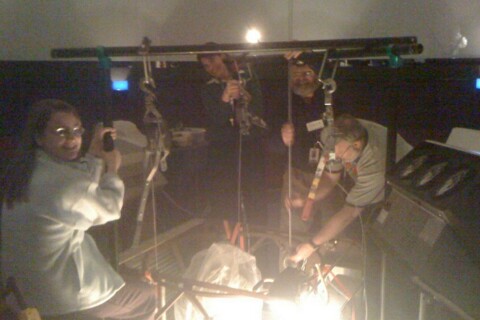
Here’s where it gets similar to the Hubble mission. Compare these two pictures:


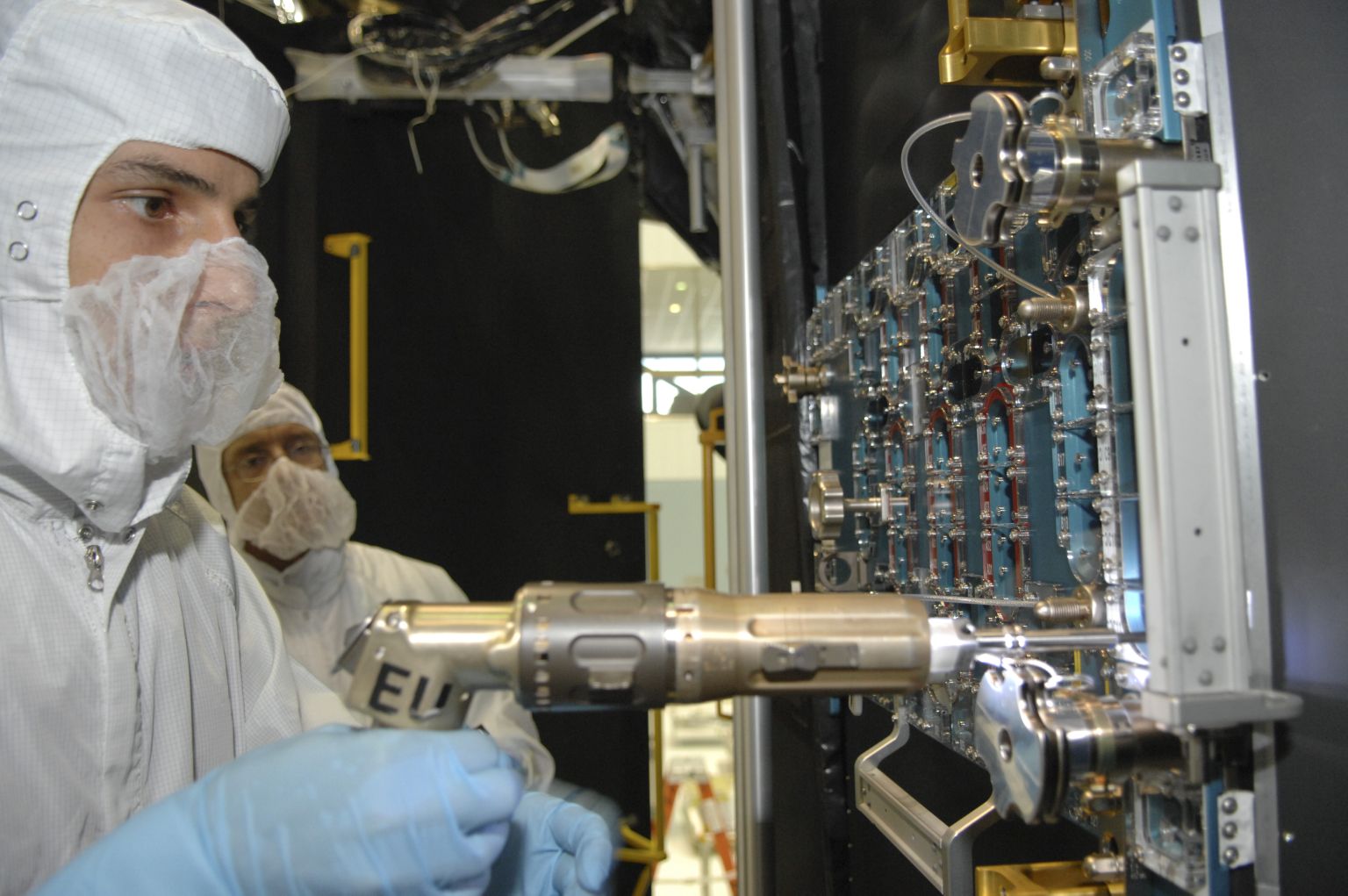
That’s Astronaut Mike Massimino in the center, with his head stuck up in the bowels of Hubble. Astronaut Mike Good’s  hands are in the lower right, holding a tool that looks like a drill with a long bit.
And this is me. Five feet down an elevator shaft that’s about  three-and-a-half or four feet in diameter, trying to reach down another two and a half feet to unhook a chain.

The astronauts on STS-125 had quite a lot more to contend with, they were wearing space suits, the stakes were higher, their equipment larger and more expensive, but we both succeeded through teamwork, specialized tools, perseverance, and time.

Nemeses

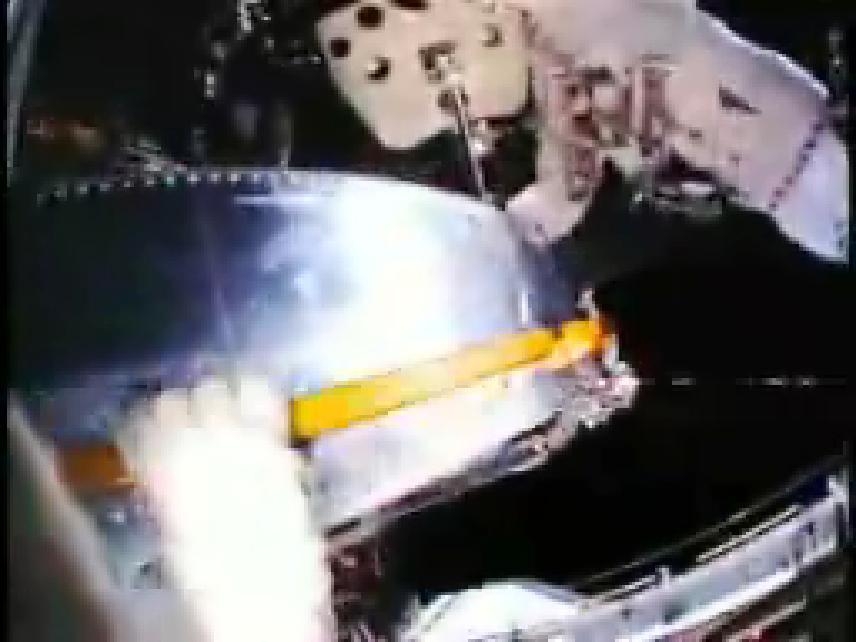
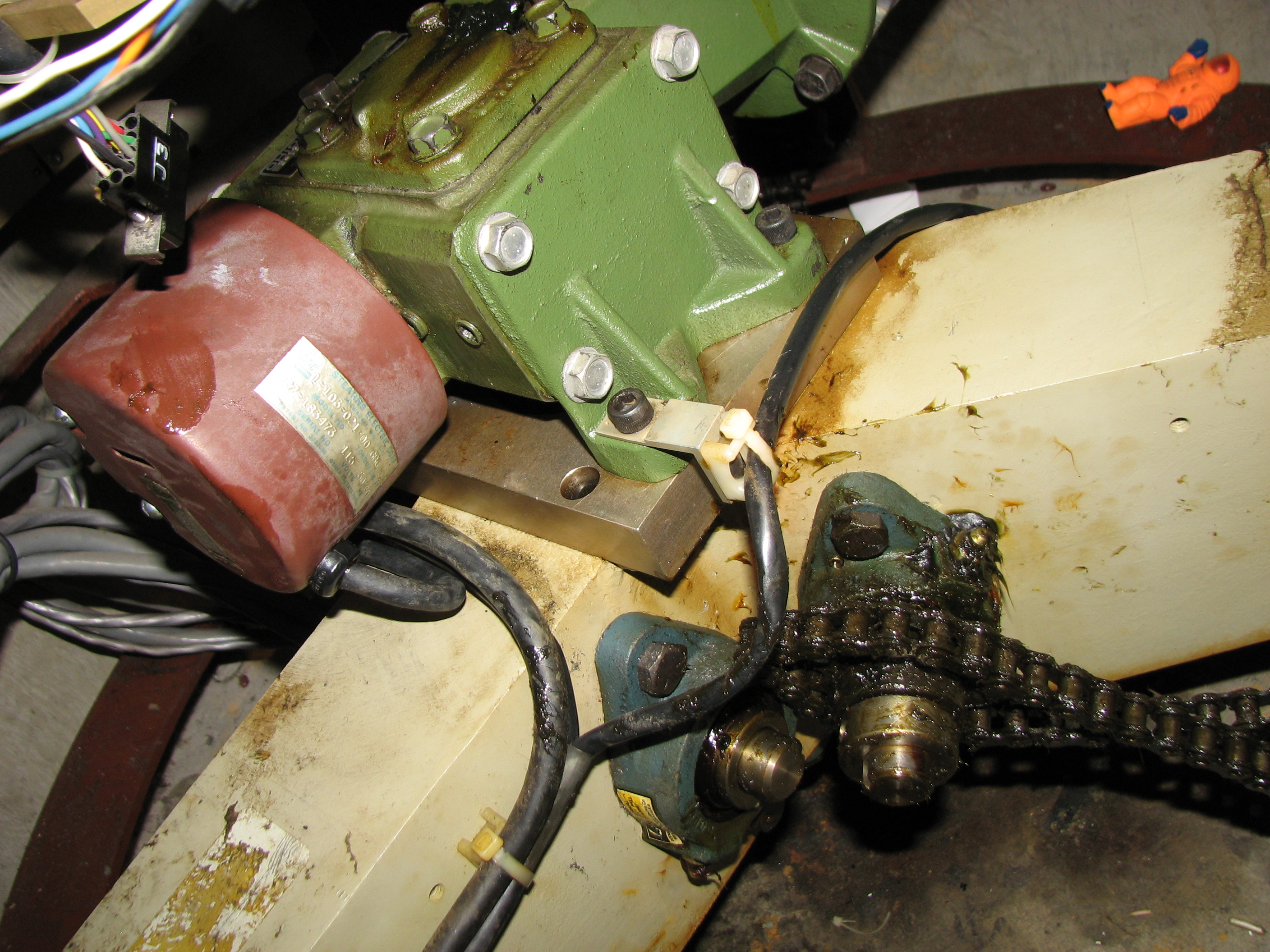
Ah, and then the equipment just seemed to fight back:


This is not the handrail that Astronaut Mike Massimino had to break off, but it looks very similar and I can’t find a photo online of the broken one.


This chain and sprocket caused a day and a half of work for several people. Arrrgh! But, we succeeded!

Specialized Tools


In order to safely remove small screws in space, and be able to manipulate power tools while wearing gloves, they developed some very specialized tools for the Hubble repair missions.
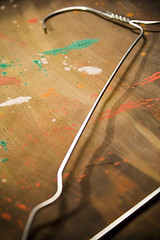
Well, we were inspired by this – but  Mark made a tool very similar, but with a slightly pointier point. Unfortunately, that tool is at the bottom of the elevator shaft now, so I can’t show you a real picture.


(Coat Hanger credit: Demion on Flickr)

Teamwork


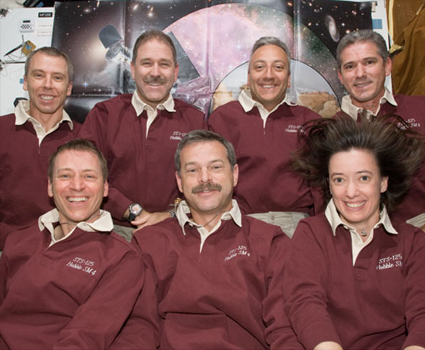
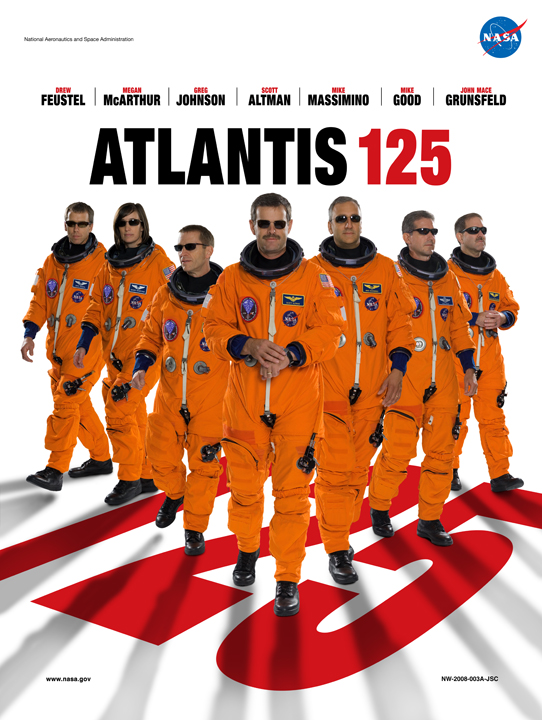
This is the team, and this is their poster:
I love it.
Well, we may not have a movie poster, but we couldn’t have lifted the projector without the work of a large number of people, not the least of whom were Mark Rogers, Kim Chinn, Sarah Huschle, Chuck Hanna-Myrick, and the planetarians!


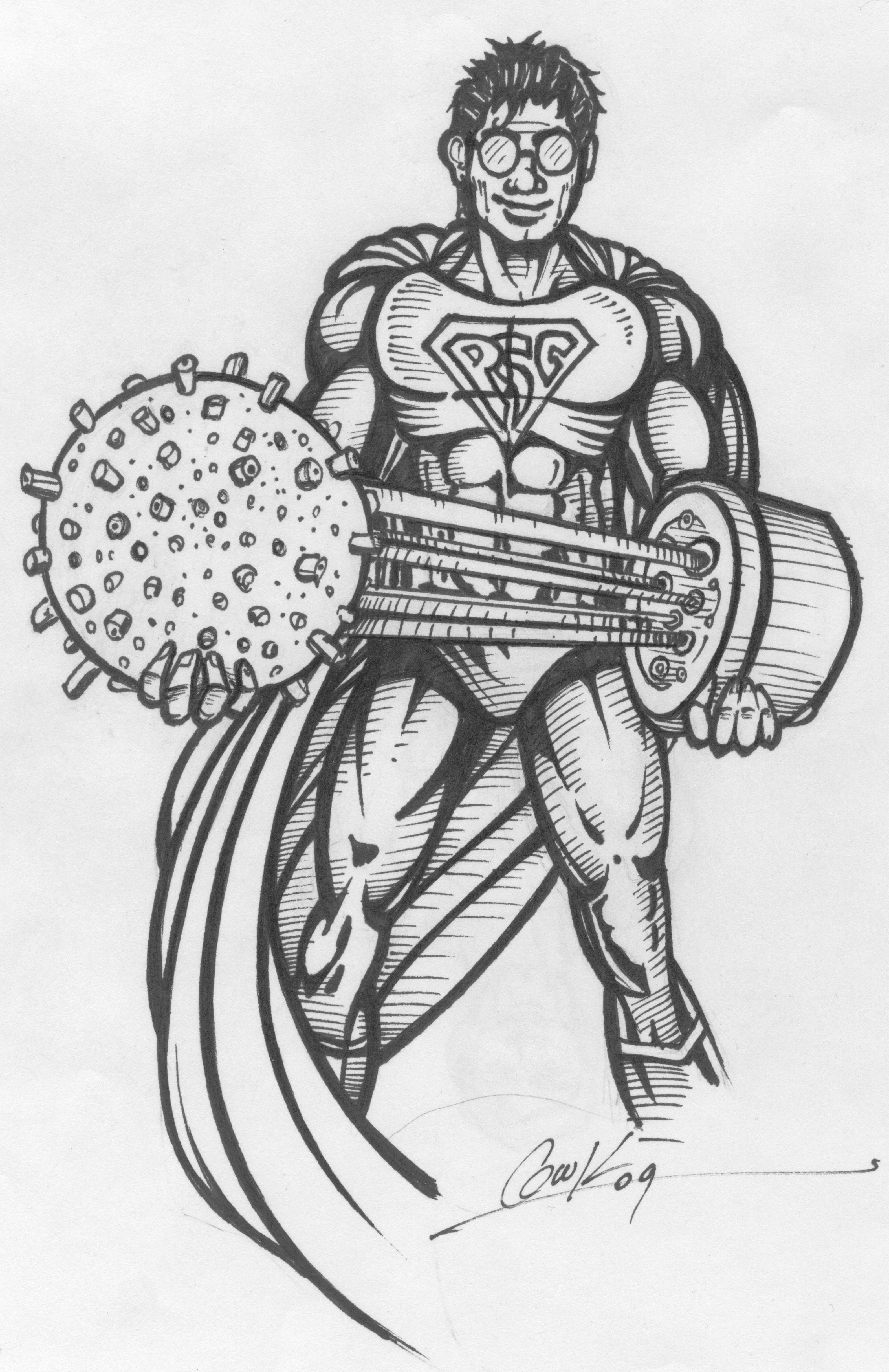
Gary Kezele made the commemorative sketch.

Want More?

Hubble

STS-125 (the repair mission)

Hubble 3D in IMAX – the newest IMAX space movie.

See it in Seattle (Use this link until March 19th) (Use this link after March 19th)

~ A l i c e !

P.S. All astronaut photos are from NASA. As you might expect.

Huge New NASA Photos at Pacific Science Center

Pacific Science Center just installed some amazing new photographs. They’re right outside the planetarium, beside the Gemini Capsule. Our public unveiling of these images is today, November 18th at 10am.

The images we’re putting up are a celebration of the International Year of Astronomy from three of NASA’s Great Observatories. I’m going to show you the images here, but to appreciate their full majesty you’ve got to stop by and see them in person.

Key to the Center of our Galaxy

Key to the Center of our Galaxy

I’m also putting up the key to the images, so you can use them to do a treasure hunt when you come to visit.

Some Quickie Tech Details

  • Distance to these formations: 26,000 light years
  • Width: 246 light years from edge to edge (really 32.5 arcminutes if you want to get technical)
  • Color: This is a false-color image. Reds are infrared from Spitzer, yellows are near-infrared from Hubble, and blues are X-ray from Chandra. To see it look this beautiful you’d have to be some kind of alien with fancy eyes that see in a very wide range of wavelengths. None of the wavelengths represented here are visible to the human eye.

Where Is It?

Map of Sagittarius with Image Location Marked

Map of Sagittarius with Image Location Marked

Where’d I Get My Info?

HubbleSite

And Some Carnivals of Space!

#129 from Tiny Mantras – featuring my 2012 movie review post and some really interesting stuff about Unicorns …

#128 from AARTScope – featuring a quiz on IYA and “How to talk to your friends about 2012” from me

#127 from Next Big Future – seems to be all about the awesome Ares 1-X Launch

#126 from The Gish Bar Times – has my video about telescope purchasing, and a lot about the Moon

#125 from Orbiting Frog – is very easy to read, check it out!

~ A l i c e !

Exoplanets Photographed!

Quickie:

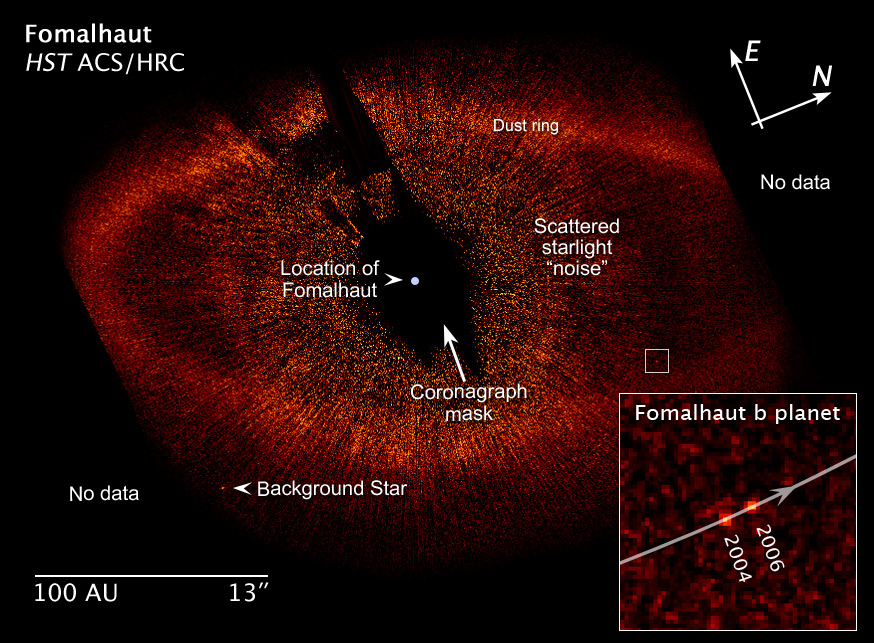
They got a photo of a planet around another star, and they’ve confirmed that it is actually a planet. (Actually, there are two discoveries, one planet around Fomalhaut, and three planets around, get this, HR8799.)

Hubble Team

Planet around Fomalhaut b Credit: Hubble Team

An Actual Photo!

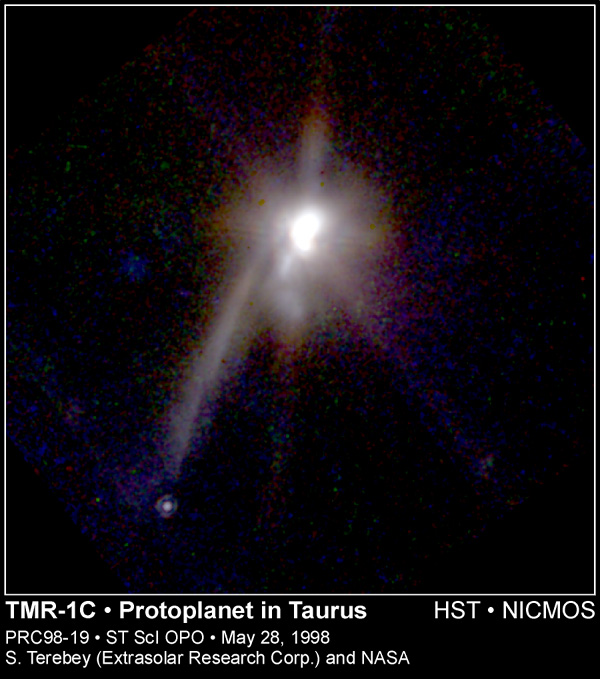
Eee gad! We finally did it. Although the current count of detected exoplanets is up to about 322, we don’t have photographs of any of those. Sadly. Over the years, there’ve been a number of false alerts, but none panned out. Most notable in my memory was May of 1998, about a month after I was hired here – they thought they found a protoplanet ejected from around a star in Taurus. Eventually they decided it was just a star in the background.

Hubble

Not a Planet in Taurus Credit: Hubble

Fomalhaut? Really?

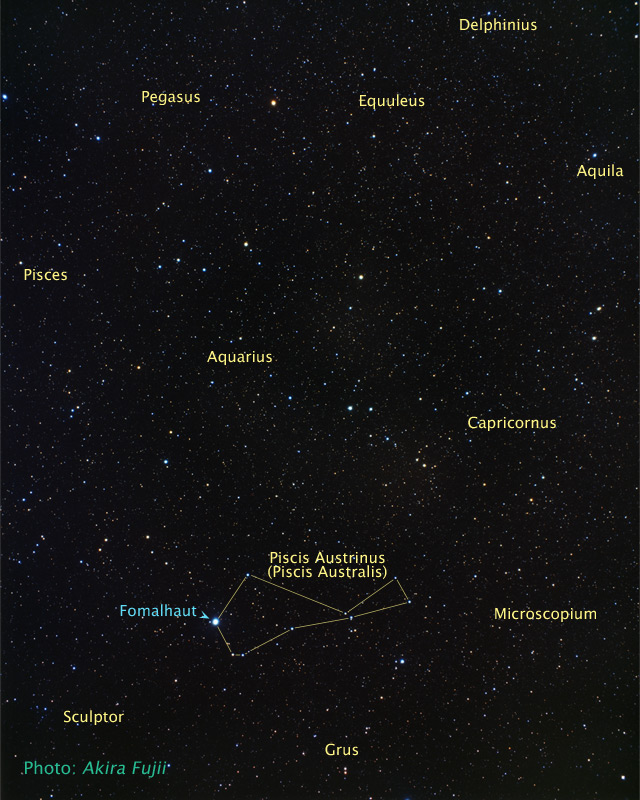
Okay, so one of the other things I find awesome about this is that the planet is around Fomalhaut (they pronounce it FOAM-al-hot). Fomalhaut is a first-magnitude star. That’s darn bright. I was expecting the first image of a planet to be around some dim little nothing star in a nothing constellation. You can see Fomalhaut tonight – look low in the South, for a bright star – and that’s where it is.

What Makes This One a Planet?

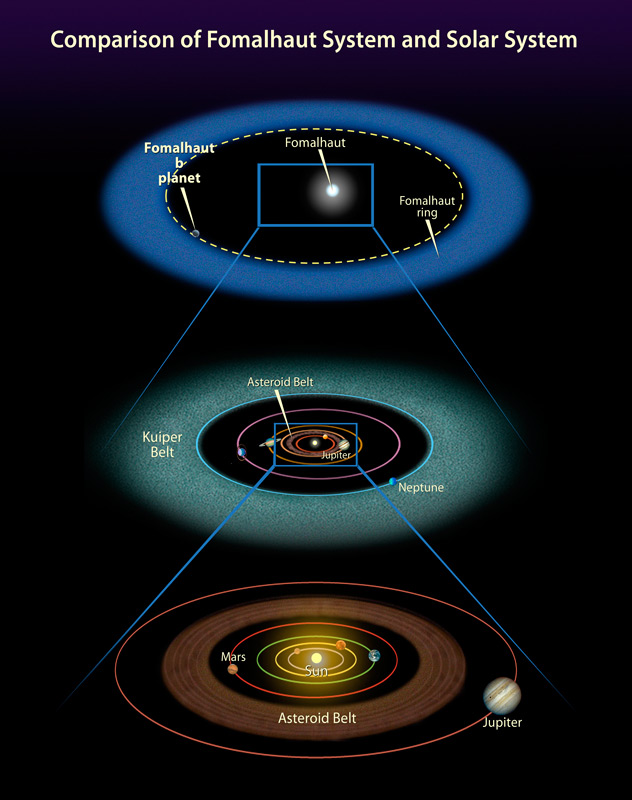
Mostly we’re finding big, high-mass planets around other stars. The problem with candidates we’re photographing is that they’re even bigger – big enough and bright enough that we can see them. Big enough and bright enough, that they generally turn out to be dim stars, not planets. This planet is in a ginormous dust ring (see the diagram). If the planet had a large mass, you’d see it mess up the dust ring – the dust would be attracted to the planet, there would be tracks and all sorts of fun physics. There isn’t. The dust ring is undisturbed. That puts an upper limit on the mass of this planet, so we can be sure it is small enough to qualify as a planet (less than 13 times the mass of Jupiter).

This planet is between the mass of Uranus and three times the mass of Jupiter.

Hubble Team

Diagram of the Fomalhaut b system, compared to our own Credit: Hubble Team

The “Marois Trio”

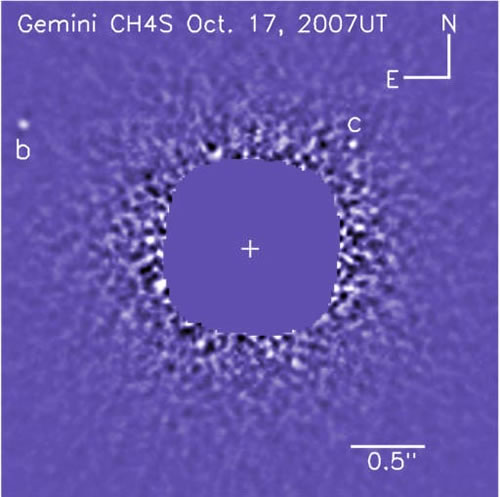
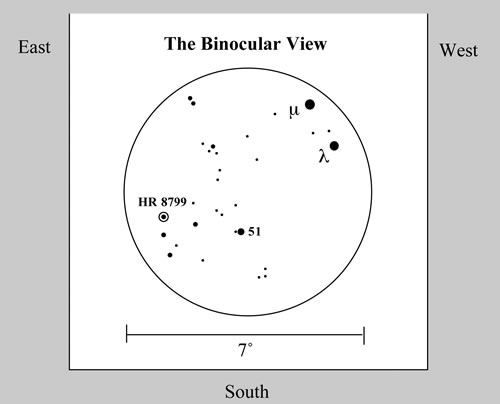
Parallel to Hubble’s discovery, Christian Marois (et al) of the Gemini Observatory also just released a paper detailing their photograph of three planets going around the star HR8799 in Pegasus. This one is a little harder to see (you need binoculars), but the fact that there are three planets all orbiting the star, points to the fact that this is also, pretty definitely, actual planets and not stars.

Two of the three planets around HR8799

Two of the three planets around HR8799 Credit: Gemini Observatory

Where do I look?

Hubble Team

Where is Fomalhaut? Credit: Hubble Team

Gemini Observatory

Where is HR8799? Credit: Gemini Observatory

Where’d I Get My Info?

Hubble Release

Gemini Observatory Release