March 20 Spring Equinox Sunset Watch — 2019

It’s time for the 40th seasonal sunset watch!

40!!!

  • When: Wednesday, March 20, 7:00pm (so come at 6:30pm)

    • Actual sunset is supposed to be at 7:22pm, but we have noticed that the Sun sets about 15 minutes earlier than the USNO says, because of the horizon altitude.
    • The equinox moment is Wednesday, March 20, 2:58pm
  • Where: Solstice Park – all the way up the hill from the tennis courts (or, if you’re not in Seattle, wherever you have a view of the western horizon!)
  • Who: Everyone welcome, as usual. (Please do leash your dogs as we usually have a good number of people, kids, and other dogs around.)
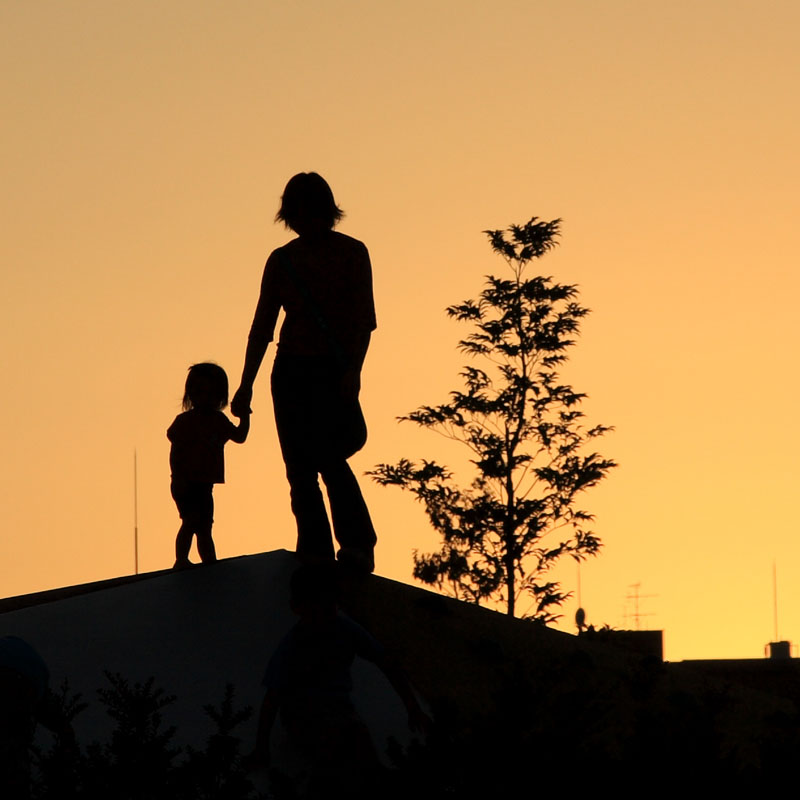
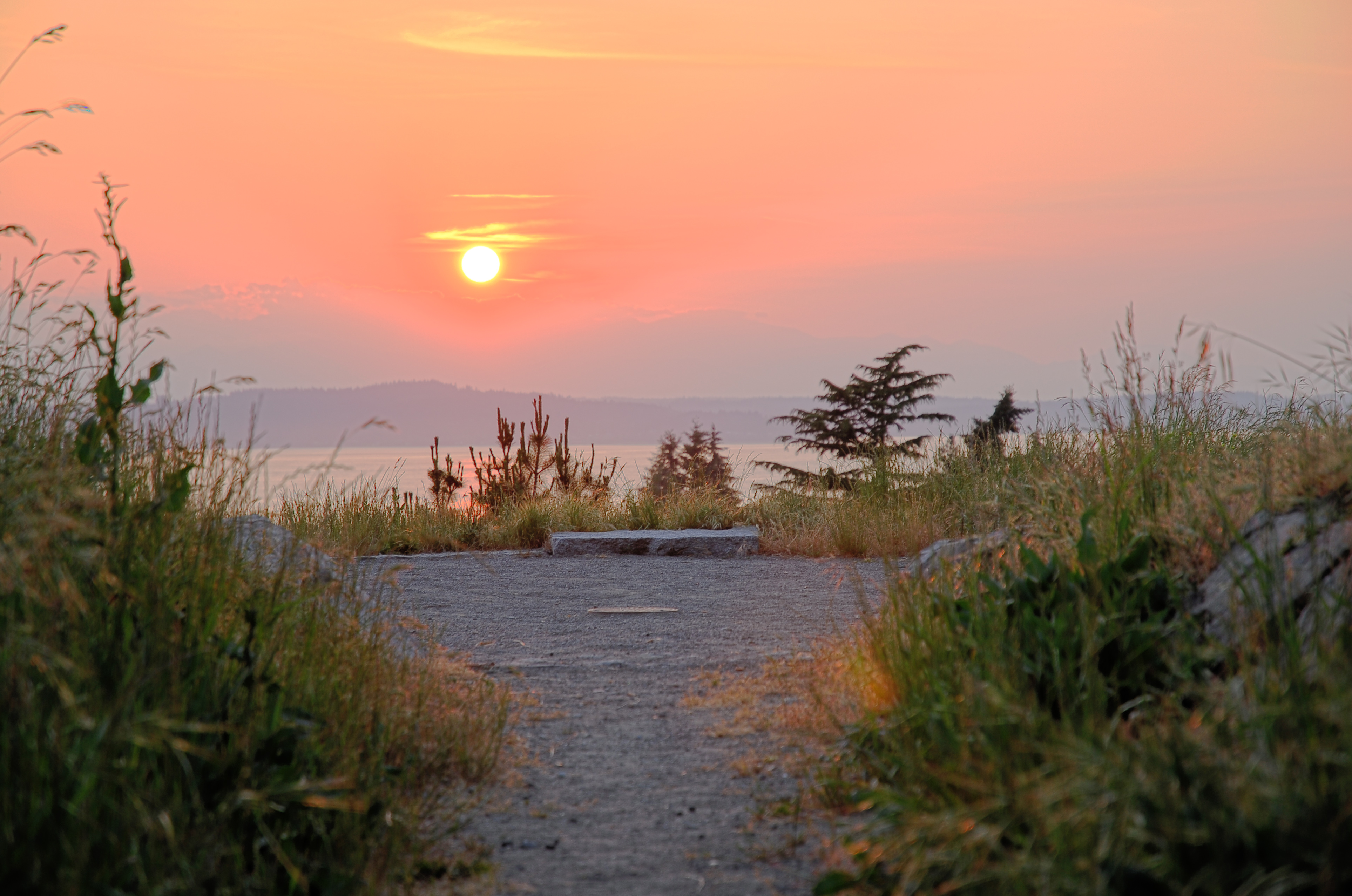
Parent and Child at Sunset by Kazuhiko Teramoto

Parent and Child at Sunset by Kazuhiko Teramoto, skyseeker

Come watch the sunset at Solstice Park in West Seattle. I’ll be there even if it is cloudy because sometimes the Sun peeks through just as it begins to set, but if it is driving rain or a thunderstorm I’m staying home with some tea!

If you’re interested – here’s the timing of various celestial events  from Seattle, courtesy of the U.S. Naval Observatory Astronomical Applications Department:

Sun and Moon Data for One Day

U.S. Naval Observatory
Astronomical Applications Department
Seattle, King County, WA (Longitude W122° 20′, Latitude N47° 38′)

Wednesday, March 20, 2019 Pacific Daylight Time
Sun
Begin civil twilight 6:42 a.m.
Sunrise 7:12 a.m.
Sun transit 1:17 p.m.
Sunset 7:22 p.m.
End civil twilight 7:53 p.m.
Moon
Moonrise 5:47 p.m. on preceding day
Moon transit 12:45 a.m.
Moonset 7:28 a.m.
Moonrise 7:08 p.m.
Phase of the Moon on March 20, 2019: Full Moon at 6:43 p.m. (local daylight time)

This event is my part of the NASA’s Solar System Ambassador program, and thanks to West Seattle Blog for publicizing all of them!

Everyone is welcome, see you there!

~ A l i c e !

December 21 Winter Solstice Sunset Watch — 2018

It’s time for the 39th seasonal sunset watch!

  • When: Friday, December 21, 4:05pm (so come at 3:45pm)

    • Actual sunset is supposed to be at 4:20pm, but we have noticed that the Sun sets about 15 minutes earlier than the USNO says, because of the horizon altitude.
    • The equinox moment is Friday, December 21, 2:23pm
  • Where: Solstice Park – all the way up the hill from the tennis courts (or, if you’re not in Seattle, wherever you have a view of the western horizon!)
  • Who: Everyone welcome, as usual. (Please do leash your dogs as we usually have a good number of people, kids, and other dogs around.)
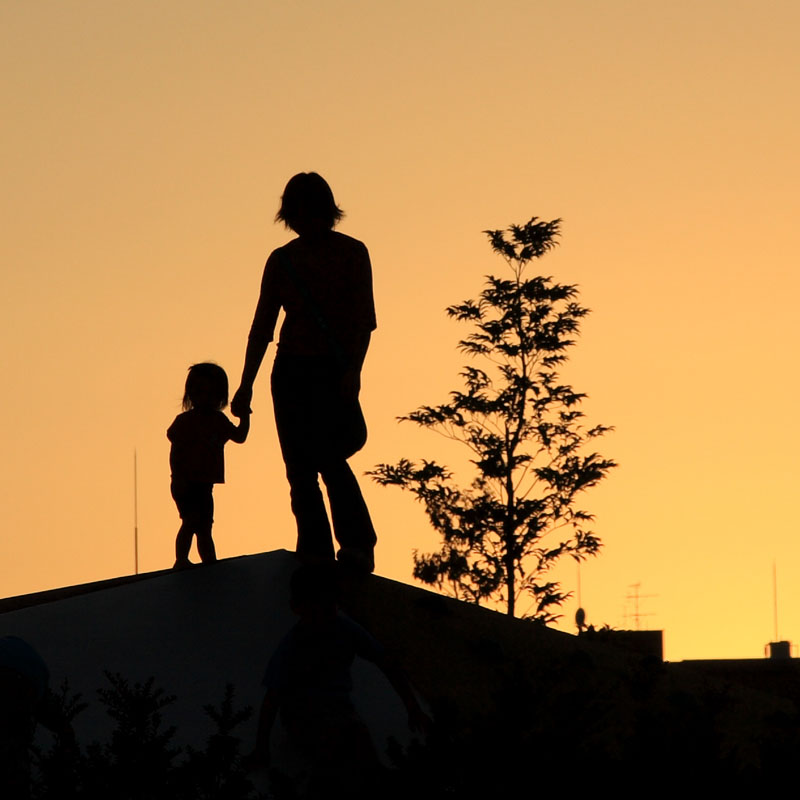
Parent and Child at Sunset by Kazuhiko Teramoto

Parent and Child at Sunset by Kazuhiko Teramoto, skyseeker

Come watch the sunset at Solstice Park in West Seattle. I’ll be there even if it is cloudy because sometimes the Sun peeks through just as it begins to set, but if it is driving rain or a thunderstorm I’m staying home with some tea!

If you’re interested – here’s the timing of various celestial events  from Seattle, courtesy of the U.S. Naval Observatory Astronomical Applications Department:

Sun and Moon Data for One Day

U.S. Naval Observatory
Astronomical Applications Department
Seattle, King County, WA (Longitude W122° 20′, Latitude N47° 38′)

Friday, December 21, 2018 Pacific Standard Time
Sun
Begin civil twilight 7:19 a.m.
Sunrise 7:55 a.m.
Sun transit 12:08 p.m.
Sunset 4:20 p.m.
End civil twilight 4:56 p.m.
Moon
Moonset 6:30 a.m.
Moonrise 3:52 p.m.
Moon transit 11:43 p.m.
Moonset 7:41 a.m. on following day
Closest Primary Moon Phase: Full Moon on December 22, 2018 at 9:49 a.m. (local standard time)

Phase of the Moon on December 21, 2018: Waxing Gibbous with 99% of the Moon’s visible disk illuminated.

This event is my part of the NASA’s Solar System Ambassador program, and thanks to West Seattle Blog for publicizing all of them!

Everyone is welcome, see you there!

~ A l i c e !

December 21 Winter Solstice Sunset Watch–2017

It’s time for the 35th seasonal sunset watch!

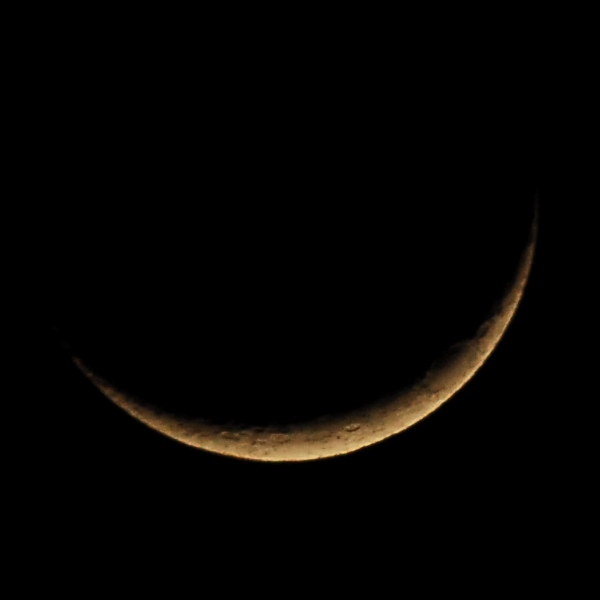
I can’t wait to see you for a chilly winter sunset. We’ll also watch for the fingernail-crescent of the Moon just after sunset.

  • When: Thursday, December 21 at 4:05pm (so come at 3:45pm)

    • Actual sunset is supposed to be at 4:20pm, but we have noticed that the Sun sets about 10 minutes earlier than the USNO says, because of the horizon altitude.
    • The equinox moment is Thursday, December 21 at 8:28am
  • Where: Solstice Park – all the way up the hill from the tennis courts (or, if you’re not in Seattle, wherever you have a view of the western horizon!)
  • Who: Everyone welcome, as usual. (Please do leash your dogs as we usually have a good number of people, kids, and other dogs around.)
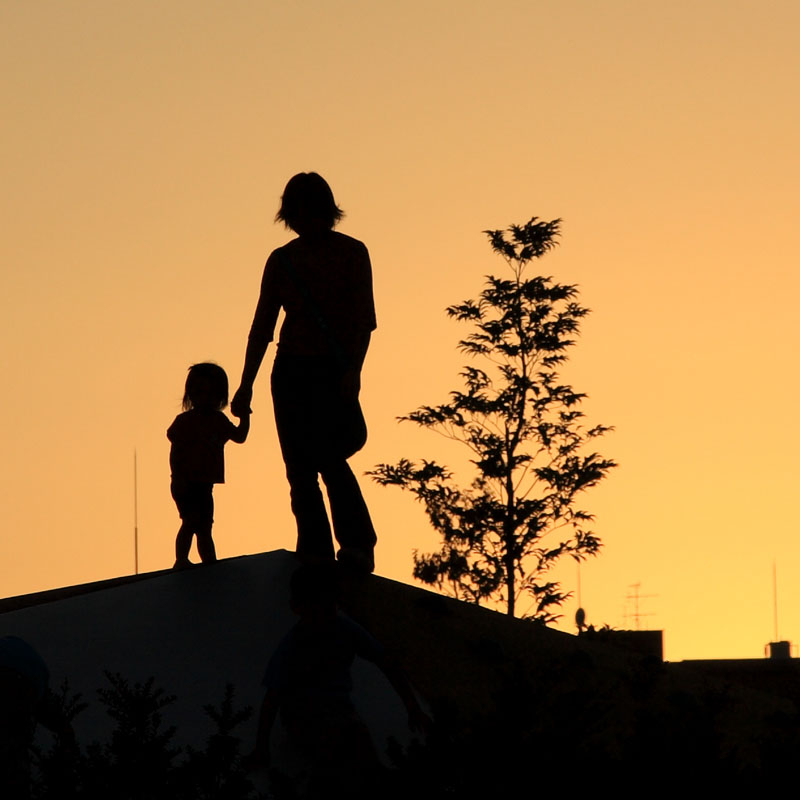
Parent and Child at Sunset by Kazuhiko Teramoto

Parent and Child at Sunset by Kazuhiko Teramoto, skyseeker

Come watch the sunset at Solstice Park in West Seattle. I’ll be there even if it is cloudy because sometimes the Sun peeks through just as it begins to set, but if it is driving rain or a thunderstorm I’m staying home with some tea!

If you’re interested – here’s the timing of various celestial events  from Seattle, courtesy of the U.S. Naval Observatory Astronomical Applications Department:

Sun and Moon Data for One Day

U.S. Naval Observatory
Astronomical Applications Department

Seattle, King County, WA (Longitude W122° 20′, Latitude N47° 38′)

Thursday, December 21, 2017 Pacific Standard Time
Sun
Begin civil twilight 7:19 a.m.
Sunrise 7:55 a.m.
Sun transit 12:08 p.m.
Sunset 4:20 p.m.
End civil twilight 4:56 p.m.
Moon
Moonrise 10:09 a.m.
Moon transit 2:56 p.m.
Moonset 7:48 p.m.
Closest Primary Moon Phase: New Moon on December 17, 2017 at 10:30 p.m. (local standard time)

Phase of the Moon on December 21, 2017: Waxing Crescent with 11% of the Moon’s visible disk illuminated.

This event is my part of the NASA’s Solar System Ambassador program, and thanks to West Seattle Blog for publicizing all of them!

Everyone is welcome, see you there!

~ A l i c e !

June 20 Summer Solstice Sunset Watch –2017

It’s time for the 33rd seasonal sunset watch!

This is also my last currently-scheduled event before the solar eclipse in August! Come and I’ll give tips and resources on safely observing the eclipse from Seattle, as well as a sites in Oregon. I’ve got more resources than anyone (practically) on safe observing for kids aged 18-months to 6 years, so bring the kiddos.

  • When: Tuesday, June 20 at 9:00pm (so come at 8:45pm)

    • Actual sunset is supposed to be at 9:11pm, but we have noticed that the Sun sets about 10 minutes earlier than the USNO says, because of the horizon altitude.
    • The solstice moment is Tuesday, June 20 at 9:24pm so maybe we’ll stick around and celebrate that too, for once!
  • Where: Solstice Park – all the way up the hill from the tennis courts (or, if you’re not in Seattle, wherever you have a view of the western horizon!)
  • Who: Everyone welcome, as usual. (Please do leash your dogs as we usually have a good number of people, kids, and other dogs around.)
Parent and Child at Sunset by Kazuhiko Teramoto

Parent and Child at Sunset by Kazuhiko Teramoto, skyseeker

Come watch the sunset at Solstice Park in West Seattle. I’ll be there even if it is cloudy because sometimes the Sun peeks through just as it begins to set, but if it is driving rain or a thunderstorm I’m staying home with some tea!

If you’re interested – here’s the timing of various celestial events  from Seattle, courtesy of the U.S. Naval Observatory Astronomical Applications Department:

Sun and Moon Data for One Day

Solstice Moment (Seattle): Tuesday, June 20 9:24pm
Solstice Moment (UTC): June 21 04 24

Seattle, King County, WA (Longitude W122° 20′, Latitude N47° 38′)

Tuesday, June 20, 2017 Pacific Daylight Time
Sun
Begin civil twilight 4:31 a.m.
Sunrise 5:11 a.m.
Sun transit 1:11 p.m.
Sunset 9:11 p.m.
End civil twilight 9:52 p.m.
Moon
Moonrise 3:00 a.m.
Moon transit 9:55 a.m.
Moonset 5:03 p.m.
Closest Primary Moon Phase: New Moon on June 23, 2017 at 7:31 p.m. (local daylight time)

Phase of the Moon on June 20, 2017: Waning Crescent with 16% of the Moon’s visible disk illuminated.

This event is my part of the NASA’s Solar System Ambassador program, and thanks to West Seattle Blog for publicizing all of them!

Everyone is welcome, see you there!

~ A l i c e !

What If We Had No Moon? (Oblivion Spoilers)

I was alerted last week to the possibility that people might be asking questions about the scientific possibilities suggested in the movie Oblivion, released today. May I point out that ripping apart the science in movies like this is a form of entertainment for me? If you aren’t interested, go read someone else’s blog.

Shameless plug: You should go see Oblivion at Pacific Science Center in IMAX.

In order to address these issues, I have to talk about the movie, but I’m going to do my best not to spoil the whole thing since you might want to see it.

SPOILER ALERT

.

.

.

SPOILER ALERT

.

.

.

SPOLIER ALERT

.

.

.

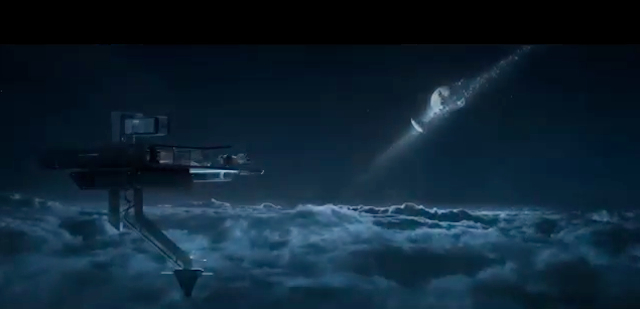
In Oblivion the year is 2077, and the Moon has been destroyed by robot aliens. This caused widespread destruction due to earthquakes and tsunamis. The tectonic activity has stabilized, but humanity has migrated to Titan. A few people are still on earth guarding the Hydro Rigs that convert seawater into energy for the Titan colony. The Moon is depicted as being half there, half a debris ring around the Earth.

Oblivion

Meteorites

Yes, and the movies doesn’t have any.

The method of the Moon’s destruction isn’t dwelled upon in the movie, but I get the impression it was a nuclear war. Let’s just assume the alien race has enough power to blow up the Moon, and they do so.

The first effect is going to be a huge number of meteorites slamming into the Earth. These aren’t going to be just a few that make some pretty craters, that’s a lot of mass up there in the Moon and a lot of it is going to come raining down on the Earth. I think this is going to be the most devastating effect. I’ll have to run some hypothetical math (or maybe Phil Plait or XKCD What-If will do it before me), but it seems like this rain of debris would be significantly more destructive than the meteor that probably killed off the dinosaurs. There will be more mass than that single meteor (a LOT more mass), and it will rain down over more of the planet. I suspect it will be moving more slowly though, so that may mitigate the effect a bit.

Last I heard the dinos died out either because of the ensuing nuclear winter (too much ash and dust in the atmosphere, cooling the climate) or a nearly instantaneous ignition/superheating of most of our atmosphere, which would have broiled everything aboveground leaving burrowing animals and sea-life alone. Whoo-ee. Someone check my references on that. (Jonas? Jonas? Why are you in New Zealand when I need you?). So, the Moon debris falling down would be very bad.

But somehow no meteorites from the lunar explosion.

Earthquakes

Sure. There could be earthquakes if the Moon blew up. Mostly due to IMPACTS FROM METEORITES. Barring those I’m having trouble envisioning why we would get earthquakes from the Moon breaking up in orbit. So my answer is:

Not the way they are in the movie.

The Moon does pull tidally on the Earth’s crust a little bit, but the effects are not the kind that we generally notice over the span of human lifetimes. Even by spreading out the mass of the Moon into more of a ring, you’ll also lose that tidal flex. I would expect that to make fewer earthquakes, not more. In the process of the Earth settling from a shape influenced by the Moon into a shape influenced by the debris ring we will have some earthquakes, but not ones that destroy cities.

If we were Jupiter’s moon Io, and it was Jupiter that was destroyed then yes, we would feel significant tectonic stress. But we’re not.

The Moon’s tidal forces do assist in keeping the Earth’s crust heated, and possibly impact the fact that we have moving tectonic plates in the first place. Now that tectonic plates have formed though, it will take a bajillion years to slow them down and stop them.

Tsunamis

Let’s say yes.

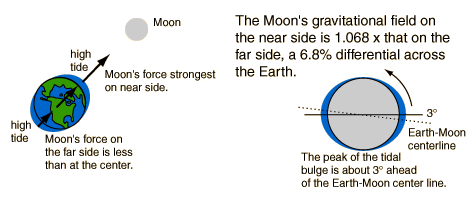
We all know the Moon is the major influencer on our tides here on Earth. The Moon and the Sun share the duties of causing the Earth’s tides, but the Moon does 2/3 of the work, and the Sun only does the leftover 1/3. So there’s a lot of water caught up in the tidal oval at any given time. The Earth rotates through that oval of influence, giving us two high tides per day.

Here’s a diagram of the tidal oval. It’s exaggerated a lot:

tides

From: http://hyperphysics.phy-astr.gsu.edu/hbase/tide.html#stid

That’s a LOT of water to displace, and most of it is at the equator. So if the Moon suddenly disappears, that peak will slosh back down and (after sloshing back and forth a lot) will settle into a more even distribution. With half the Moon still in place, we’ll only be redistributing about 1/3 of that water. Also, since the Moon’s debris is staying in orbit (forming a ring), we won’t need to displace the water towards the poles, it can stay concentrated near the equator. Even though that is a significant reduction, it’s still a lot of moving water, suddenly. That’s a tsunami: a LOT of ocean water being displaced suddenly.

A caveat: it looks in the movie as if those tsunamis carried a lot of sediment with them, enough to cover all but the very top of the Empire State Building. Tsunamis from the destruction of the Moon would have no reason to dredge up sediment from the bottom of the ocean, so I don’t know where it is implied that material came from. I have no problem with the water washing that high in a significant Moon event, but not mud or sand.

A Ring around the Earth

When you first see the movie you’ll say “Alice! That ring is around the Moon, not the Earth.” Just wait, later on it becomes visible as a ring around the Earth.

Yes and no.

I guess that’s my answer for all of these. This is the case where I need to pull out my solar system dynamics textbooks and run through some equations first though.

Yes: soon after the destruction of the Moon, any debris will end up in orbit, and a lot of that will be leading or following the Moon’s own orbit, since that’s where it originated. This will give us a lumpy ring. It won’t be as bright as in the movie, because it will be mostly dust and boulders. Saturn’s ring is very visible because it is mostly very reflective ice. Dust is darker.

Over 60 years (from the Moon’s destruction around 2017 or later until the time of the movie in 2077), some of that debris will have reentered the Earth’s atmosphere, and the rest will also still be orbiting in that ring.

Over a more extended period of time I don’t think the distance of the Moon’s orbit is a stable place for a ring system. The dust will either recoalesce into one or a few Moons, drift to a different orbit, or fall down to the Earth.

I haven’t had time to sit down and calculate any of this out, but these are my reasonably-well-educated guesses.

References

If We Had No Moon, Bernard Foing http://www.astrobio.net/index.php?option=com_retrospection&task=detail&id=2507

Sun’s Tidal Effect http://hyperphysics.phy-astr.gsu.edu/hbase/tide.html#stid

365 Days of Astronomy http://cosmoquest.org/blog/365daysofastronomy/2009/03/28/march-28th/

NASA http://helios.gsfc.nasa.gov/qa_earth.html#quake

.

.

.

SPOILER ALERT

.

.

.

SPOILER ALERT

.

.

.

SPOLIER ALERT

~ A l i c e !

International Observe the Moon Night – 2010

Tonight was the first annual International Observe the Moon Night. What? You didn’t know? Oh, sorry Seattle, I kinda didn’t want to get your hopes too high … the forecast wasn’t that great. I apologize profusely.

It is, of course, raining.

We took a photo anyway (and submitted it for judging! I hope we win a side award for “funniest” picture of the Moon or something.):

(c) Jason Enevoldsen. This is the ACTUAL location of the Moon, not just a random chunk of cloudy sky.

You can submit your photos too. In fact, the photos don’t have to be from exactly tonight – anytime between August 24th and September 23rd will do. Maybe you took one a couple weeks ago, or maybe you can snap one in between the clouds during the first half of this week.

Anyway, I love these international observing events like the Great World Wide Star Count, and I hope there are more. A lot of them take place over a week or a month, which works better for us here in the Pacific Northwest, we can just choose the cloud-free night and go observe them. Meanwhile, when it is raining like tonight, stargaze through your computer and live vicariously through the good weather of others.

And don’t miss my fall equinox sunset viewing. I’ll be there if it is cloudy, but not if it is REALLY raining.

~ A l i c e !

Autumn Equinox Sunset Viewing – 2010

It’s time again! Add it to your calendar – the quarterly sunset viewing at Solstice Park is coming up in just a couple weeks!

  • When: Wednesday, September 22, 2010 at 7:07pm (so come at 6:30pm)
  • Where: Solstice Park (or, if you’re not in Seattle, wherever you have a view of the western horizon!)
  • Who: Everyone welcome, as usual.

Sunset on June 11, 2009 Credit: Jason Gift Enevoldsen

Come watch the autumn equinox sunset at Solstice Park in West Seattle on Monday. We’ll see if the sunset lines up with the placed marker. I’ll be there even if it is cloudy, but not if the weather is miserable.

If it is clear we’ll bring a telescope or two to take a look at the Moon after the Sun goes down – and maybe Jupiter if we stay until it is dark enough.

If you’re interested – here’s the timing of various celestial events on Saturday from Seattle, courtesy of the U.S. Naval Observatory Astronomical Applications Department:

Sun and Moon Data for One Day

The following information is provided for Seattle, King County, Washington (longitude W122.3, latitude N47.6):

Wednesday 22 September 2010 Pacific Daylight Time

SUN
Begin civil twilight 6:25 a.m.
Sunrise 6:56 a.m.
Sun transit 1:02 p.m.
Sunset 7:07 p.m.
End civil twilight 7:38 p.m.

MOON
Moonrise 6:10 p.m. on preceding day
Moon transit 12:11 a.m.
Moonset 6:23 a.m.
Moonrise 6:28 p.m.
Moonset 7:27 a.m. on following day

This event is my part of the NASA’s Solar System Ambassadors program, and thanks to West Seattle Blog for publicizing the last few!

Everyone is welcome, see you there!

~ A l i c e !

Moon over West Seattle

We saw the crescent moon set beautifully over the Sound from here in West Seattle tonight.

Crescent Moon over West Seattle - Credit: Jason Enevoldsen

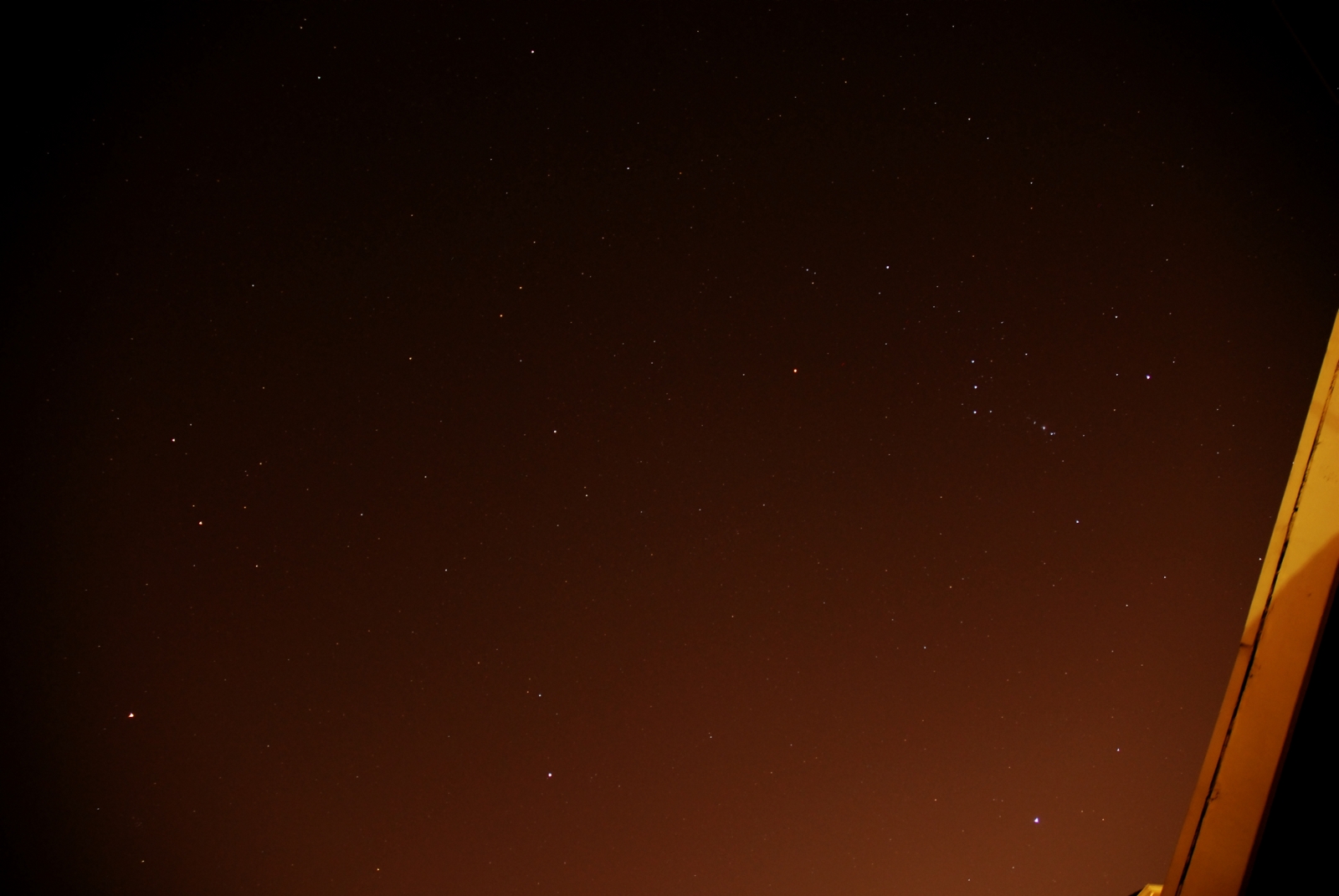
Mars and Orion - Credit: Jason Enevoldsen

Jason caught it on film – and he also caught Mars and Orion.

Enjoy!

~ A l i c e !

Thanksgiving and Astronomy

Thanksgiving is upon us, here in the United States. By now your in-laws, friends, acquaintances, and family have probably learned that you think Astronomy is cool. Which means you’re the expert. Awesome!

Wait, did that worry you a bit? Being called an expert in astronomy? I sure get worried when I’m called an expert. So, just for you, an astronomy cheat sheet for Thanksgiving dinner-table conversation! So, if you want to steer the conversation away from politics and religion, here are a few ideas – in no particular order.

Topics You May Be Asked About

Water on the Moon

Question: So I hear they discovered water on the Moon! Or, what was that a couple weeks ago about NASA crashing something into the Moon?

Answer: Yup! There have actually been a couple of discoveries recently, but when NASA’s LCROSS mission slammed into a crater at the Moon’s south pole, it kicked up a cloud of material (which is what they were hoping for), and they discovered water and a lot of other interesting molecules in that cloud. Is it enough to use? Yeah, but we’d have to clean out those other chemicals first which might be difficult.

More info about Water on the Moon.

2012

Question: I hear the world is going to end in 2012, what’s up with that?

Answer: No. The 2012 hoax is based on a bunch of misinformation and misinterpretations. The planets won’t be aligned, the poles won’t flip, and neutrinos from the Sun won’t boil the Earth’s interior. Intriguingly, we will have a solar maximum in 2013, so 2012 promises to have some nice sunspots, flares, prominences, and other Sun activity.

More info about 2012.

Mars

Question: These questions have a wide range: from “Is there life on Mars?” to “How are those Mars missions doing anyway?”

Answer: Yes, we’ve found water on Mars, though not a lot. We’ve found that water many times. The most recent surface expeditions to Mars were Phoenix (at one of the poles, currently probably under a layer of ice), Spirit and Opportunity (which both had rovers). Phoenix is now defunct, as there is no sunlight from which it can draw power. Even when the Martian winter recedes and the Sun shows up again in spring don’t expect Phoenix to turn back on. Spirit and Opportunity have been going for almost 6 years now – and their original mission was slated for 90 “sols” (days on Mars). Their 6-year anniversary is January of 2010. At this moment Spirit is stuck in a sand trap, and the NASA JPL techs are working hard to extricate her.

And no, we haven’t found life there yet and the chances are getting slimmer.

More info about water on Mars, life on Mars, Phoenix, and the rovers.

Hey, What’s That?

Question: Hey, what’s that?

Answer: Jupiter.

Well, it is possible that it is Sirius or Mars, but you’d have to be up fairly late with your family for that to be the answer. If you’re out for a post-dinner walk, and you notice something bright in the sky, it is probably Jupiter. To double-check yourself, Jupiter is low in the southwestern sky before sunset here in the United States.

More info on what’s in tonight’s sky.

CERN

Question: I hear they turned on that world-destroying black hole maker again.

Answer: Yup! I mean, no … it isn’t a world-destroying black hole maker, but they (CERN) did turn on the “LHC” (Large Hadron Supercollider) in Switzerland. They’ve turned it on, spun it up, and even gotten collisions of particles! Yay! Now, it will still be a bit until they discover that strange particle they’re looking for. And maybe a little longer until they prove that dark matter is real.

By the way, did you know that CERN stands for European Organization for Nuclear Research? How does that make sense? (Well, okay, I get the “RN” instead of “NR” part, but … I don’t get the “CE” instead of “EO”)

More info on CERN.

Topics You Might Like to Bring Up

Free Spirit

Pitch: We have a remote-control car stuck in a sand trap on Mars.

Details: Well, it’s actually a lot cooler, more difficult, and more emotionally wrought for many folks than just a remote control car and a sand trap. Spirit, one of our two rovers on Mars has gotten hung up in some soft soil. It has been trapped for weeks – the soil is softer than they expected, and there may be some loose rocks hidden by the sand which make plotting a course almost impossible. Every movement is like sinking into quicksand – it causes the rover to slip deeper into the soil. Also, there are some indents on the bottom of the rover that could easily get hung up on some sharp rocks underneath Spirit’s belly if the rover sinks too far. The rescue operation is continuing.

More information on Free Spirit.

Galileoscope

Pitch: The only decent cheap telescope on the market.

Details: For the International Year of Astronomy a working group was put together to design a cheap, decent telescope kit, that any kid could use to see the rings of Saturn. This telescope is amazing for the price – and you get to learn how the optics work while putting it together. It also only takes about 10 minutes to assemble and no tools are required. This is a good beginner scope, but you should complement it with a tripod to get any use out of it at all. I highly recommend the give-one-get-one option, because they’ll send Galileoscopes to kids in underserved countries with these donations.

More information on the Galileoscope.

Shuttle Missions

Okay, watch out because this one could turn into a political conversation.

Pitch: There are only 5 shuttle missions left until the Space Shuttles are all retired.

Details: It’s about time we created a new ground-to-orbit technology. The Shuttles were launched in the 80’s (raise your hand if you’re still driving a car that was built in the 80’s. I thought so – not that many of you). Besides, if your clunker breaks down you’re stuck on the highway and you call AAA for a tow. If your shuttle breaks down … well, we’ve seen that twice and it is heartbreaking. I remember both vividly, and I’m actually just barely old enough to be able to remember the first one.

More info on the shuttle retirement, and the replacement.

Enceladus

Pitch: Yowsers watch out for those geysers!

Details: Cassini, which has been in orbit of Saturn for some years now, has just done a couple of screamingly-close flybys of Saturn’s moon Enceladus. Why do you care? Because Enceladus is on the short list of places in our solar system we rate as likely for finding life. In fact, one scientist has ranked it as “more habitable” than Earth, based on a set of seemingly-reasonable characteristics.  You also care because, well, why are there geysers on this moon? What are they made of? What do they mean? We don’t know all those answers yet, but Cassini will help us figure it out.

More images from Enceladus.

My favorite (click and look closely at the dark side …):
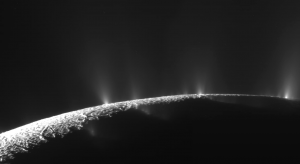
One of Cassini's images of geysers on Enceladus.

One of Cassini's images of geysers on Enceladus.

I wish you a wonderful Thanksgiving, if you celebrate it, and a wonderful Thursday, Friday, and weekend if you don’t.

~ A l i c e !
The Moon Has Water

“The Moon Has Water!” News Releases

This table has been created to be updated. The latest update is the date of the latest news release. This post is based on my Mars Has Water post that I’ve been updating since 2006. No matter how exciting it is to find water in these places, the press releases often have the same title: “[Planetary Body] Has Water!” Well, yes, and often we’ve found water there before. Each individual discovery has something new and interesting though, so I’m collating a list of those discoveries here. If you know of a discovery I’m missing, please e-mail me.

Date News Released News Title, Mission, Evidence (and what’s special this time) Reliability of Evidence Amount of Water Date the Water May Have Been Liquid
November 13, 2009 LCROSS Impact Data Indicates Water on Moon, spectrometers on board the LCROSS Mission, two plumes of material ejected when LCROSS hit the Moon both show evidence of water being kicked up, this time we kicked the water up ourselves showing the concentration of water below the surface of the crater Cabeus High Small, but enough to melt and use (“The plume from the impact contained at least 100 kilograms of water”) A long time ago if ever.
September 24, 2009 NASA Instruments Reveal Water Molecules on Lunar Surface, M3 on Chandrayaan-1, VIMS on Cassini, High-Resolution Infrared Imaging Spectrometer on Epoxi (Deep Impact), spectra data at the polar regions show hydroxyl and water molecules distributed through the surface of the Moon Medium Very Little – 10 to 1000 parts per million (at most one liter of water in one ton of lunar rock) Possibly never, we’re talking individual molecules of water and hydroxl, probably adsorbed (stuck) to the surfaces of various minerals.
March 5, 1998 Lunar Prospector Finds Evidence of Ice at Moon’s Poles, neutron spectrometer instrument on board Lunar Prospector, spectra data suggesting concentrations of water at Moon’s Poles Low Very little – 10-300 million metric tons (the low number is around the size of Lake Union) No estimate.
December 21, 1996 Ice on the Bone Dry Moon and Ice on the Moon, Bistatic Radar Experiment on Clementine, radio waves bounced off of permanently dark craters suggests ice deposits Low Very Little – 100 million to 1 billion metric tons (The small number is four times the size of Lake Union, or a third the size of Lake Sammamish) No estimate.

~ A l i c e !