Livestream Commentary: Mars Perseverance Entry, Descent, and Landing

I will be hosting live commentary over Zoom during the Entry, Descent, and Landing of Mars Perseverance.

When: Thursday, February 18, 2021 12:20pm-1:15pm

Where: Register in advance for this meeting (because it is public)

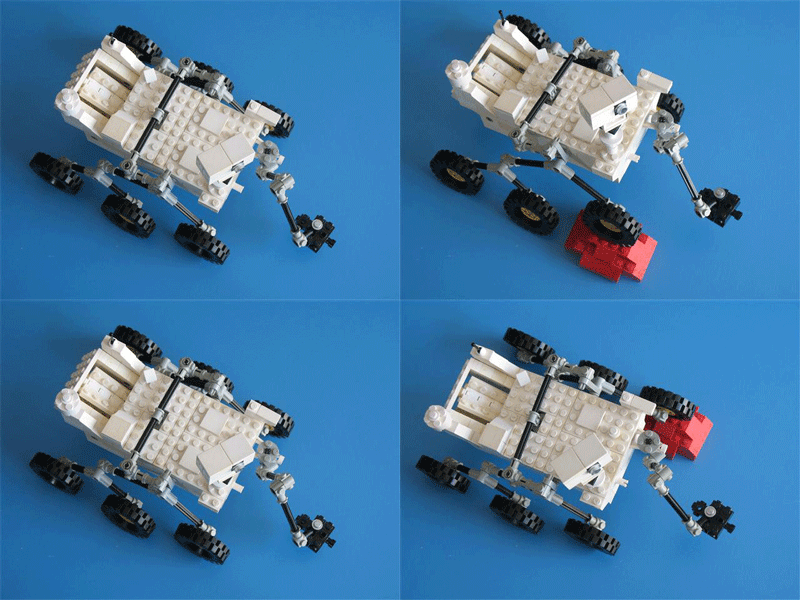
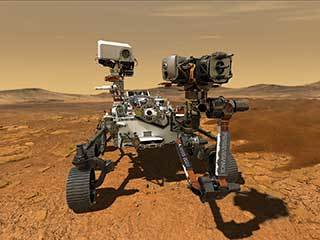
A rover on Mars with six wheels, a camera on a mast, and an arm with equipment on it.

I will be livestreaming the splashdown via https://mars.nasa.gov/mars2020/timeline/landing/watch-online/ within the commentary. I will be chatting directly with you, and will attempt not to be talking over the NASA official commentators, but explaining some terms they use and answering your direct questions.

To watch the livestream of the launch on your own go to NASA’s Mars Landing site to get the best links from NASA.

Also, here are some great activities and information to get you started.

<iframe src="https://mars.nasa.gov/gltf_embed/25042" width="100%" height="450px" frameborder="0"></iframe> <iframe src="https://mars.nasa.gov/gltf_embed/25043" width="100%" height="450px" frameborder="0"></iframe>

See you later this month!

-Alice

Crew Dragon Splashdown: Sunday August 2, 11:15am Pacific

I will be hosting live commentary over Zoom during the Splashdown of Crew Dragon (the return to Earth of NASA’s #LaunchAmerica: the first launch of crew to orbit in a commercial spacecraft).

When: Sunday, August 2, 2020 11:15am Pacific Time

Where: Register in advance for this meeting (because it is public): https://zoom.us/meeting/register/tJYkfuqvrz8tHtF1InWLMWB77rwAopWZc8cl

I will probably be livestreaming the splashdown via https://www.nasa.gov/live within the commentary. I will be commentating directly with you, and will attempt not to be talking over the NASA and SpaceX official commentators, but explaining some terms they use and answering your direct questions.

To watch the livestream of the launch on your own go to https://www.nasa.gov/live to get the best links from NASA.

Here’s my Twitter summary of why the launch was historic, and hence the return-to-Earth as well:

This is going to be a very big step. If I’m checking my history correctly, this will be the first crewed orbital flight of a truly-new design of spacecraft since the Space Shuttles first orbited in ~1981. I’m not dismissing SpaceShipTwo’s accomplishment of suborbital human spaceflight in 2018, but orbital is definitely different.

I am also not dismissing 神舟(Shenzhou) in 2003, though you have to admit that 神舟 is very, very, very similar to Сою́з(Soyuz). In trying to capture the significance of this upcoming crewed Dragon launch, the technology of 神舟 didn’t *feel* as new.

I guess I’m trying to say this *feels very different and very new. As we’re living in a time of heightened anxiety with the pandemic, things that *feel like risky new technology can *feel even newer or riskier. Let us not mistake *feelings for quantitative and scientifically-conducted risk assessment in any of our scientific endeavors right now, be they human spaceflight, quarantine advice, or the accelerated development of massive SARS-Cov-2 testing and vaccines.

See you in the morning!

-Alice

#LaunchAmerica Live Commentary: SpaceX Demo-2 test flight of Crew Dragon

I will be hosting live commentary over Zoom during NASA’s #LaunchAmerica: the first launch of crew to orbit in a commercial spacecraft. The launch is currently targeted for Wednesday, May 27, at 1:33pm Pacific time. I will start my commentary at 1:00pm Pacific Time. This will all be rescheduled if the launch gets rescheduled.

When: Wednesday, May 27, 1:00pm Pacific Time

Where: Register in advance for this meeting (because it is public):
https://zoom.us/meeting/register/tJ0rdu6rqTwiGtThxCfYc7rK-UgGcvDTj6qY

I will probably not be livestreaming the launch within the commentary. It’ll be better quality if you open the Zoom link up in one tab, and the launch livestream in another. I will be commentating directly with you, and will attempt not to be talking over the NASA official commentators, but explaining some terms they use and answering your direct questions. If it does seem to work better, then I will try livestreaming the launch also. We’ll see. Technology, yo.

To watch the livestream of the launch go to https://www.nasa.gov/beourguest and register to get the best links from NASA. I will also post more links here and in the Zoom chat once we’re rolling tomorrow.

Here’s my Twitter summary of why this is historic:

This is going to be a very big step. If I’m checking my history correctly, this will be the first crewed orbital flight of a truly-new design of spacecraft since the Space Shuttles first orbited in ~1981. I’m not dismissing SpaceShipTwo’s accomplishment of suborbital human spaceflight in 2018, but orbital is definitely different.

I am also not dismissing 神舟(Shenzhou) in 2003, though you have to admit that 神舟 is very, very, very similar to Сою́з(Soyuz). In trying to capture the significance of this upcoming crewed Dragon launch, the technology of 神舟 didn’t *feel* as new.

I guess I’m trying to say this *feels very different and very new. As we’re living in a time of heightened anxiety with the pandemic, things that *feel like risky new technology can *feel even newer or riskier. Let us not mistake *feelings for quantitative and scientifically-conducted risk assessment in any of our scientific endeavors right now, be they human spaceflight, quarantine advice, or the accelerated development of massive SARS-Cov-2 testing and vaccines.

See you tomorrow!

Seasonal Sunset Watches!

It’s time for the seasonal sunset watch, every solstice and equinox sunset at Solstice Park in West Seattle. Here are the details for the next several events:

# Date Event Time Actual
Sunset Time
Official
Sunset Time
Equinox/ Solstice Moment Time
41 Summer Solstice 2019
Friday, June 21, 2019
8:30 pm – 9:30 pm 9:00 pm 9:11 pm 8:54 am
42 Fall Equinox 2019
Monday, September 23, 2019
6:30 pm – 7:30 pm 6:55 pm 7:05 pm 12:50 am
43 Winter Solstice 2019
Saturday, December 21, 2019
3:45 pm – 4:45 pm 4:05 pm 4:20 pm 8:19 pm
44 Spring Equinox 2020
Thursday, March 19, 2020WEBCAST VIA ZOOM.
6:30 pm – 7:30 pm


VIA ZOOM.
7:00 pm 7:22  pm 8:50 pm
45 Summer Solstice 2020
June 20, 2020VIA ZOOM, register in advance for this meeting.
8:45 pm – 9:15 pm
VIA ZOOM, register in advance for this meeting.
9:00 pm 9:11 pm 2:44 pm
46 Fall Equinox 2020


Tuesday, September 22, 2020


I will host via Zoom as has become usual.
6:45 pm – 7:15pm


VIA ZOOM!
6:55 pm 7:05 pm 6:31 am
47 Winter Solstice 2020
Monday, December 21, 2020I will host via Zoom as has become usual. Zoom!
3:45 pm – 4:15 pm


VIA ZOOM!
4:05 pm 4:20 pm 2:02 am
48 Spring Equinox 2021


Saturday, March 20, 2021


I will be live-Tweeting during the sunset. Tune in @AlicesAstroInfo
6:45 pm-7:15 pm


ON TWITTER
7:00 pm 7:22 pm 2:37 am
49 Summer Solstice 2021


Sunday, June 20, 2021


VIA ZOOM, register in advance for this meeting.


https://zoom.us/meeting/register/tJYpcuqgrj4pGN0SPUuK7TGLPT3YRgmcqviO
(Twitter will be my backup plan in case of technical difficulties @AlicesAstroInfo)
8:45 pm-9:15 pm


VIA ZOOM!
9:00 pm 9:11 pm 8:31 pm
  • When:

    • We have noticed that the Sun sets about 15 minutes earlier than the USNO‘s official prediction says, because of the horizon altitude.
    • The moment of the solstice/equinox doesn’t usually happen during this event, but I leave it here for you to know.
  • Where: I will host Summer 2021’s Solstice Sunset watch live on Zoom from an undisclosed West Seattle location.

    • I want to support folks in continued social distancing to protect our children and unvaccinated vulnerable folks from SARS-Cov-2/coronavirus.
    • I recommend you find a nice outdoor space to watch the sunset from, and tune in to the participatory webcast for some social interaction and celebration of the turning of the seasons.
    • Please wear a mask and social distance from people until you discuss your combined comfort levels. Some people aren’t ready to give up masks, some people aren’t vaccinated, some people never worried about transmission in an outdoor setting. Let’s be polite and kind as we all navigate each other’s risk tolerances.
  • Where: Solstice Park – all the way up the hill from the tennis courts (or, if you’re not in Seattle, wherever you have a view of the western horizon!)
  • Who: Everyone welcome, as usual. (Please do leash your dogs as we usually have a good number of people, kids, and other dogs around.)
Parent and Child at Sunset by Kazuhiko Teramoto

Parent and Child at Sunset by Kazuhiko Teramoto, skyseeker

Come watch the sunset at Solstice Park in West Seattle. I’ll be there even if it is cloudy because sometimes the Sun peeks through just as it begins to set, but if it is driving rain or a thunderstorm I’m staying home with some tea!

If you’re interested – here’s the timing of various celestial events  from Seattle, courtesy of the U.S. Naval Observatory Astronomical Applications Department.

This event is my part of the NASA’s Solar System Ambassador program, and thanks to West Seattle Blog for publicizing all of them!

Everyone is welcome, see you there!

~ A l i c e !

March 20 Spring Equinox Sunset Watch — 2018

It’s time for the 36th seasonal sunset watch! (It’s our NINE year anniversary!)

I can’t wait to see you for a reasonably-timed sunset.

  • When: Tuesday, March 20, 2018 at 7:10pm (so come at 6:30/6:45pm)

    • Actual sunset is supposed to be at 7:22pm, but we have noticed that the Sun sets about 10 minutes earlier than the USNO says, because of the horizon altitude.
    • The equinox moment is Tuesday, March 20, 2018 9:15am
  • Where: Solstice Park – all the way up the hill from the tennis courts (or, if you’re not in Seattle, wherever you have a view of the western horizon!)
  • Who: Everyone welcome, as usual. (Please do leash your dogs as we usually have a good number of people, kids, and other dogs around.)
Parent and Child at Sunset by Kazuhiko Teramoto

Parent and Child at Sunset by Kazuhiko Teramoto, skyseeker

Come watch the sunset at Solstice Park in West Seattle. I’ll be there even if it is cloudy because sometimes the Sun peeks through just as it begins to set, but if it is driving rain or a thunderstorm I’m staying home with some tea!

If you’re interested – here’s the timing of various celestial events  from Seattle, courtesy of the U.S. Naval Observatory Astronomical Applications Department:

Sun and Moon Data for One Day

U.S. Naval Observatory
Astronomical Applications Department

Seattle, King County, WA (Longitude W122° 20′, Latitude N47° 38′)

Tuesday, March 20, 2018 Pacific Daylight Time
Sun
Begin civil twilight 6:41 a.m.
Sunrise 7:12 a.m.
Sun transit 1:17 p.m.
Sunset 7:22 p.m.
End civil twilight 7:53 p.m.

Moon
Moonrise 9:07 a.m.
Moon transit 4:02 p.m.
Moonset 11:09 p.m.
Closest Primary Moon Phase: New Moon on March 17, 2018 at 6:12 a.m. (local daylight time)

Phase of the Moon on March 20, 2018: Waxing Crescent with 12% of the Moon’s visible disk illuminated.

This event is my part of the NASA’s Solar System Ambassador program, and thanks to West Seattle Blog for publicizing all of them!

Everyone is welcome, see you there!

~ A l i c e !

December 21 Winter Solstice Sunset Watch–2017

It’s time for the 35th seasonal sunset watch!

I can’t wait to see you for a chilly winter sunset. We’ll also watch for the fingernail-crescent of the Moon just after sunset.

  • When: Thursday, December 21 at 4:05pm (so come at 3:45pm)

    • Actual sunset is supposed to be at 4:20pm, but we have noticed that the Sun sets about 10 minutes earlier than the USNO says, because of the horizon altitude.
    • The equinox moment is Thursday, December 21 at 8:28am
  • Where: Solstice Park – all the way up the hill from the tennis courts (or, if you’re not in Seattle, wherever you have a view of the western horizon!)
  • Who: Everyone welcome, as usual. (Please do leash your dogs as we usually have a good number of people, kids, and other dogs around.)
Parent and Child at Sunset by Kazuhiko Teramoto

Parent and Child at Sunset by Kazuhiko Teramoto, skyseeker

Come watch the sunset at Solstice Park in West Seattle. I’ll be there even if it is cloudy because sometimes the Sun peeks through just as it begins to set, but if it is driving rain or a thunderstorm I’m staying home with some tea!

If you’re interested – here’s the timing of various celestial events  from Seattle, courtesy of the U.S. Naval Observatory Astronomical Applications Department:

Sun and Moon Data for One Day

U.S. Naval Observatory
Astronomical Applications Department

Seattle, King County, WA (Longitude W122° 20′, Latitude N47° 38′)

Thursday, December 21, 2017 Pacific Standard Time
Sun
Begin civil twilight 7:19 a.m.
Sunrise 7:55 a.m.
Sun transit 12:08 p.m.
Sunset 4:20 p.m.
End civil twilight 4:56 p.m.
Moon
Moonrise 10:09 a.m.
Moon transit 2:56 p.m.
Moonset 7:48 p.m.
Closest Primary Moon Phase: New Moon on December 17, 2017 at 10:30 p.m. (local standard time)

Phase of the Moon on December 21, 2017: Waxing Crescent with 11% of the Moon’s visible disk illuminated.

This event is my part of the NASA’s Solar System Ambassador program, and thanks to West Seattle Blog for publicizing all of them!

Everyone is welcome, see you there!

~ A l i c e !

June 20 Summer Solstice Sunset Watch –2017

It’s time for the 33rd seasonal sunset watch!

This is also my last currently-scheduled event before the solar eclipse in August! Come and I’ll give tips and resources on safely observing the eclipse from Seattle, as well as a sites in Oregon. I’ve got more resources than anyone (practically) on safe observing for kids aged 18-months to 6 years, so bring the kiddos.

  • When: Tuesday, June 20 at 9:00pm (so come at 8:45pm)

    • Actual sunset is supposed to be at 9:11pm, but we have noticed that the Sun sets about 10 minutes earlier than the USNO says, because of the horizon altitude.
    • The solstice moment is Tuesday, June 20 at 9:24pm so maybe we’ll stick around and celebrate that too, for once!
  • Where: Solstice Park – all the way up the hill from the tennis courts (or, if you’re not in Seattle, wherever you have a view of the western horizon!)
  • Who: Everyone welcome, as usual. (Please do leash your dogs as we usually have a good number of people, kids, and other dogs around.)
Parent and Child at Sunset by Kazuhiko Teramoto

Parent and Child at Sunset by Kazuhiko Teramoto, skyseeker

Come watch the sunset at Solstice Park in West Seattle. I’ll be there even if it is cloudy because sometimes the Sun peeks through just as it begins to set, but if it is driving rain or a thunderstorm I’m staying home with some tea!

If you’re interested – here’s the timing of various celestial events  from Seattle, courtesy of the U.S. Naval Observatory Astronomical Applications Department:

Sun and Moon Data for One Day

Solstice Moment (Seattle): Tuesday, June 20 9:24pm
Solstice Moment (UTC): June 21 04 24

Seattle, King County, WA (Longitude W122° 20′, Latitude N47° 38′)

Tuesday, June 20, 2017 Pacific Daylight Time
Sun
Begin civil twilight 4:31 a.m.
Sunrise 5:11 a.m.
Sun transit 1:11 p.m.
Sunset 9:11 p.m.
End civil twilight 9:52 p.m.
Moon
Moonrise 3:00 a.m.
Moon transit 9:55 a.m.
Moonset 5:03 p.m.
Closest Primary Moon Phase: New Moon on June 23, 2017 at 7:31 p.m. (local daylight time)

Phase of the Moon on June 20, 2017: Waning Crescent with 16% of the Moon’s visible disk illuminated.

This event is my part of the NASA’s Solar System Ambassador program, and thanks to West Seattle Blog for publicizing all of them!

Everyone is welcome, see you there!

~ A l i c e !

March 20 Spring Equinox Sunset Watch — 2017

It’s time for the 32nd seasonal sunset watch!

  • When: Monday, March 20 at 7:10pm (so come at 6:45pm)

    • Actual sunset is supposed to be at 7:23pm, but we have noticed that the Sun sets about 10 minutes earlier than the USNO says, because of the horizon altitude.
    • The equinox moment is Monday, March 20 at 3:29am
  • Where: Solstice Park – all the way up the hill from the tennis courts (or, if you’re not in Seattle, wherever you have a view of the western horizon!)
  • Who: Everyone welcome, as usual. (Please do leash your dogs as we usually have a good number of people, kids, and other dogs around.)
Parent and Child at Sunset by Kazuhiko Teramoto

Parent and Child at Sunset by Kazuhiko Teramoto, skyseeker

Come watch the sunset at Solstice Park in West Seattle. I’ll be there even if it is cloudy because sometimes the Sun peeks through just as it begins to set, but if it is driving rain or a thunderstorm I’m staying home with some tea!

If you’re interested – here’s the timing of various celestial events  from Seattle, courtesy of the U.S. Naval Observatory Astronomical Applications Department:

Sun and Moon Data for One Day

Equinox Moment (Seattle): Monday, March 20, 3:29am
Equinox Moment (UTC):Mar 20 10 29

U.S. Naval Observatory
Astronomical Applications Department

Seattle, King County, WA (Longitude W122° 20′, Latitude N47° 38′)

Monday, March 20, 2017 Pacific Daylight Time
Sun
Begin civil twilight 6:41 a.m.
Sunrise 7:11 a.m.
Sun transit 1:17 p.m.
Sunset 7:23 p.m.
End civil twilight 7:53 p.m.
Moon
Moonrise 2:32 a.m.
Moon transit 7:13 a.m.
Moonset 11:54 a.m.
Phase of the Moon on March 20, 2017: Last Quarter at 8:58 a.m. (local daylight time)

This event is my part of the NASA’s Solar System Ambassador program, and thanks to West Seattle Blog for publicizing all of them!

Everyone is welcome, see you there!

~ A l i c e !

Incoming: Asteroid 2012 DA14

An asteroid is going to miss the Earth by a somewhat narrow margin on February 15, 2013 at 11:25am Pacific Time.

What’s Special About This Asteroid Approach?

Closest “Ever”

Just like we keep finding water on Mars, internet commenters wax hyperbolic about the latest meme (“This is the best YouTube video EVAR!”), and we break a local weather record every three months, you can spin anything to be the most ever, the biggest ever, or the closest ever, as long as you add enough qualifiers.

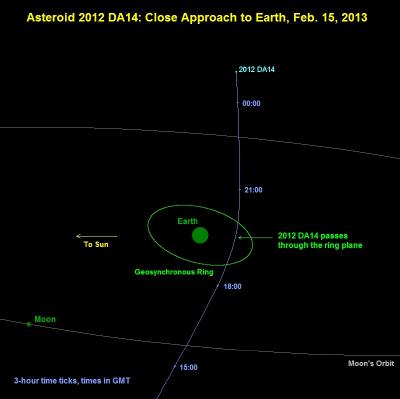
In this case, this is the biggest object1 to get this close to the earth2, since we started doing regular sky surveys in the 1990s3 looking for objects like this. As much as I’ve just knocked down how exciting that is, this is pretty cool. It is going to be close enough to be almost visible.

  1. Smaller objects have been closer. Meteors streak through our atmosphere every day.
  2. This asteroid is coming in closer than our farthest satellites. In fact, it is closer than a big set of our satellites: the geostationary satellites. Other asteroids you’ve heard of approaching us have been just barely within the orbit of the Moon. Time for a picture or two:

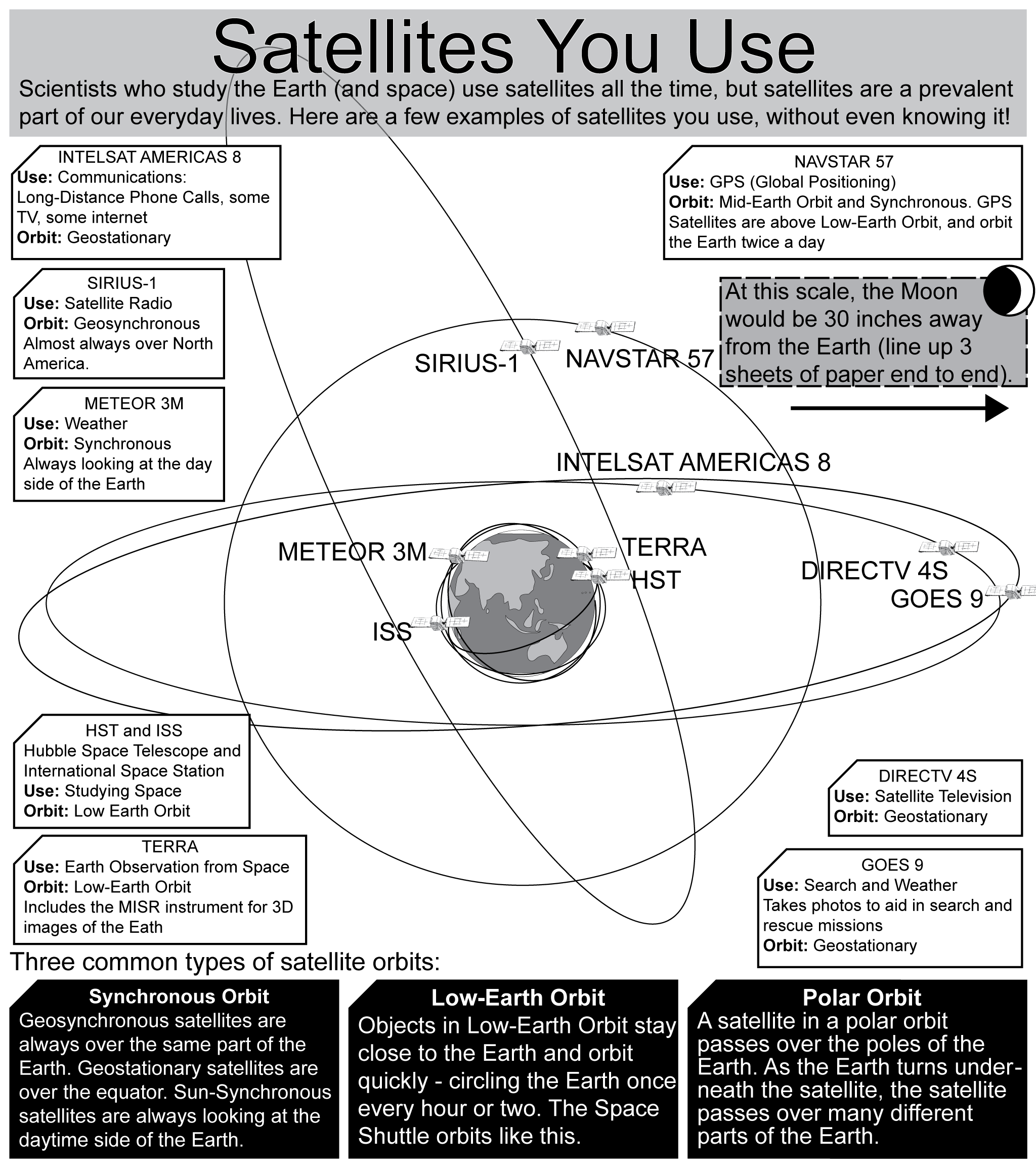
    Satellites-You-Use
    This is a small selection of satellites you use. There are hundreds of satellites in orbit around the Earth, though most of them fall into one of these illustrated orbits. I created the image above, the satellite drawings are not to scale, but the orbits, Earth, and Moon are. Jonas Goodwin drew the satellites for me. Click to make it big enough to read.

2012da14_s

  1. In the picture just above, the smaller green ring is the same as the larger grey ring (with the DirecTV and GOES satellite) in the “Satellites You Use” diagram above. This asteroid-orbit diagram is from NASA. Click to link over to their website and description.

3. Lucky for you and me, there are people out there looking for asteroids that are going to get close to the Earth. NASA’s Near Earth Object (NEO) program has got your back! Of course, they need more telescope time and more funding to do a complete survey, but they sure are finding a lot of these babies. I, for one, am happy they’re doing their jobs.

Reasonably-sized

2012 DA14 (also known as “this asteroid”) is about 50 meters wide. That’s half an (American) football field, or ten yards longer than the retired Space Shuttle.

According to NASA estimates, this size of asteroid gets close to the Earth about every 40 years, but only impacts the Earth once every 1200 years.

Seeing it

If you want to see this asteroid, your best bet will be to check out NASA’s Goldstone Radar results after February 20th, or search the internet for images obtained by some of the most talented amateur astronomers such as Thierry LeGault, who specializes in taking pictures of fast-moving dim objects.

Unfortunately, here in Seattle it won’t be above the horizon until daytime, so we’re out of luck.

Might 2012 DA14 Hit The Earth?

No.

“2012 DA14 will definitely not hit Earth,” emphasizes Don Yeomans of NASA’s Near Earth Object Program at JPL in the NASA press release of January 28, 2013. “The orbit of the asteroid is known well enough to rule out an impact.”

So, no.

Similar Events

This is the same size meteor that impacted the Earth creating Meteor Crater in Arizona (50,000 years ago), and the same size as the object that exploded just above the Earth’s surface during the Tunguska Event in Siberia in 1908. From these two events we know that a meteorite of this size is destructive, but not catastrophic to the whole world. Their disastrous effect was limited to a few hundred square miles. With notice, we can plan for evacuation of an area that large.


Want More?

NASA Press Release (well written)

Near Earth Object Program Homepage

My old post: Satellites You Use (to give you a sense of scale of where this asteroid is, where our satellites are, and where the Moon is, in relation to the Earth)

Meteor Crater

Tunguska Event (This is awe-striking, read about it)

~ A l i c e !

Mars Rover Rocker-Bogie Differential

Today’s is a guest post, brought to you by my father, engineer, physicist, computer programmer, and Lego, Mars, and animation enthusiast: Keith Enevoldsen. If you’re not caught by the title of the post, scroll down and look at the pictures… then scroll back up and read the rest of the article because it is fascinating stuff! (P.S. He has a website full of awesome science stuff too!)
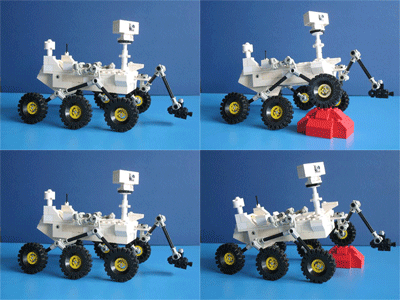
A teaser for what you have to look forward to…

~ A l i c e !

The Rocker-Bogie

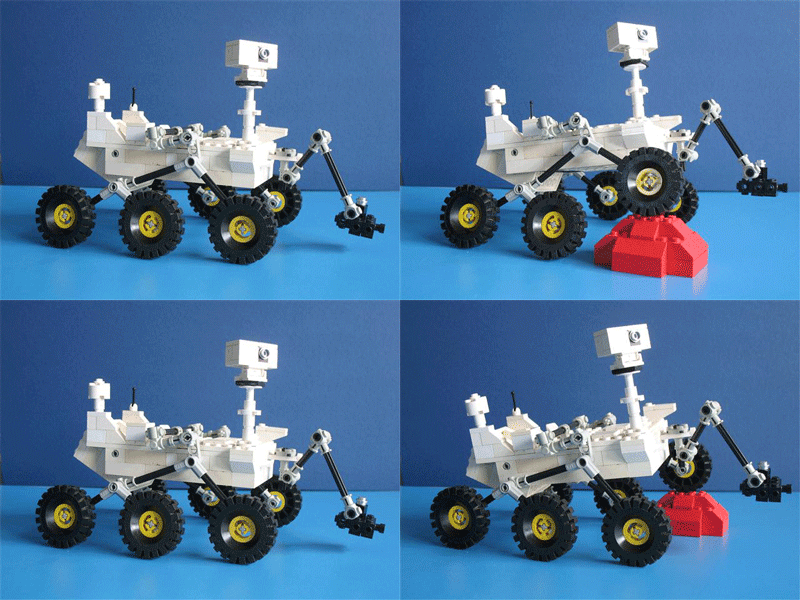
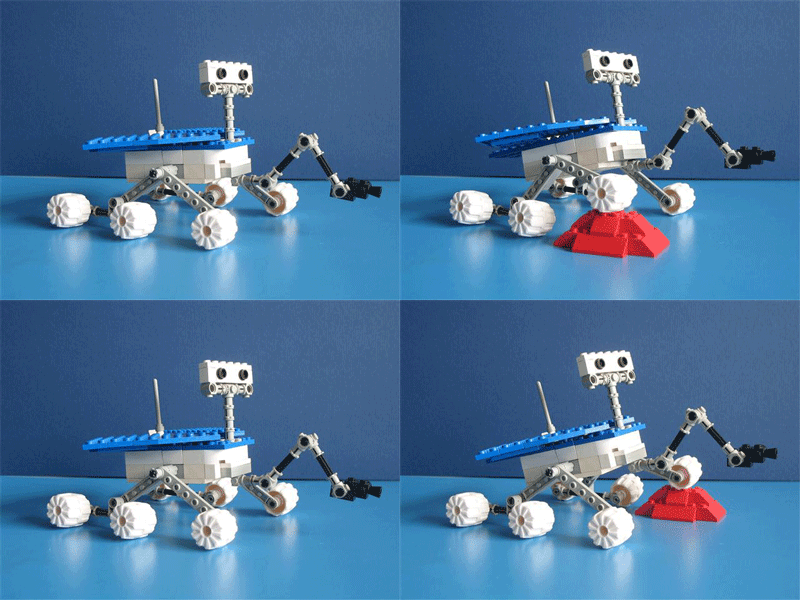
All the Mars rovers have six wheels and use a rocker-bogie suspension system to drive smoothly over bumpy ground. The rocker-bogies are easy to see in pictures of the rovers (see pictures below). There is one rocker-bogie assembly on each side of the rover. The rocker is the larger link that connects to the rover body (the chassis) in the middle (at the rocker pivot), has a wheel on the front, and connects to the bogie in the back. The bogie is the smaller link that connects to the rocker in the middle (at the bogie pivot), and has wheels at both ends. Each of the six wheels has its own motor.

The Differential

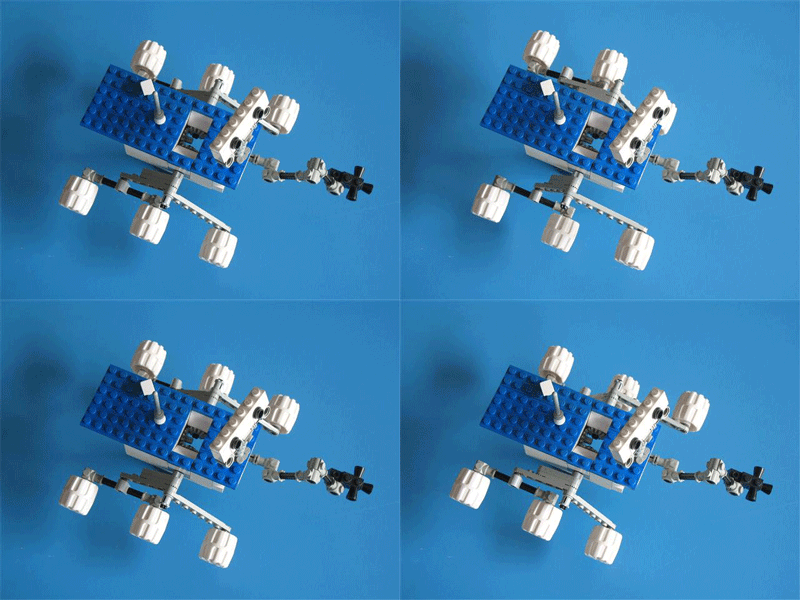
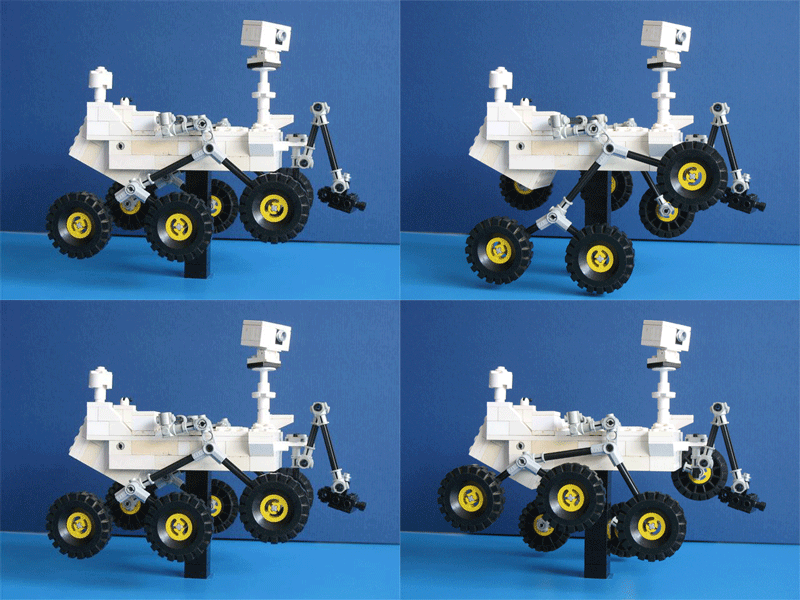
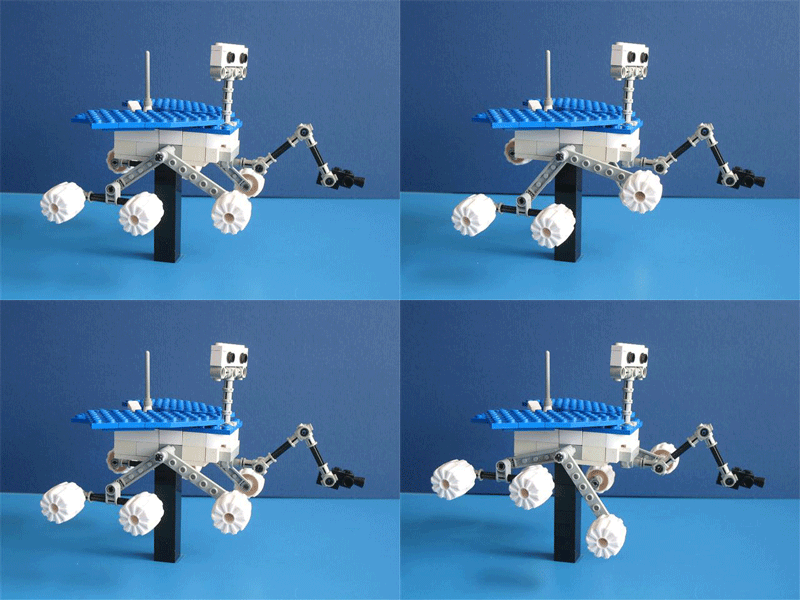
It is not so easy to see and understand how the rocker-bogie mechanism keeps the body level. What prevents the rover body from tipping all the way forward or backward around the rocker pivots? If you build a model rover and you attach the rockers to the body with an axle or two pivot pins, the body will tip forward or backward until it hits the ground! In the real rovers the two rockers connect to each other and to the body through a mechanism called a differential. The differential is what keeps the body level. Relative to the body, when one rocker goes up, the other rocker goes down. Relative to the ground, the body angle is halfway between the angles of the two rockers. That’s cool, but how does it work? The different rovers use different mechanisms: a differential gearbox or a differential bar.

Differential Gearbox

The Mars Pathfinder (Sojourner) and Mars Exploration Rovers (Spirit and Opportunity) use differential gearboxes.
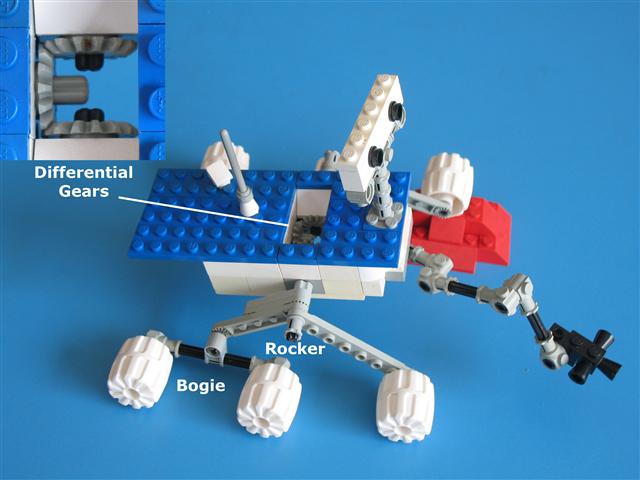
MER’s Differential
Image and Model © 2012 Keith Enevoldsen

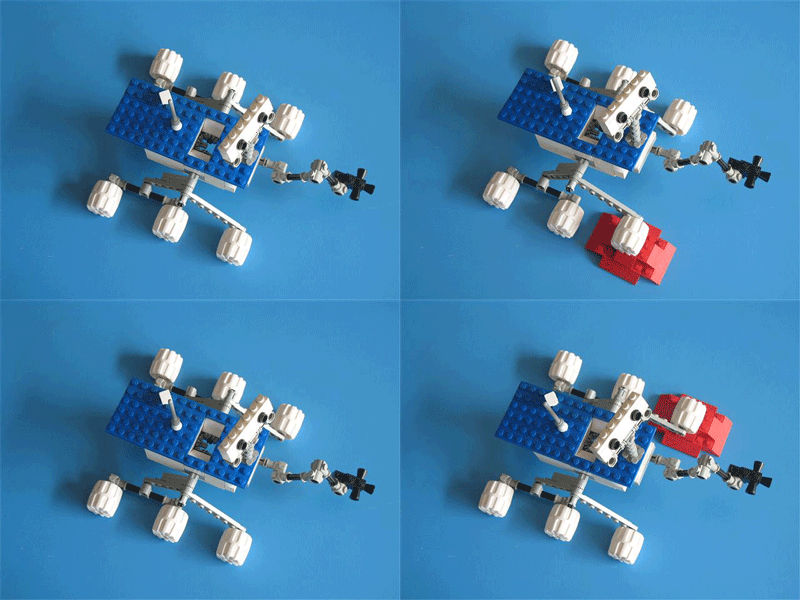
The gearbox is inside the rover body, so you never see it. No wonder it is hard to figure out how it works! In my Lego model rover shown here, I use a simple three-gear differential. Two gears connect to the two rockers and the third (middle) gear connects to the body. If you hold the model rover body steady in midair and tilt one rocker up, the gears will turn and the other rocker will tilt down (see the animations below).

The real Mars Exploration Rovers use more complicated gearboxes with more gears but they are functionally equivalent to this simple three-gear differential.

Differential Bar

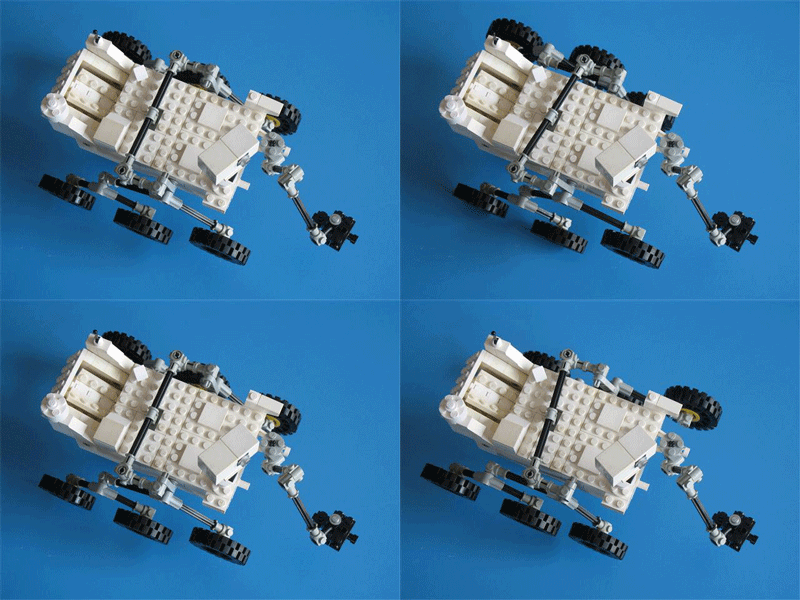
The Mars Science Laboratory (Curiosity) uses a differential bar. This is the big black bar that you see across the deck of the rover.
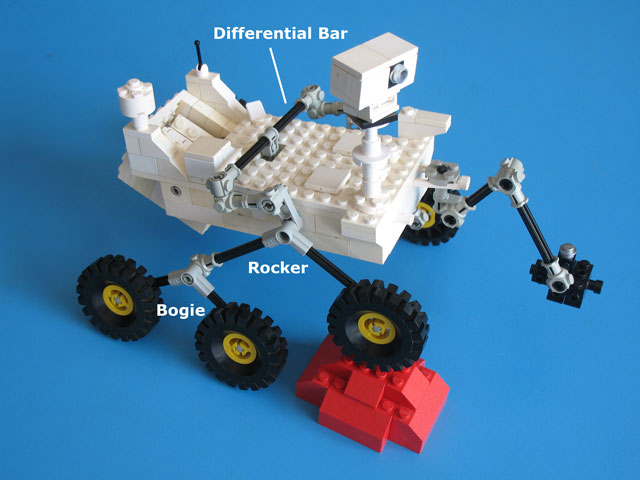
Curiosity’s Differential
Image and Model © 2012 Keith Enevoldsen

The middle of the bar is connected to the body with a pivot and the two ends are connected to the two rockers through some short links. If you hold the model rover body steady in midair and tilt one rocker up, one end of the bar will go back, the other end will go forward, and the other rocker will tilt down (see the animations below).

The Mars Exploration Rovers did not use a differential bar because it would interfere with the solar panels. But the Mars Science Laboratory does not have that problem because it is nuclear powered and has no solar panels.

Animations

Animations of a Rocker-Bogie with a Differential Gearbox

Mars Exploration Rover (Spirit and Opportunity)

Body held steady in midair:
 

Wheels on the ground:
 

Animations of a Rocker-Bogie with a Differential Bar

Mars Science Laboratory (Curiosity)
Body held steady in midair:

Wheels on the ground:
 

No Springs

The rocker-bogie mechanism has no springs. The absence of springs helps it keep all six wheels on the ground with approximately equal pressure on each wheel. This is a good thing when you are driving on sand!

Want More? (and References)

“Mars Exploration Rover Mobility Assembly Design, Test and Performance”, JPL

“A Capable and Temporary Test Facility on a Shoestring Budget: The MSL Touchdown Test Facility”, JPL


I hope you enjoyed my dad’s post. He sure had fun figuring out those mechanisms and creating them out of Lego!

I’ll be posting a Curiosity-landing-“watching” event here very soon.

~ A l i c e !