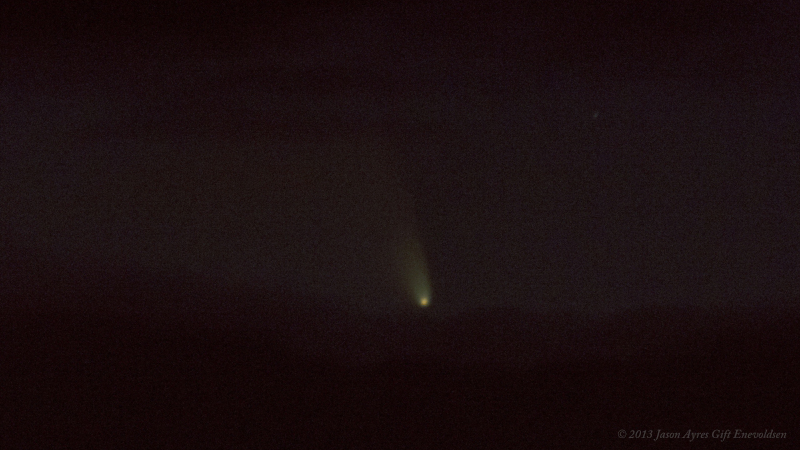
Photo of Comet PanSTARRS from West Seattle: Through the Clouds

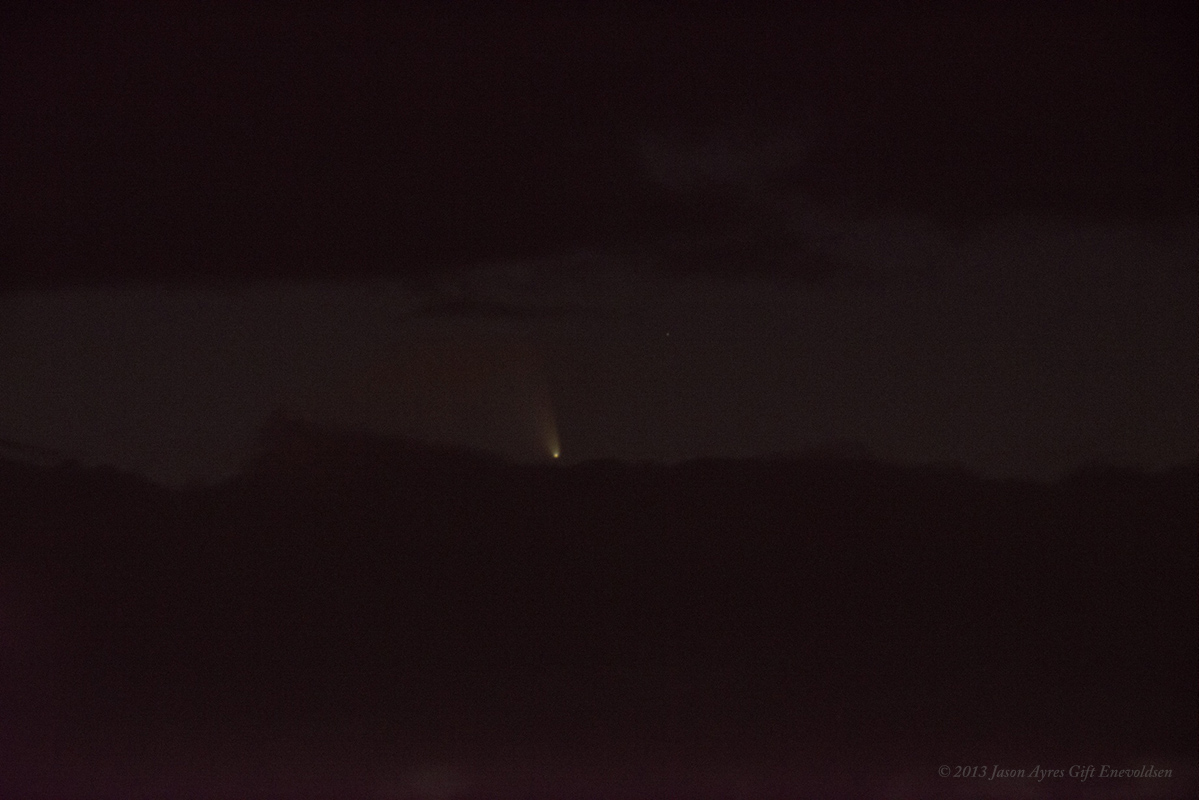
I will add more later, but here is the first photo my husband got of Comet PanSTARRS from Lincoln Park here in West Seattle. It was visible between the clouds for about three minutes.


Update, new image!

panstarrs-3-800x450-w

Comet PanSTARRS from West Seattle at 8:32pm on Friday 3/15/2013 (c) my husband Jason Ayres Gift Enevoldsen. E-mail him at jason dot enevoldsen at gmail dot com for reuse permission. Click for bigger. (This is the second, updated image. Below is the first)


This is the original image I posted this evening:

Comet PanSTARRS from West Seattle at 8:32pm on Friday 3/15/2013 (c) my husband Jason Ayres Gift Enevoldsen. E-mail him at jason dot enevoldsen at gmail dot com for reuse permission.

Comet PanSTARRS from West Seattle at 8:32pm on Friday 3/15/2013 (c) my husband Jason Ayres Gift Enevoldsen. E-mail him at jason dot enevoldsen at gmail dot com for reuse permission. Click for bigger

~ A l i c e !

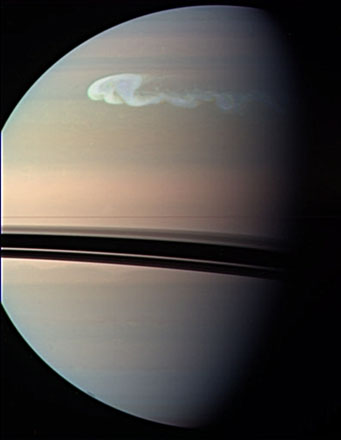
Storm on Saturn – with a Tail

Storm on Saturn by Cassini from NASA/JPL/Space Science Institute.

There is a gigantic beautiful storm on Saturn, noticeable through amateur telescopes, but even more spectacular through Cassini’s instruments.

Quickies:

  • It’s new – discovered in early December 2010.
  • It’s changing a lot from picture to picture
  • It’s comparably sized to the Great Red Spot on Jupiter
  • It is an atmospheric storm
  • It was discovered by amateurs
  • You can see Saturn early in the morning right now.

Discovery and Info

There’s not that much to be said for this storm at the moment, though it is so cool I’m surprised to find so few articles about it. It was discovered by amateurs, and Cassini just happened to be in the right place to take a picture on December 24 (2010). That doesn’t leave time for analysis, what with holiday breaks, and the American Astronomical Society Conference starting today in Seattle.

Dr. Carolyn Porco of the Cassini imaging team did mention that Saturn has quite the exciting atmosphere, just as Jupiter does, but we see less of the excitement due to Saturn’s haze. (Well, she said “complex” and I said “exciting.”)

At this point it is reasonable to compare this storm to others in the Solar System – hurricanes on Earth, Jupiter’s Great Red Spot, and the storm on Neptune. I can’t say which ones are actually related types of storms, but they’re definitely all atmospheric events for their respective planets. Gases have this habit of not staying in one place, they get stirred up, mixed up, blown around. They rise and sink, move as large masses, or blend into the surrounding materials.

The storm is still developing – and to help you get a handle on visualizing how big this storm on Saturn is, I cobbled together a terrible-looking scaled image of Jupiter and Saturn, including Jupiter’s Red Spot and Saturn’s new storm. This is generally to scale, I did measure rather than just eyeballing, but I didn’t have the computer scale it for me or anything that sophisticated. Sorry, I know it is ugly, but I thought it would be useful.
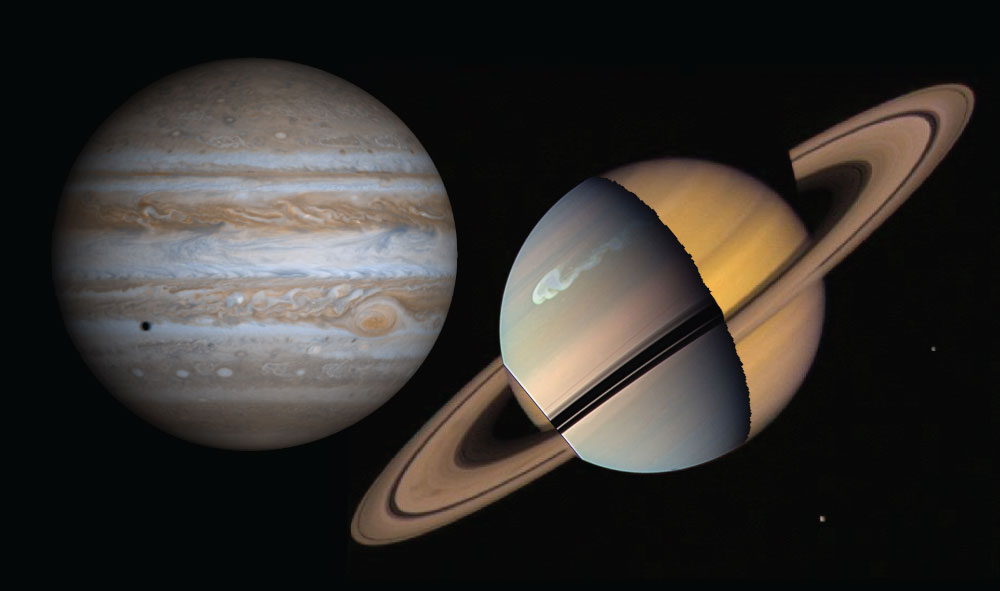
Ugly Scaled Jupiter and Saturn and their Storms - Distance NOT to scale - Images from Cassini and Voyager, compositing by Alice Enevoldsen

As you can see, the storms are comparably sized, with Saturn’s being a little smaller and longer.

Tie It In

Both Jupiter and Saturn are easily visible in tonight’s sky –  Jupiter after sunset, high in the West, and Saturn a bit before sunrise, midway up in the East. So, depending on if you’re an early riser or a night owl  (who stays up past 5pm here in the winter …) – you can see at least one of the gas giants tonight.  Yes, even from Seattle! Take your chances when there’s a little gap in the clouds and look!

Want More?

Raw Cassini CICLOPS Images

Sky and Telescope – December 27, 2010

Wired – December 27, 2010

Universe Today – December 27, 2010

~ A l i c e !
International Observe the Moon Night – 2010

Tonight was the first annual International Observe the Moon Night. What? You didn’t know? Oh, sorry Seattle, I kinda didn’t want to get your hopes too high … the forecast wasn’t that great. I apologize profusely.

It is, of course, raining.

We took a photo anyway (and submitted it for judging! I hope we win a side award for “funniest” picture of the Moon or something.):

(c) Jason Enevoldsen. This is the ACTUAL location of the Moon, not just a random chunk of cloudy sky.

You can submit your photos too. In fact, the photos don’t have to be from exactly tonight – anytime between August 24th and September 23rd will do. Maybe you took one a couple weeks ago, or maybe you can snap one in between the clouds during the first half of this week.

Anyway, I love these international observing events like the Great World Wide Star Count, and I hope there are more. A lot of them take place over a week or a month, which works better for us here in the Pacific Northwest, we can just choose the cloud-free night and go observe them. Meanwhile, when it is raining like tonight, stargaze through your computer and live vicariously through the good weather of others.

And don’t miss my fall equinox sunset viewing. I’ll be there if it is cloudy, but not if it is REALLY raining.

~ A l i c e !

Earth-Centered Events

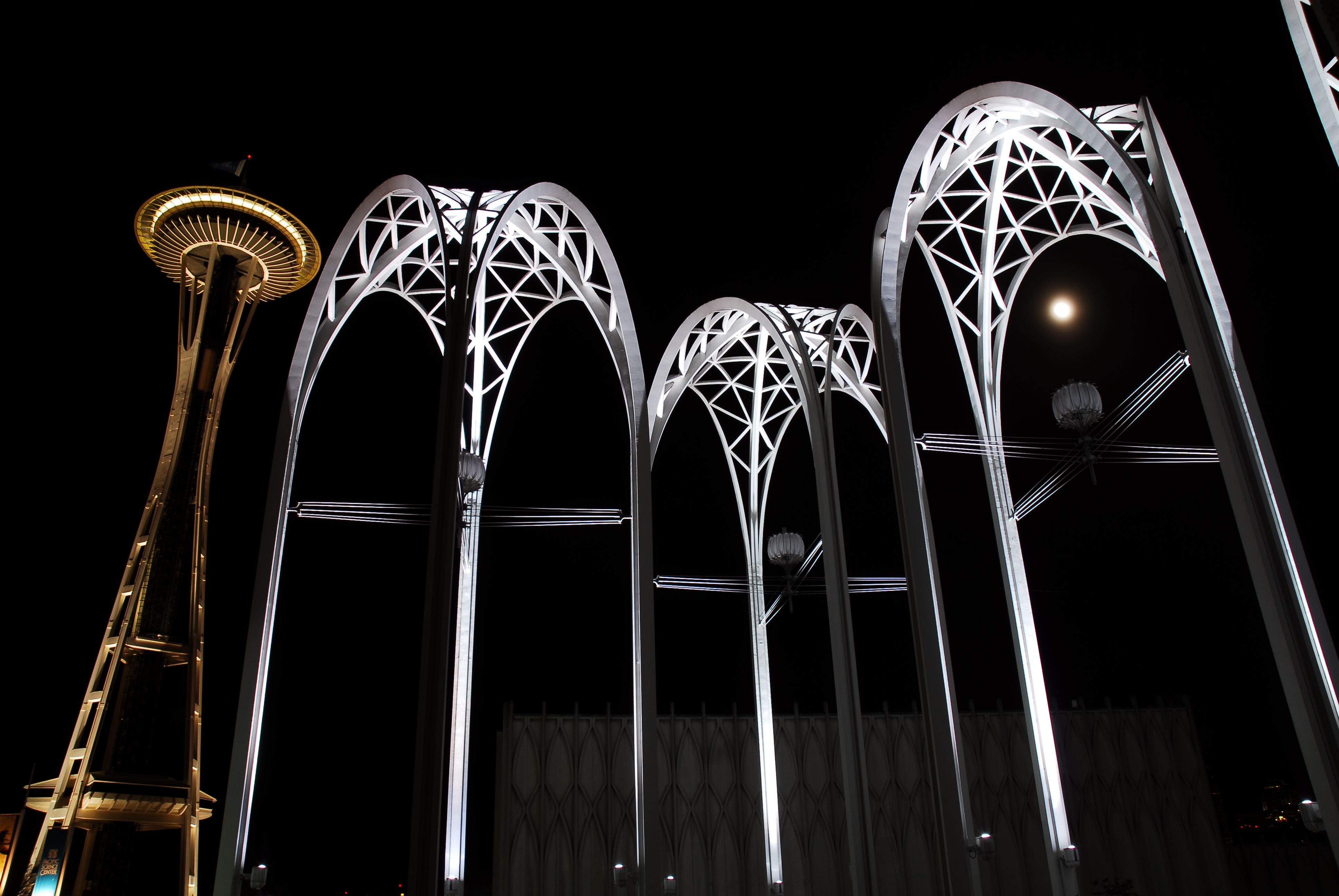
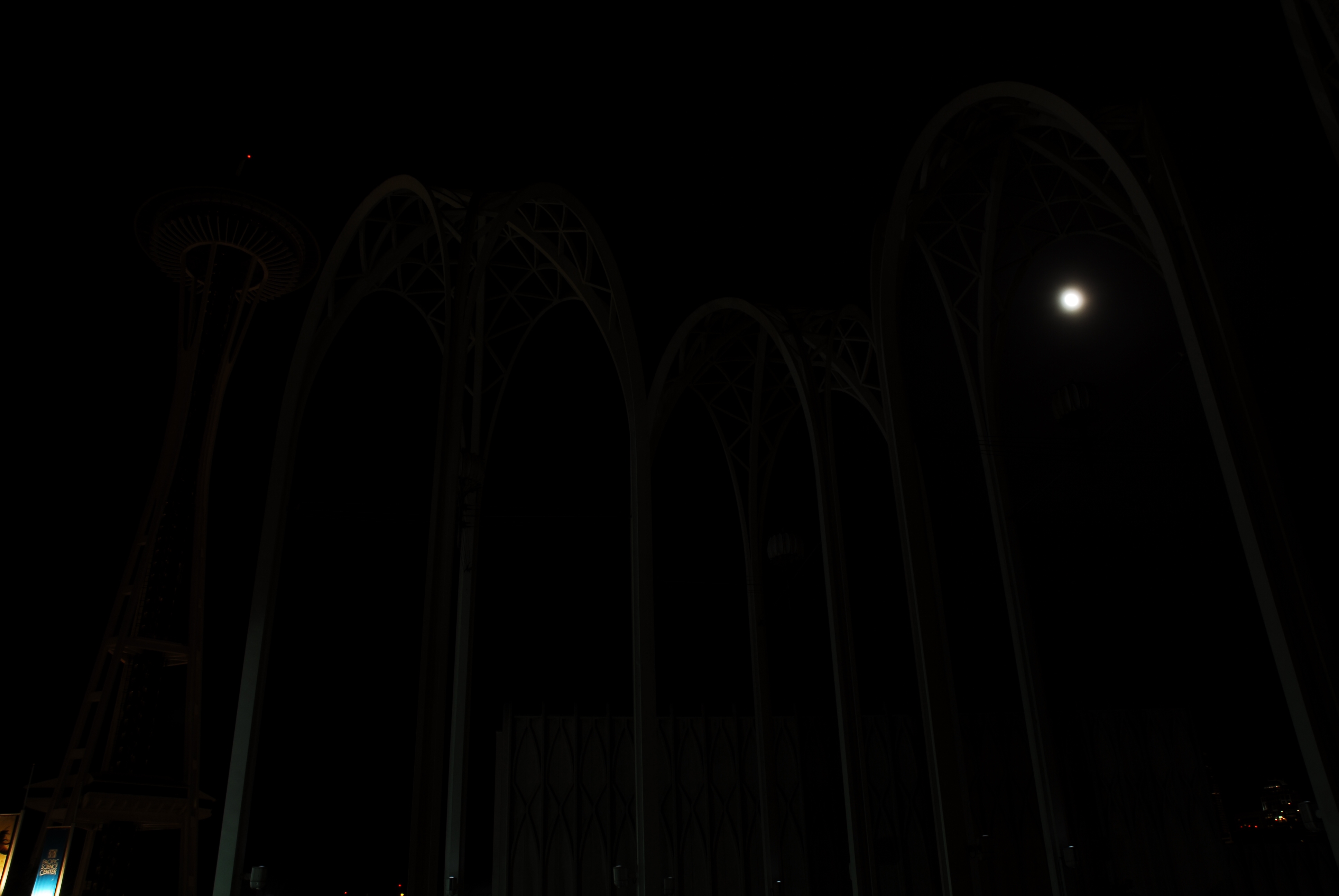
Today is “just” some photos for you of the Earth-Centered events that have happened over the last week. First, Earth Hour just finished here in Seattle – so a pretty before-and-after of Pacific Science Center and the Space Needle. (Click to get the full-resolution versions).

Pacific Science Center before Earth Hour 2010 Photo: (C) Jason Ayres Gift Enevoldsen

Pacific Science Center during Earth Hour 2010 Photo: (C) Jason Ayres Gift Enevoldsen

Equinox Sunset

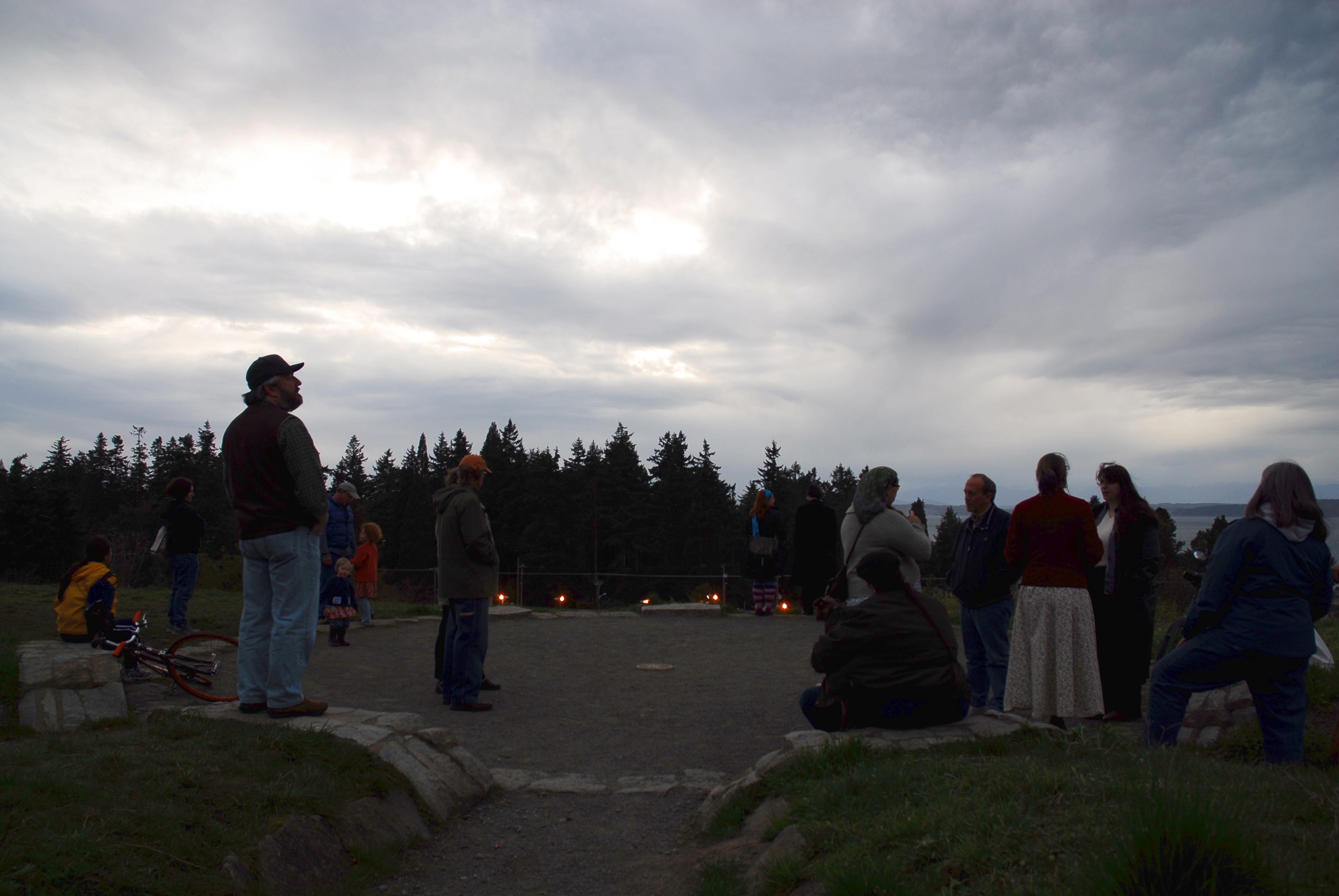
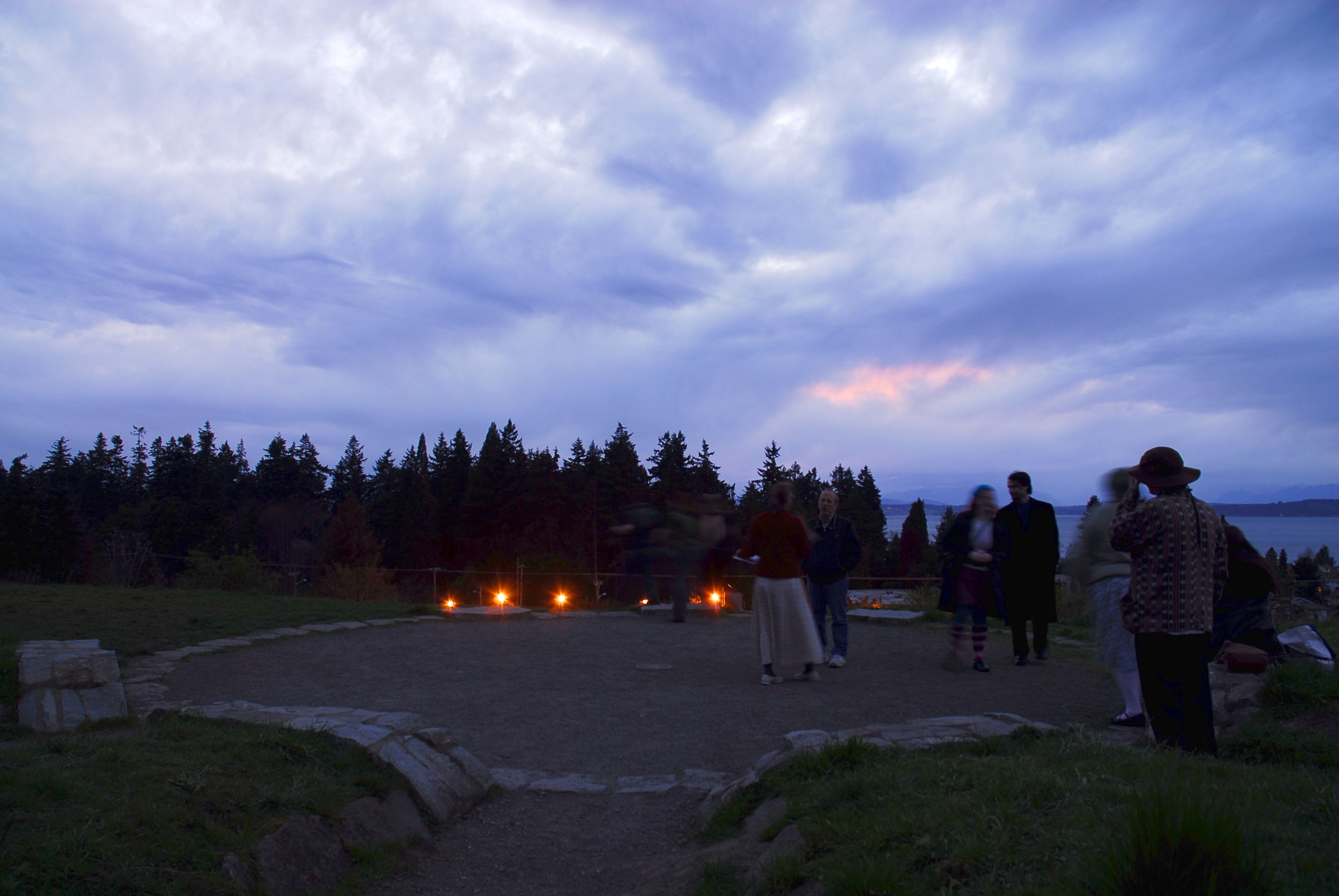
I haven’t had a chance to tell you how fun the West Seattle 2010 Spring Equinox Sunset Viewing at Solstice Park was. Unfortunately, we didn’t see the Sun … remember, this is Seattle. If you schedule a sun-dependent event, it will be cloudy. Anyway, we had 30-40 folks show up, and had a good time anyway. Greg posted a nice piece over at the Seattle Astronomy Examiner about it. (Click pictures to see high-res)

STILL waiting for the Sun. Photo Credit: Jason Ayres Gift Enevoldsen

Waiting for the Sun - Photo Credit: Jason Ayres Gift Enevoldsen

STILL waiting for the Sun to set - Photo Credit: Jason Ayres Gift Enevoldsen

Talking with the crowd while we wait. Photo Credit - Greg Scheiderer

~ A l i c e !

Smithsonian Photography Contest

click! Photography Changes Everything is an online exhibit put on by the Smithsonian, and they’re looking to celebrate the International Year of Astronomy with us!

If you like photography and you like writing you might like to submit a photo and a short story.

This month’s focus: Seeing Other Worlds

Submit a photo showing how photography influences our ability to see ‘unseen’ or unfamiliar worlds to become part of this month’s focus, Seeing Other Worlds.

Some things to consider: How can photography help us see things that would otherwise go unnoticed in our everyday lives? How does micro- and macro- photography (e.g. from microscopic bacteria to galaxies far beyond the earth) change our perception of the world and our place in it? How do new imaging technologies and software (e.g. MRI’s, CAT scans, Google Earth, etc.) change what we’re able or want to see? How does photography shape awareness and shape our perception of other communities, cultures and lifestyles?

I can’t find a deadline, and I’ll bet that’s because the exhibit goes on all year, but with different themes at different times.

It’s an interesting exhibit – take a look around.

~ A l i c e !

P.S. I promise to have an astronomy post for you soon – I’m working on putting together an overview of the new sky.

Exoplanets Photographed!

Quickie:

They got a photo of a planet around another star, and they’ve confirmed that it is actually a planet. (Actually, there are two discoveries, one planet around Fomalhaut, and three planets around, get this, HR8799.)

Hubble Team

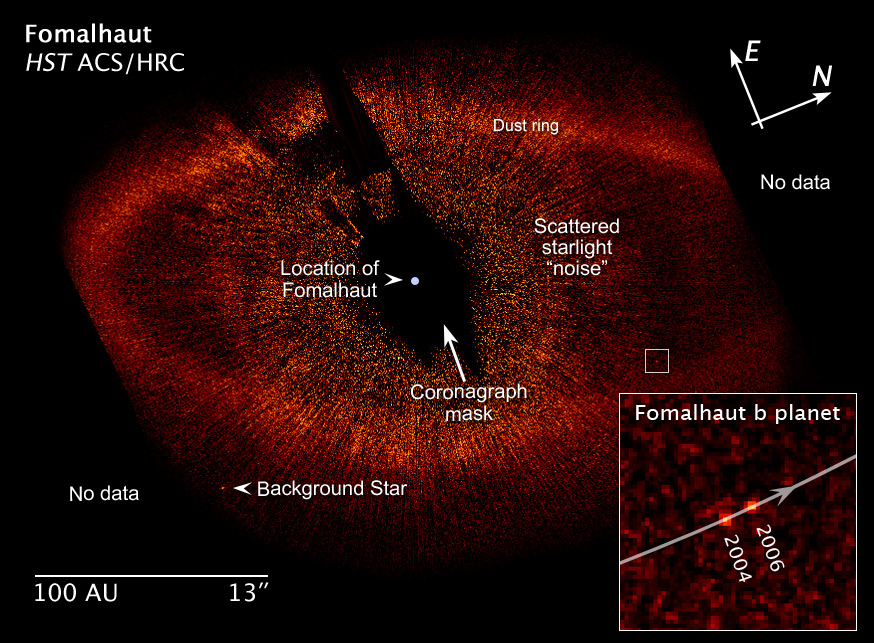
Planet around Fomalhaut b Credit: Hubble Team

An Actual Photo!

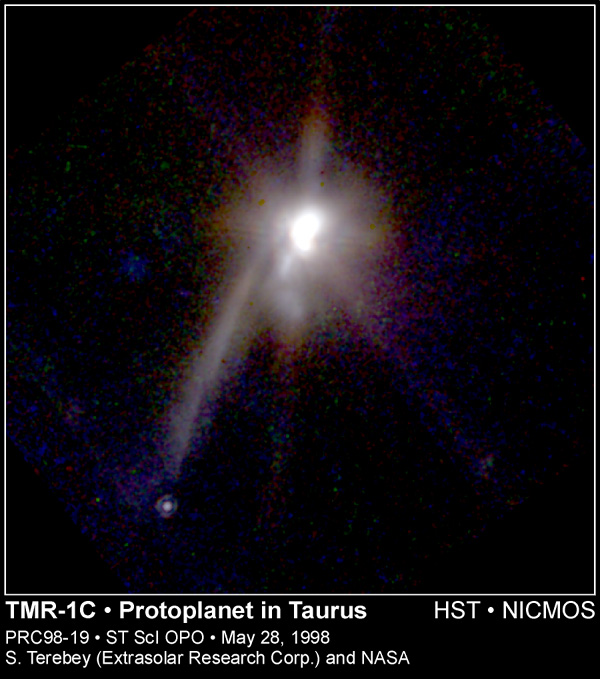
Eee gad! We finally did it. Although the current count of detected exoplanets is up to about 322, we don’t have photographs of any of those. Sadly. Over the years, there’ve been a number of false alerts, but none panned out. Most notable in my memory was May of 1998, about a month after I was hired here – they thought they found a protoplanet ejected from around a star in Taurus. Eventually they decided it was just a star in the background.

Hubble

Not a Planet in Taurus Credit: Hubble

Fomalhaut? Really?

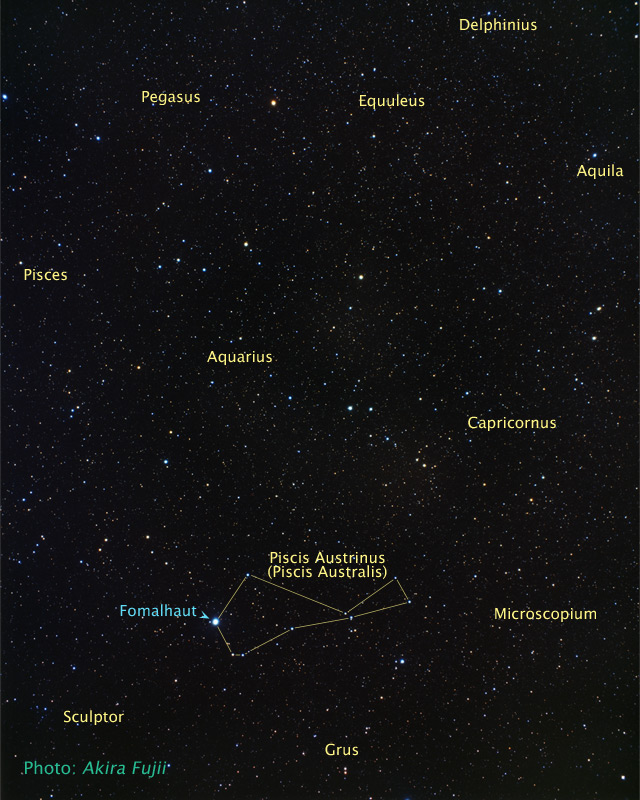
Okay, so one of the other things I find awesome about this is that the planet is around Fomalhaut (they pronounce it FOAM-al-hot). Fomalhaut is a first-magnitude star. That’s darn bright. I was expecting the first image of a planet to be around some dim little nothing star in a nothing constellation. You can see Fomalhaut tonight – look low in the South, for a bright star – and that’s where it is.

What Makes This One a Planet?

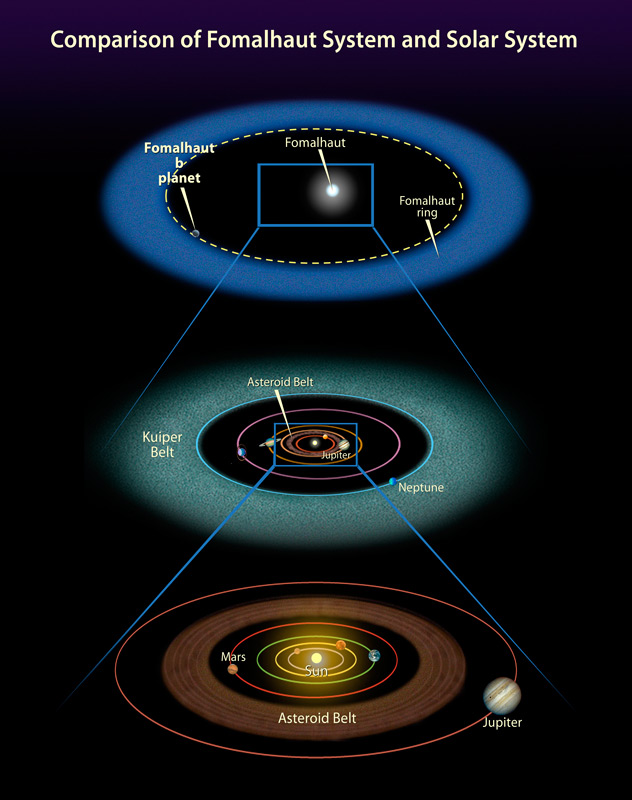
Mostly we’re finding big, high-mass planets around other stars. The problem with candidates we’re photographing is that they’re even bigger – big enough and bright enough that we can see them. Big enough and bright enough, that they generally turn out to be dim stars, not planets. This planet is in a ginormous dust ring (see the diagram). If the planet had a large mass, you’d see it mess up the dust ring – the dust would be attracted to the planet, there would be tracks and all sorts of fun physics. There isn’t. The dust ring is undisturbed. That puts an upper limit on the mass of this planet, so we can be sure it is small enough to qualify as a planet (less than 13 times the mass of Jupiter).

This planet is between the mass of Uranus and three times the mass of Jupiter.

Hubble Team

Diagram of the Fomalhaut b system, compared to our own Credit: Hubble Team

The “Marois Trio”

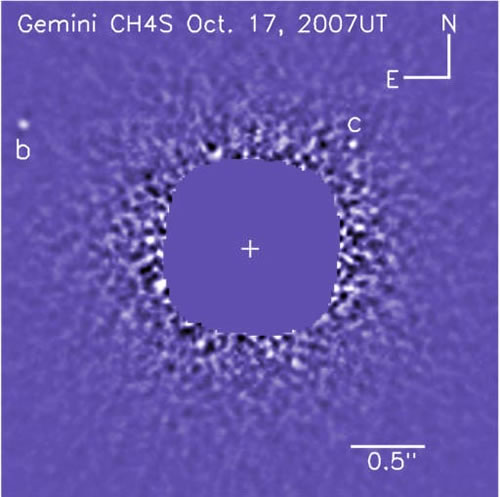
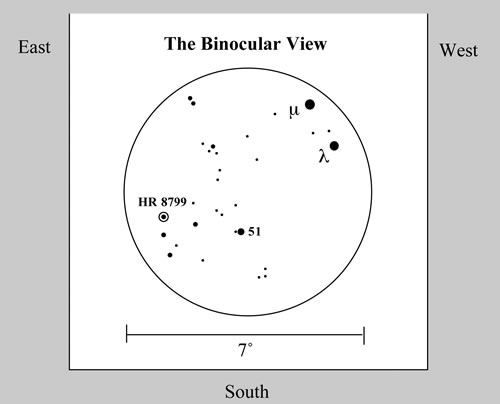
Parallel to Hubble’s discovery, Christian Marois (et al) of the Gemini Observatory also just released a paper detailing their photograph of three planets going around the star HR8799 in Pegasus. This one is a little harder to see (you need binoculars), but the fact that there are three planets all orbiting the star, points to the fact that this is also, pretty definitely, actual planets and not stars.

Two of the three planets around HR8799

Two of the three planets around HR8799 Credit: Gemini Observatory

Where do I look?

Hubble Team

Where is Fomalhaut? Credit: Hubble Team

Gemini Observatory

Where is HR8799? Credit: Gemini Observatory

Where’d I Get My Info?

Hubble Release

Gemini Observatory Release

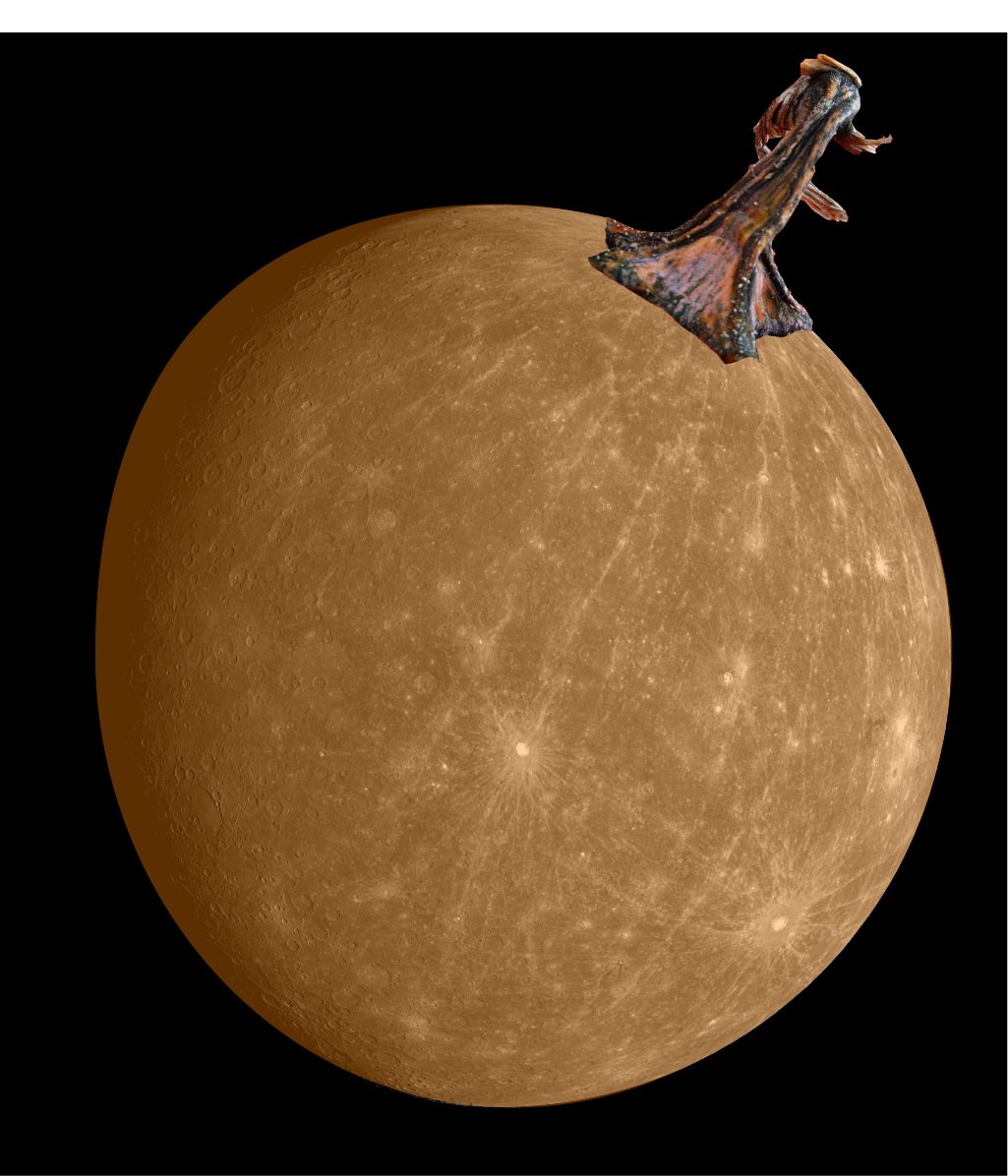
NEW Images from Mercury!!

The Key Stuff:

Woo hoo! New images of Mercury!
The way I’d introduce this and interpret it in the planetarium is just to ask questions about it, and collect visitor hypotheses. That’s all the scientists have right now: questions. They also have some hypotheses about bits of it, but they haven’t had time to think of ideas for everything, and even less to test or analyze those ideas.

MESSENGER

Mercury Credit: MESSENGER

What’s up with those longitudinal lines?
Why are those rayed craters so bright?
Some of those craters are on the lines, why?
Is that Mercury’s North pole at the top?
What causes lines like that on other planets?

Here’s some background to help you with your analysis.

Rays:

As we know from the Moon, rays often emanate from craters – especially new craters. When the meteor impacts, it sprays up a bunch of regolith (surface rock/dirt) that falls down in a rayed pattern. Go stomp in a puddle. Watch what happens – that’s what I’m talking about.

Bright Craters:

Brighter craters are almost always newer. The rock is newly broken, showing “shiny” un-weathered, un-covered, un-eroded faces to the sunlight which bounces back at us.

North and South:

According to the MESSENGER press release, that is the North Pole of Mercury up there at the top with a crater on it.

Longitudinal Lines:

The MESSENGER team has floated the idea that these are rays from that Northern crater. They know more than me, but that seems to me like a long way for ejecta (the kicked up regolith) to go. A really long way. How hard would that impact have had to be? Would Mercury’s gravity be enough to pull that ejecta back?

Want More?

Emily promises to have a post up soon.
Phil’s already chatting about it.

My Source.

P.S. Phil’s wrong. It’s not a watermelon. It’s a pumpkin, and I have incontrovertable proof:

Mercury is a Pumpkin

Mercury is a Pumpkin

Diffraction Spikes, or Why Stars Have Points

Stars with Points
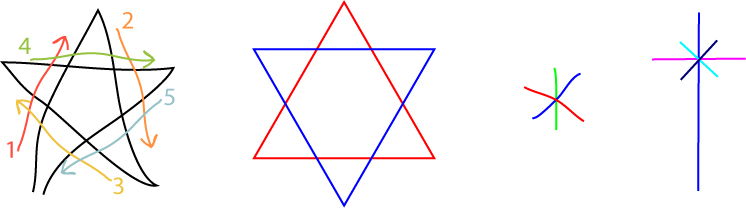
Tis the season to draw stars – many different kinds of stars. The classic star drawn by elementary-schoolers is a 5-pointed star created in a single stroke, leaving a pentagon in the center. Other hand-drawn classics include: a “Star of David”-style star: two overlapping triangles; a simple starburst of three or more overlapping lines; and a “Christmas” star: four overlapping lines with a longer tail.

2007_12_02 Stars
Caption: Hand-Drawn Stars

A real star is a giant sphere of burning gas. Sometimes we draw stars as single dots, but we almost always draw our stars with points. Why? I don’t know. I do know that photographs of stars through telescopes also exhibit “points.”

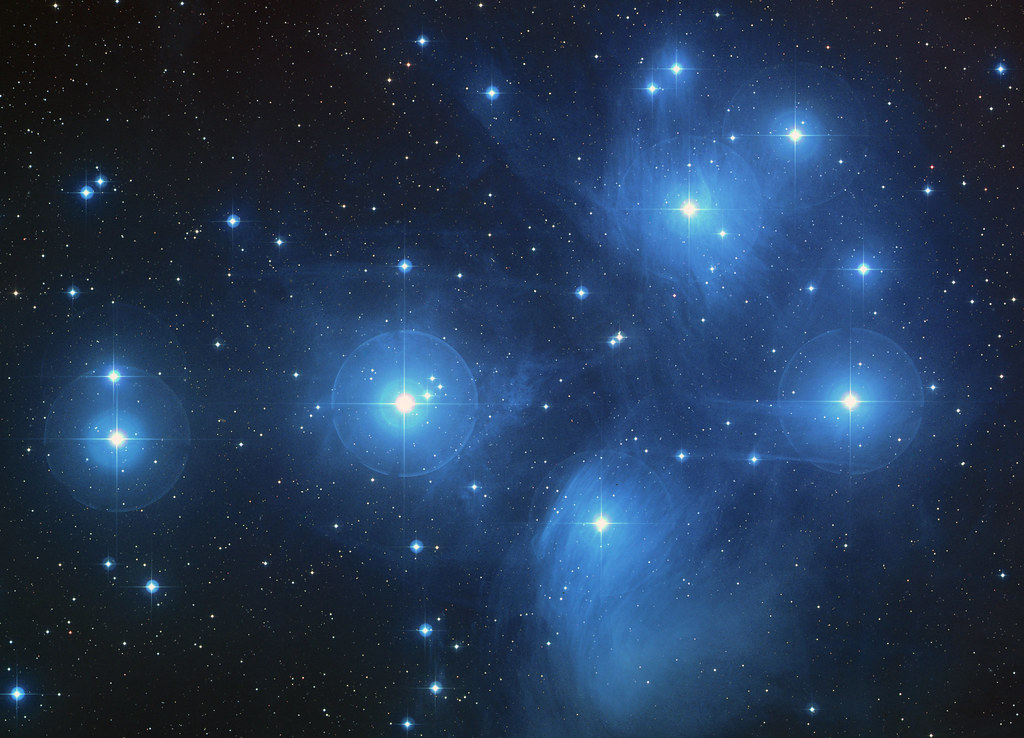
2007_12_2 Diffraction Spikes
Credit: Robert Gendler
Caption: The Pleiades with Diffraction Spikes

Telescopic Spikes:
The spikes on a star in a telescope’s photograph are an artifact from the telescope itself. (An artifact is something in a photograph that looks real, but isn’t actually there).

Most large telescopes have lenses or mirrors inside that are between the main opening of the telescope and the main mirror or lens. These smaller bits have to be held up in the middle of the telescope tube somehow. The easiest way? Struts. Support rods. These small struts then deflect the light from the stars, and cause spikes to show up on the image.

Diffraction spikes show up on point-sources of light (like stars) because the light is coming from one location, not many. You can use this technique to identify stars in a photograph, and differentiate them from nebulae and galaxies. Mostly.

Diffraction:
A subject for another AstroInfo. In short though, light acts like a wave pattern, so when it encounters an edge or corner, it bends. When light goes around a strut or rod, it splits into two wave-like patterns, which bend around the two edges (left and right) and recombine on the other side of the barrier. This results in prettiness. Diffraction gratings (special little pieces of iridescent, clear plastic) are a fun way to observe lights of all kinds. You can buy them in the store this time of year as “holiday glasses” or “Christmas light viewing glasses.” They’ll make every point of light you see have a little snowflake or “Ho Ho Ho” around it. (They’re doing even cooler optical tricks.)

Want More?
Do this experiment at home! – http://www.exploratorium.edu/snacks/diffraction.html
Astronomy Picture of the Day – http://antwrp.gsfc.nasa.gov/apod/ap010415.html
A Short Brittanica Article – http://www.britannica.com/ebc/article-9362735

Wikipedia (decent article, last I checked) – http://en.wikipedia.org/wiki/Diffraction

Comet Holmes (a.k.a. 17P)

Don’t miss Comet Holmes – visible tonight, and possibly all of November. It’s starting to dim down though, so go outside and check it out as soon as a clear night comes along.

This is a photo my husband and I took last night (November 5, 2007) through our little 4-5 inch Celestron NexStar telescope. It’s not very bright, but you can see the off-center bright spot in the middle.

Finding the Comet:
To find it, you’ll look for the constellation Perseus. At about 8pm tonight, look east. You’ll see a fairly bright star above the horizon. That’s Capella. Look above it. Before you get to the next brightish star there will be a smudge. You’ll think it’s a star. It looks like someone just tried to erase a star with a bad eraser that left a mark behind. That’s the comet.

You can see it from the city, with streetlights shining in your eyes – but the darker it is around you, the better it will be. If you have binoculars or a telescope, use them to see more detail.

What the Scientists Think:
A fascinating thing happened to 17P (the name assigned to the comet by scientists): two weeks ago it was invisible to the casual observer. You needed a pretty good telescope to find it. Then, on October 24th it suddenly became a lot brighter. Now, all eyes are on it, without any ‘scopes or binoc’s. Turns out, this is an exploding comet!

You can see in the images (and in binoculars) an expanding cloud around the center of the comet. This is a dust cloud that the comet spit off when it exploded. According to Sky and Telescope, this isn’t the first time this comet has exploded: when Mr. Holmes discovered this comet (115 years ago) it was exploding. Then it exploded again! This is the third time in recorded history that this comet has become so spectacular.

I don’t think it’s so strange for a comet to explode – they’re constantly off-gassing (small explosions of released gas) because of they’re made of ices that heat up and sublime as they approach the Sun. This comet just seems more volatile than most. Keep an eye out though: science may say something different about this comet when we learn more.

Take this chance to look at one of the five most exciting comets of the decade! Go out tonight! Keep looking up.

Want More?
Where to find it: http://www.skyandtelescope.com/observing/home/10862521.html
The best photos: http://www.cometography.com/pcomets/017p.html
Make a comet at home: http://www.noao.edu/education/crecipe.html
(QFC is a local place that sells dry ice)