Upcoming Nova in Corona Borealis

This summer, 2024, we are likely to have a unique opportunity. There is a star in the constellation of Corona Borealis that is going to go nova. This means it is going to get much brighter, and it will look like the constellation has a new star for a short period of time. The star is named T Coronae Borealis or the Blaze Star.
(Hint, don’t confuse it with τ Coronae Borealis).

After that, the star will dim back down to something you need binoculars to see, and then dimmer still so you’ll need a telescope again–as is true right now.

Lots of info about the nova: https://www.nasa.gov/centers-and-facilities/marshall/nasa-global-astronomers-await-rare-nova-explosion/

Published directions for how to find the Corona Borealis in the night sky suggest finding Hercules first—one of the most difficult to find because it is so dim. Let’s do something else.

Corona Borealis itself is much easier to find. I suggest you use star hopping. Here’s how:

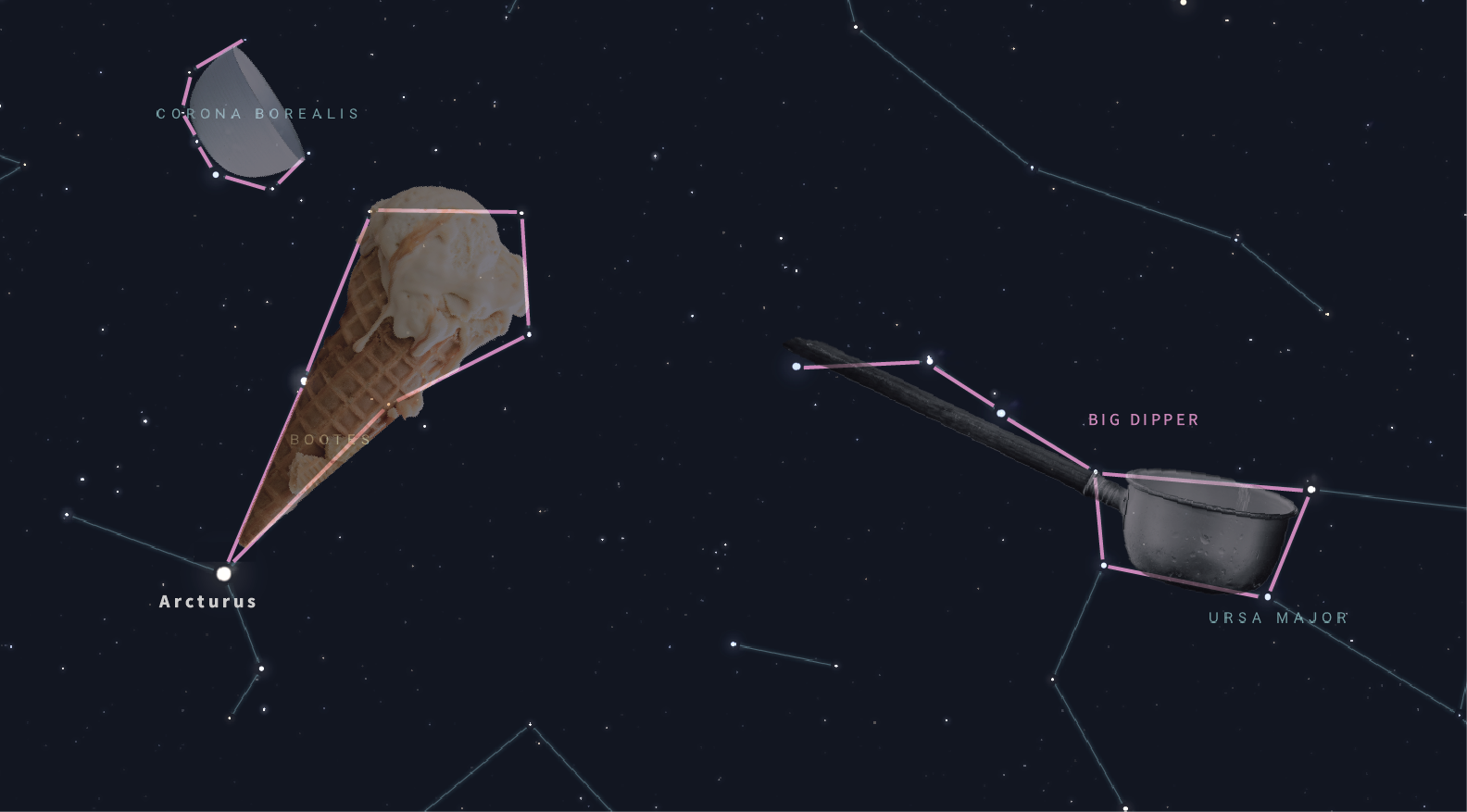
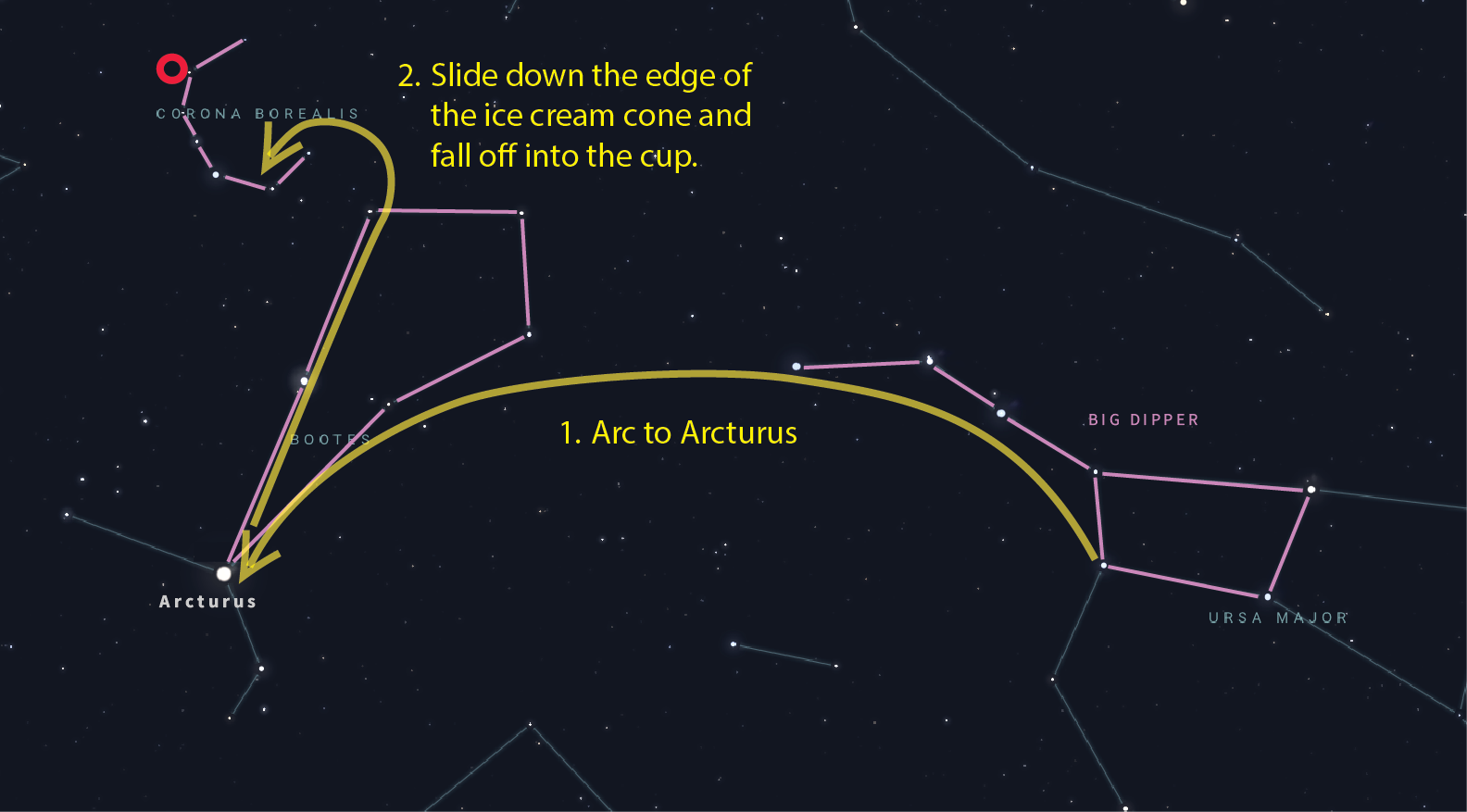
Star hopping directions for finding Corona Borealis. Big Dipper to Bootes to Corona Borealis.
  1. Start by finding the Big Dipper. I know that’s a big ask at first, but it is always in the North, and pretty big. Use a planetarium app on your phone to help find it the first time.
  2. Follow the arc of the handle of the Big Dipper and keep on going past the end in the same arc.
  3. Keep following that arc until you get to a bright star. This is (believe it or not) Arcturus. You have just “arced to Arcturus.”
  4. Arcturus is the base of a medium brightness constellation named Boötes, which is shaped like a mostly-eaten ice cream cone.🍦

    • A diagram of three constellations. The first is Corona Borealis matched with an image of a bowl. The second is Bootes matched with an image of an ice cream cone. The last is the Big Dipper matched with a ladle.
  5. Slide up the left-hand side and just sorta fall/flip off the end into the little cup of stars.
  6. 🎉Ta-Da! That little cup of stars is Corona Borealis!!!
  7. The nova, when it happens, will be off to the left.

Images by Alice Enevoldsen. Starfield from Stellarium. Photos from Unsplash: Ice cream cone – Dana DeVolk. Bowl – Tom Crew. Dipper – David Klein.

– Alice

BREAKING NEWS: Possible Nova in Delphinus

There is a new object, probably a nova, visible right now in the tiny constellation of Delphinus, between the bright stars Altair and Deneb in the Summer Triangle. This so-called “transient” object (because it wasn’t there before and will dim away and be gone at some point) is technically easy to see from Seattle. You’ll need binoculars, the clouds to go away, and some patience with yourself and the finder charts. The main barrier to seeing this object yourself is going to be knowing exactly which star is the nova, and learning to read increasingly-zoomed-in star-finder charts.

The Basics

Current object name: PNV J20233073+2046041

Discoverer: Koichi Itagaki of Yamagata, Japan

Equipment: an approximately 7-inch reflector (and a CCD). This is not quite twice as large as Pacific Science Center’s Orion Starblaster, and yet less than half the size of our Columbia Telescope.

Visibility: This object is currently a little dimmer than magnitude 6 – which is the limit of unaided human vision with perfect, dark skies. This object should be easy to pick out with binoculars, and there is a little evidence that it is getting brighter. See Sky and Telescope and Universe Today for finder charts. The constellation Sagitta is pointing straight at the new object.

Discovery Date and Time: Wednesday 8/14/2013 around 12pm Universal Time (a bit past 5am in Seattle)

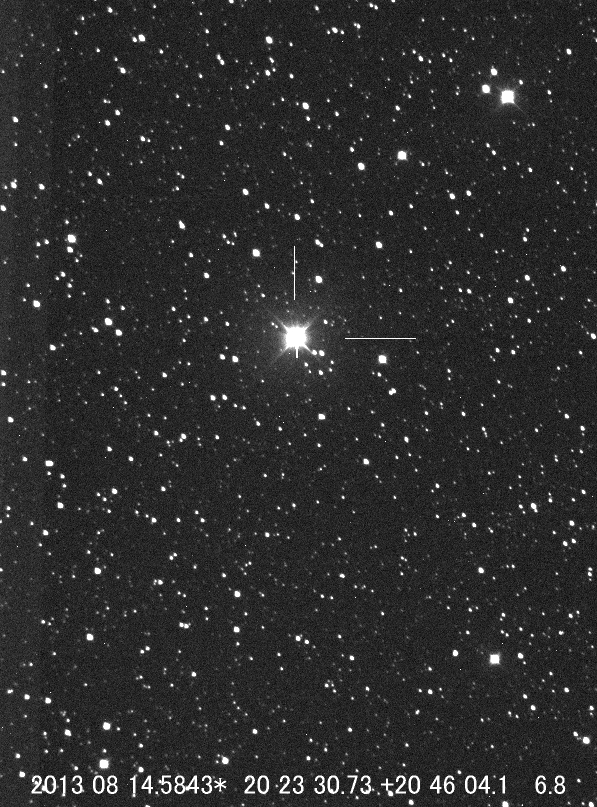
Here is Mr. Itagaki’s discovery photo:

K. Itagaki's image of the Possible Nova in Delphinus

K. Itagaki’s image of the Possible Nova in Delphinus

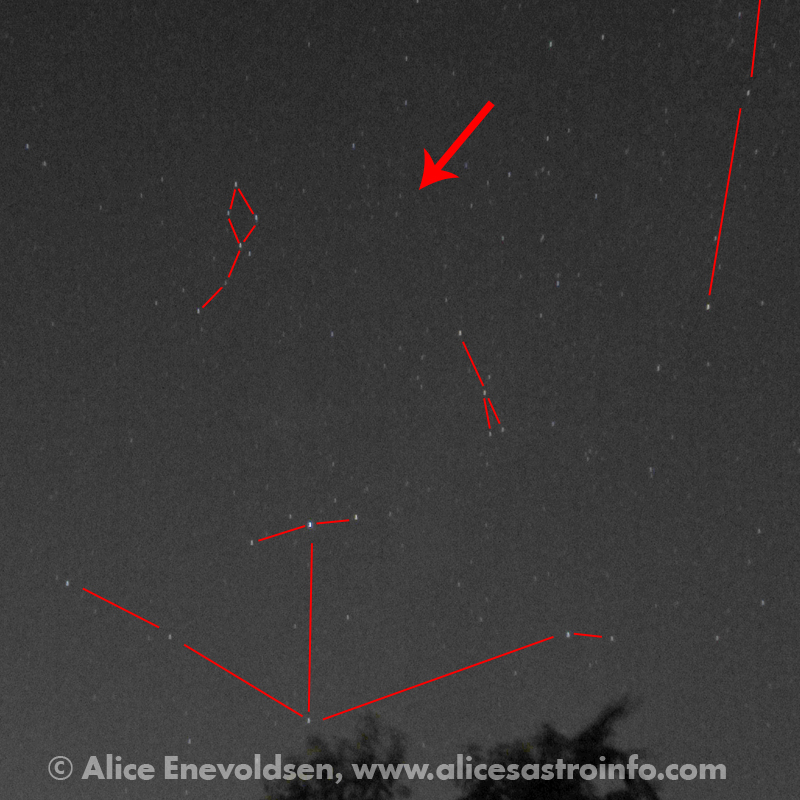
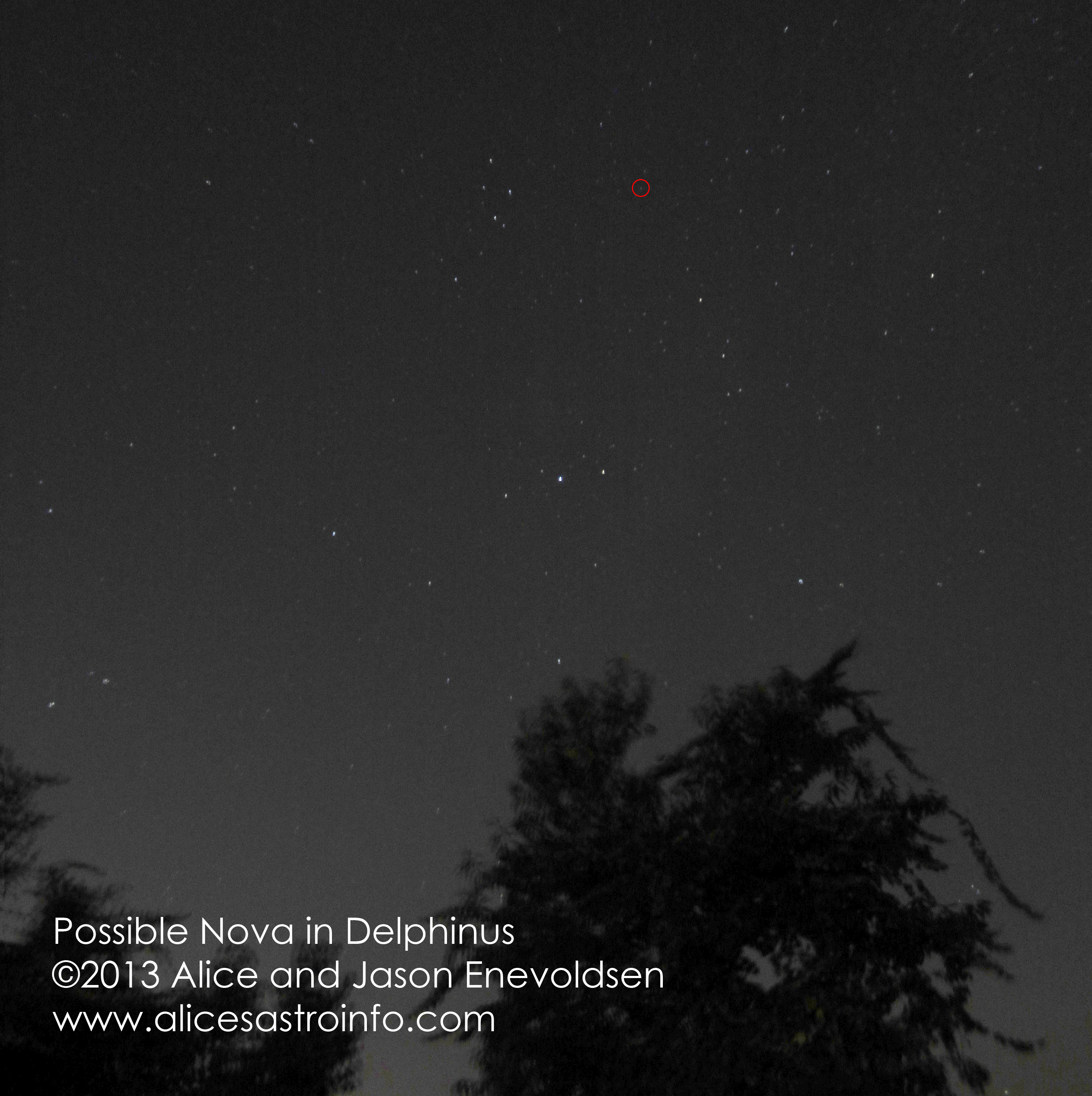
Here is my mostly unprocessed and much larger photo pointing in the right direction. These two photos are at VERY different scales, and the nova is not necessarily visible in my image. It might be, but I need to do more processing. The only thing I did here was brighten it up and add the lines and arrow.

Possible Nova in Delphinus ©2013 Alice Enevoldsen

Possible Nova in Delphinus ©2013 Alice Enevoldsen

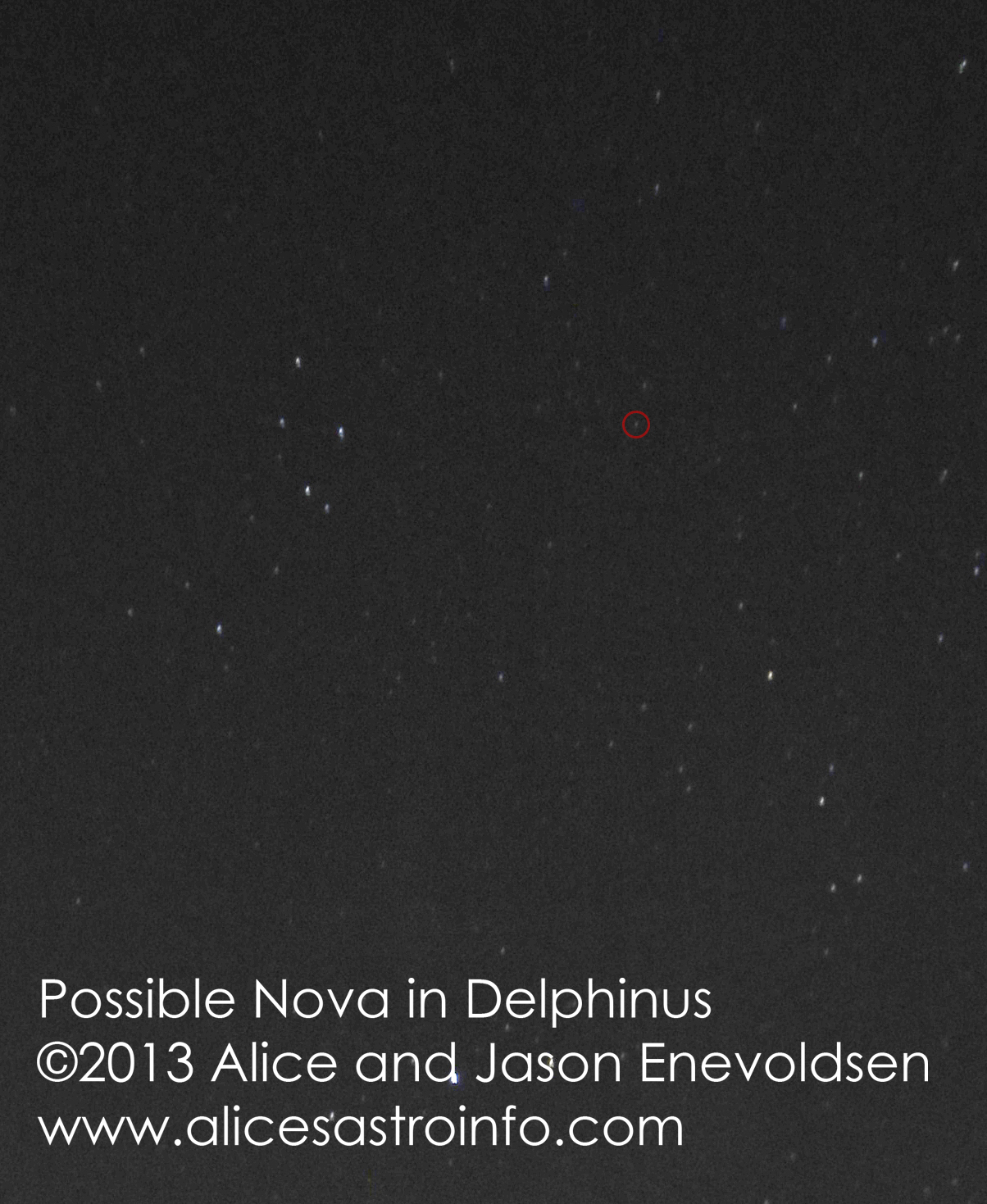
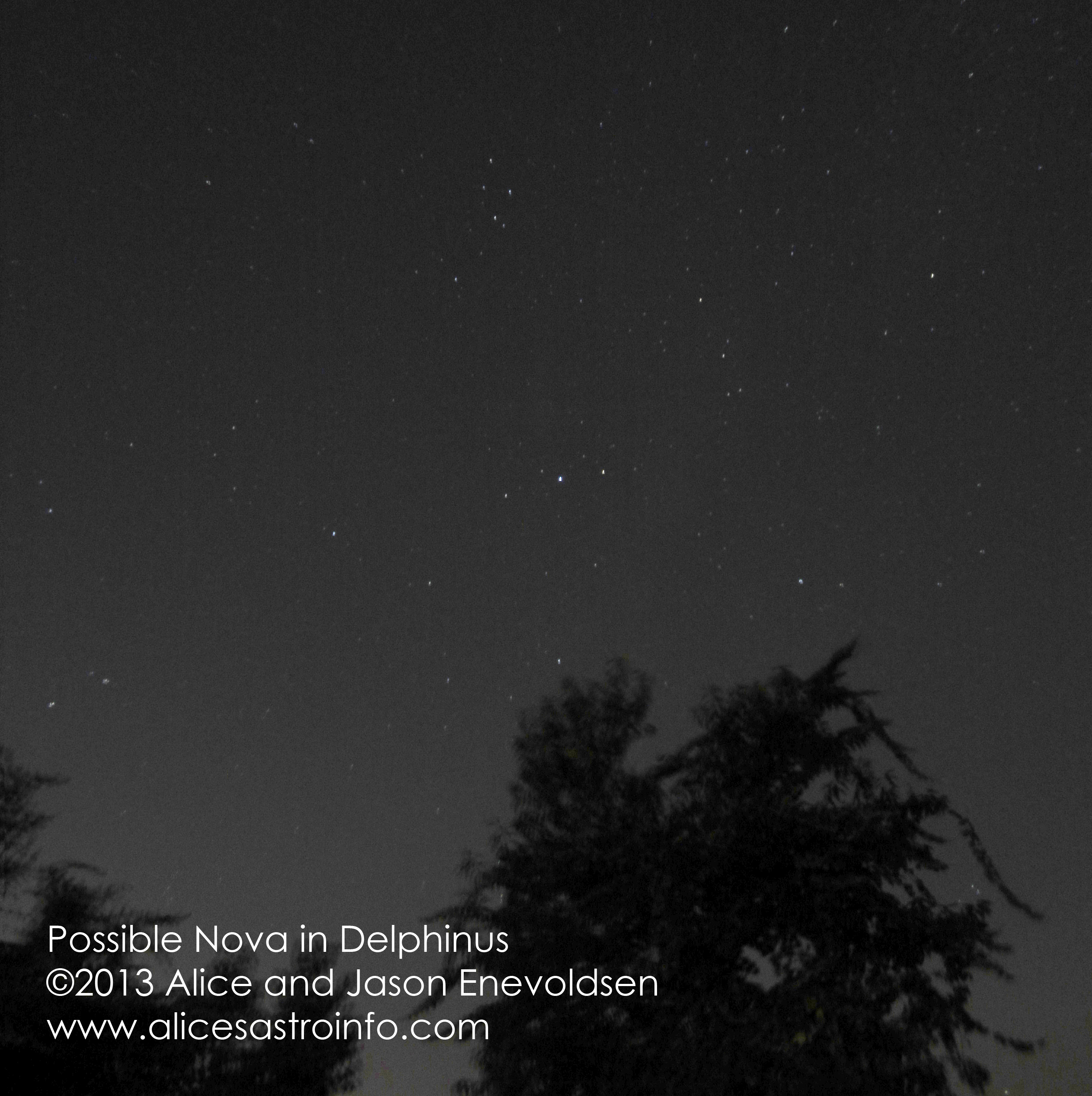
And I DID catch the possible nova! Jason did the processing on these photos. These photos are copyright by me, but you may use them, with attribution, for educational use. Please let me know if you are using these images. Click the image to see the full-resolution version.

Delphinus Nova Closer

nova-cc-crop-marked marked

nova-cc-crop marked

Interpretation hints:

Remember that there are multiple kinds of novae, one of the most common being a two-star system of a giant star and a white dwarf. As material falls from the giant star onto the dwarf star it makes novas every once in a while. This transient object is not confirmed to be a nova at all, let alone a supernova, and we don’t know how far away it is (though it is definitely far enough to pose no threat). Therefore, I recommend against comparing this nova to star-death supernovae (so no Hoberman sphere), though if it comes up you might as well just clarify that there are different types.

This also might be a wonderful time to talk about light-years and distance and time. This supernova definitely happened hundreds, thousands, or millions of years ago. The light just began to reach us yesterday. It isn’t that the nova happened yesterday, it’s that the light just got to us.

Want More?

http://www.aavso.org/bright-68u-possible-nova-del

http://www.cbat.eps.harvard.edu/unconf/followups/J20233073+2046041.html

http://www.skyandtelescope.com/observing/home/Bright-Nova-in-Delphinus-219631281.html

http://www.universetoday.com/104103/bright-new-nova-in-delphinus-you-can-see-it-tonight-with-binoculars/

~ A l i c e !

My Star Exploded Last Week

My star¹ exploded² sometime in the week preceding last Monday³.

Let me repeat that because it is awesome.

MY STAR EXPLODED LAST WEEK!!!!!!!!!!!

¹My star: back in the summer of 2000 I had the fortune to be working as an undergraduate peon researcher in an astrophysics lab at MIT. In my seemingly endless hours sifting through data I found a previously-unidentified star (technically “source”) which we creatively named XTEJ1837+037. I have ever since referred to this as “my star” assuming it was such a pointless little dot that no one would care if I claimed the credit or not. It’s pretty close to Vega, and might be a binary system – a star orbiting a black hole or neutron star. It is perhaps more accurate to say “there was an explosion at my star.”

²Exploded: I’m being very loose with the definition of “exploded” here. NASA’s SWIFT Telescope detected an outburst near the coordinates of “my star.” This does not mean my star exploded, but something did something at that location. If it is a binary system then this outburst could easily be material from the regular star falling onto the black hole/neutron star companion.

³Sometime in the week preceding last Monday: SWIFT detected the burst between September 25, 2011 and October 15, 2011. Well, that means the light got to Earth two weeks ago – but as to when the burst actually happened? To know that we’d have to know how far away “my star” is.

Basic Stats

Source: an unidentified x-ray source, probably a binary system of a star and a neutron star and a black hole.

Name: XTEJ1837+037 or SWIFTJ1836.6+0341

Satellite used: first XTE, the X-Ray Timing Explorer, now SWIFT from NASA

What happened: a burst in the same area was detected using the burst-detecting instrument onboard SWIFT.

When: the detection occurred between September 25 and October 15, 2011.

Where in the sky: near Vega.

Where in the galaxy/universe: we don’t know. It could be in the galaxy, or it could be farther. It is probably in our galaxy, likely at least one kiloparsec away (far).

More Details and More Story

My Unidentified X-Ray Source

Source just means there’s a point in the sky that photons are coming from. The Sun is an identified and named source of visible light, radio waves, x-rays … etc. I was working under Ron Remillard at MIT at the time we found this source, and I was searching through data from the X-Ray Timing Explorer (XTE) to see if I could find gamma ray bursts for his research. I call it a star above because it was not an outburst like we were looking for, this object was steady – not something that shone brightly and then disappeared. The quickest and easiest name for that is “star.”  It is important to note that we were using an x-ray telescope to do this research. This star was not visible – it shone only in x-rays, and it was very dim which is why it had not been found before.

I still asked Ron what constellation it was in. To me, even though the star wasn’t visible, being able to look towards it or point towards it was important. I don’t think Ron understood why. I know it isn’t visible. I also know it is there. It’s by Vega, at right ascension 18 degrees 37 minutes and declination +37 degrees.

We even got to name it. Ron explained how this would work. We named it XTEJ 1837+037, there was no discussion or debate, the name is formulaic. XTE is the name of the satellite used. J is there to let you know what years the coordinates are good for. In this case the coordinates are good during epoch J (12:00 Universal Time on January 1, 2000). 1837+037 are the coordinates: right ascension and declination (which can be positive or negative).

It is still an “unidentified source” because we didn’t take the time to figure out what it was. It wasn’t what we were looking for. Dr. Hans Krimm who recently rediscovered it with SWIFT speculates that it is probably a binary system – a regular star orbiting a black hole or neutron star. That would explain the recent outburst.

An Outburst

As I said, we actually have no idea what happened yet, and I am no longer involved in this research. NASA’s SWIFT telescope detected an outburst in that same area. In Hans’s words – SWIFT detected an outburst only 1.3 arc minutes from “my star.”  That means it is very likely it is the same source.

With a binary system including a regular star and a black hole or neutron star, material can fall off the star and into the black hole or onto the neutron star. This is a catastrophic event, although not destructive to the binary system, and can easily create a large outburst. In fact, it is one of the types of supernovae. (Oops, I was confused. Type 1a supernovae are caused by mass falling from a star in a binary system onto a white dwarf not a neutron star or black hole. It can still create an outburst though.)


Stay tuned, I’ll be keeping up to date on this research. I hope you’re excited too!

Want More?

This is where it gets intense. The only links I have to point out to you are very, very technical. It took me three tries to read the first sentence of the first one … which could have something to do with how excited I was. Have fun deciphering!

The Astronomers Telegram and the second one.

XTEJ1837+037

Here are some more tractable links about the spacecraft in question:

XTE

SWIFT

~ A l i c e !
We Caught One! SWIFT Sees a Supernova!

Podcast of We Caught One! SWIFT Sees a Supernova

Caught in the Act …

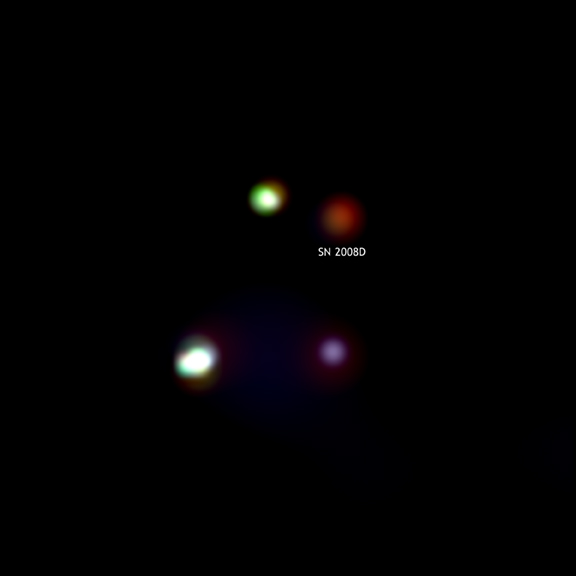
Alicia Soderberg and her colleagues (I’ve since read that she was on a plane, and her friend actually noticed this) got very lucky. She had NASA’s Swift X-Ray Telescope pointed at a galaxy (NGC 2770 in the Northern constellation Lynx) when a supernova exploded right where she was looking.

2008_05_21 Swift Supernova
Credit: NASA
Caption: SWIFT X-ray image (left) of Supernova 2008D, Visible image (right) of NGC 2770

Although there are historically recorded observations of supernovae (1987A, Tycho’s Star, SN1054), never before has a telescope recorded the actual beginning of the outburst. Usually we see the remnant of the supernova, or catch just the middle or the end of the bright explosion.

More Detail, More Accurate:

What Alicia saw is actually sort of the pre-signal for the supernova. We’ve seen the other stages of the supernova a few times before.

Scientists have been predicting that the first event as a star collapses into a supernova should be a humongously bright flash of X-Rays. Unfortunately, by the time we detect a supernova in progress, this flash has already finished. No matter how fast our telescopes turn, we can’t catch the X-Ray flash – though we can get most of the rest of the supernova, including most of the visible-light flash, the brightening of the area, and the dimming away.

Alicia and her team observed the bright flash lasting for about 5 minutes at 9:30 in the morning on January 9th of this year.

2008_05_21 Chandra Supernova
Credit: NASA/CXC/Wisconsin/ D.Pooley et al.
Caption: Chandra X-ray Observatory image of the region around SN 2008D, obtained about 10 days after the supernova explosion. The faint red source in the upper right is SN 2008D. The other 3 X-ray sources are unrelated to this supernova.

Did you want statistics?

Constellation: Lynx
Observation Dates: 01/19/2008
Observation Time: 5 hours
Instrument: ACIS
References: Soderberg et al. 2008, Nature, in press.
Distance Estimate: 90 million light years.

Want More?

The Supernova: http://chandra.harvard.edu/photo/2008/sn2008d/
SWIFT: http://www.nasa.gov/mission_pages/swift/main/index.html

Diffraction Spikes, or Why Stars Have Points

Stars with Points
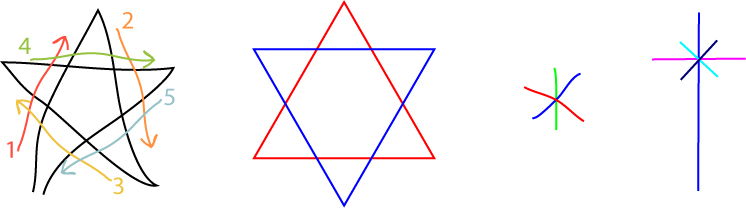
Tis the season to draw stars – many different kinds of stars. The classic star drawn by elementary-schoolers is a 5-pointed star created in a single stroke, leaving a pentagon in the center. Other hand-drawn classics include: a “Star of David”-style star: two overlapping triangles; a simple starburst of three or more overlapping lines; and a “Christmas” star: four overlapping lines with a longer tail.

2007_12_02 Stars
Caption: Hand-Drawn Stars

A real star is a giant sphere of burning gas. Sometimes we draw stars as single dots, but we almost always draw our stars with points. Why? I don’t know. I do know that photographs of stars through telescopes also exhibit “points.”

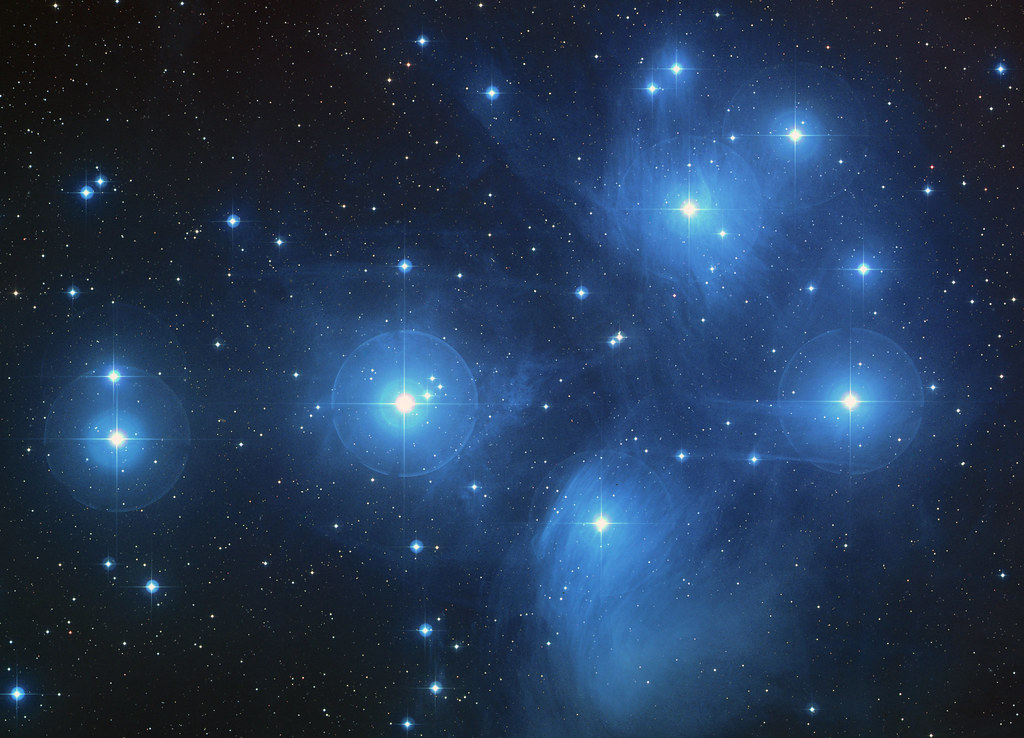
2007_12_2 Diffraction Spikes
Credit: Robert Gendler
Caption: The Pleiades with Diffraction Spikes

Telescopic Spikes:
The spikes on a star in a telescope’s photograph are an artifact from the telescope itself. (An artifact is something in a photograph that looks real, but isn’t actually there).

Most large telescopes have lenses or mirrors inside that are between the main opening of the telescope and the main mirror or lens. These smaller bits have to be held up in the middle of the telescope tube somehow. The easiest way? Struts. Support rods. These small struts then deflect the light from the stars, and cause spikes to show up on the image.

Diffraction spikes show up on point-sources of light (like stars) because the light is coming from one location, not many. You can use this technique to identify stars in a photograph, and differentiate them from nebulae and galaxies. Mostly.

Diffraction:
A subject for another AstroInfo. In short though, light acts like a wave pattern, so when it encounters an edge or corner, it bends. When light goes around a strut or rod, it splits into two wave-like patterns, which bend around the two edges (left and right) and recombine on the other side of the barrier. This results in prettiness. Diffraction gratings (special little pieces of iridescent, clear plastic) are a fun way to observe lights of all kinds. You can buy them in the store this time of year as “holiday glasses” or “Christmas light viewing glasses.” They’ll make every point of light you see have a little snowflake or “Ho Ho Ho” around it. (They’re doing even cooler optical tricks.)

Want More?
Do this experiment at home! – http://www.exploratorium.edu/snacks/diffraction.html
Astronomy Picture of the Day – http://antwrp.gsfc.nasa.gov/apod/ap010415.html
A Short Brittanica Article – http://www.britannica.com/ebc/article-9362735

Wikipedia (decent article, last I checked) – http://en.wikipedia.org/wiki/Diffraction

Quasars vs Pulsars

Ever get pulsars and quasars confused? I do – they both sound to me like something from Star Trek that you use to stun the Romulans. The words may sound alike, but the objects aren’t even similar. Here’s the short answer: a pulsar is a star, and a quasar is a galaxy.

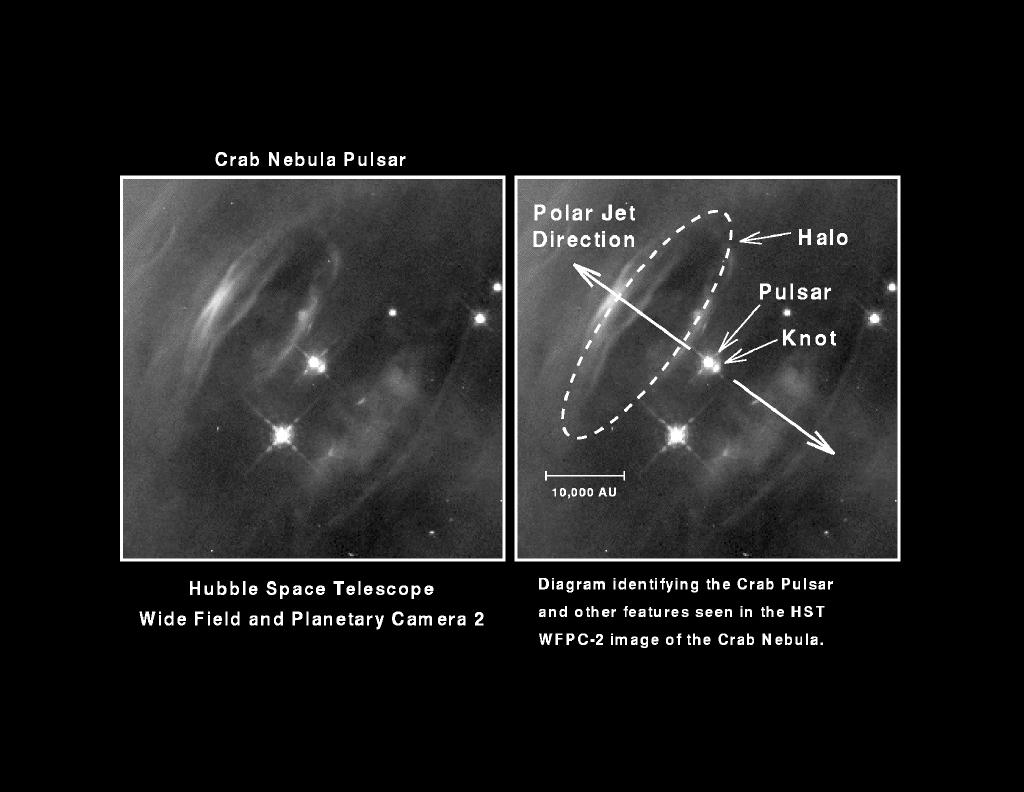
2007_07_09 Crab Pulsar HST
Credit: Hubble Space Telescope
Caption: Crab Nebula Pulsar

What is a Pulsar?
Basic Object: A star
Size: 20 km in diameter (that’s the distance from the tip of Alki Beach to the middle of downtown Bellevue.)
What makes it cool: It has a beam of light that is swinging around like a lighthouse, causing the star to appear to “pulse” THIS INFORMATION MAY BE OUT OF DATE. IT WAS TRUE OF OUR UNDERSTANDING OF HOW PULSARS WORK IN 2008, BUT FINDINGS REVEALED AT THE AAS JANUARY MEETING IN 2009 MAY HAVE CHANGED THIS. I HAVEN’T READ THE PAPERS YET.
Discovery attributed to: Jocelyn Bell Burnell
Discovery Year: 1967

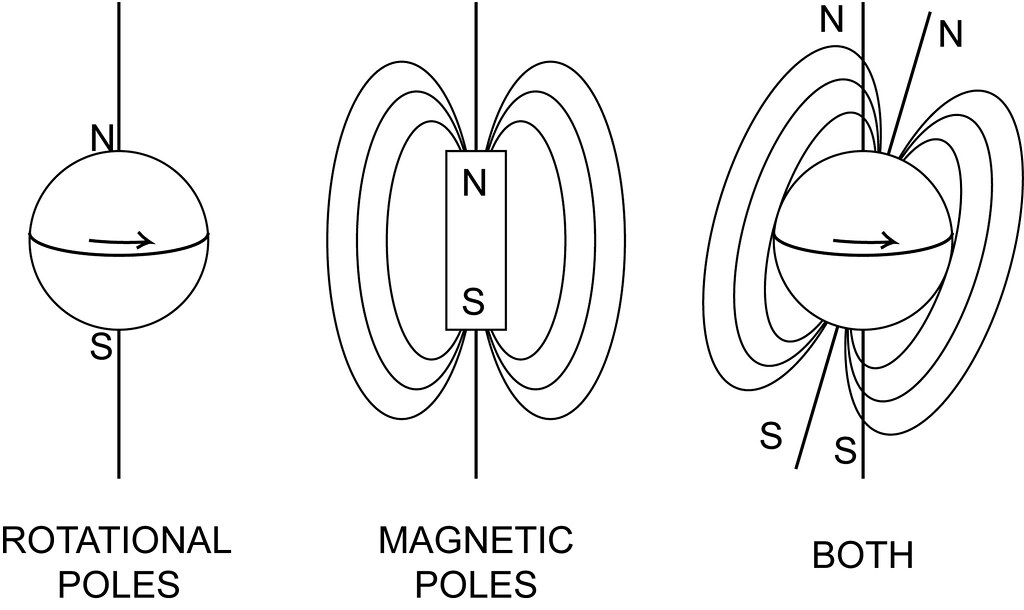
2007_07_09 Rotational and Magnetic Poles
Caption: Earth’s Various Poles

A pulsar is a neutron star that’s spinning in a special way. (Remember, everything in the universe spins). First you need to know something about poles. The Earth has two north poles and two south poles. Yes, it’s true. One set is because the Earth is spinning: the poles are the tips of the axis that the Earth spins on. The other set is because the Earth has a magnetic field: all magnets have a north side and a south side. On Earth, these two sets of poles are slightly misaligned.

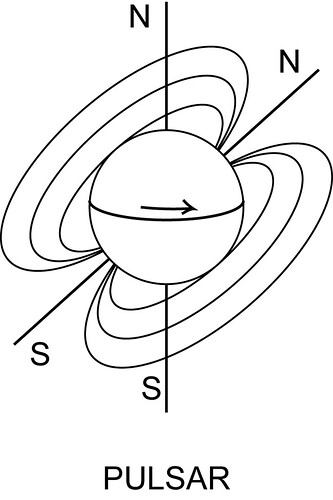
2007_07_09 Pulsar
Caption: Pulsar Diagram

In a pulsar, the poles are even more misaligned, so as the star spins, the magnetic field is swung around in circles. When this happens to a neutron star, you get a super-bright beam of light beaming out from the magnetic poles. Since these poles are swinging around, so do the beams of light – just like a lighthouse.

“Light” in this case can also mean X-Rays, Gamma-Rays, or other invisible kinds of light. To learn more about neutron stars, refer to the links below.

What is a Quasar?
Basic Object: The middle of an active galaxy
Size: too far away to measure, but they comprise the entire middle section of their galaxy, encompassing many stars.
Cool Fact: Quasar is short for QUASi-stellAR radio source, or QSO: Quasi-Stellar Object
Original Discovery attributed to: Cyril Hazard, Maarten Schmitt and their co-workers
Discovery Year: 1950s

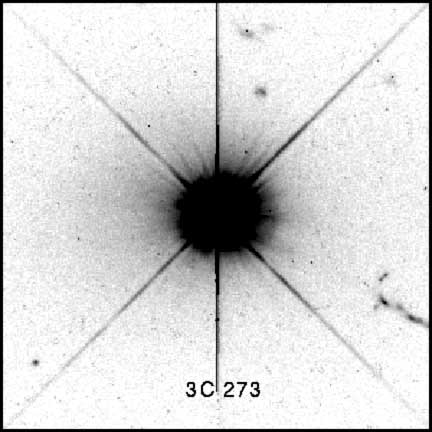
2007_07_09 HST Quasar
Credit: Hubble Space Telescope, John Bahcall
Caption: Quasar with Spikes

When quasars were first discovered, no one knew what they were. On the photographic plates the objects looked like bright stars. In most deep-space photographs stars have spikes; it’s one of the ways you can tell if you’re looking at a galaxy or a star. (They’re called diffraction spikes, and are just an artifact of the photograph). Unfortunately, the light from these “stars” was very odd: the spectrum didn’t match up with any known star types. So, the scientists said they were “quasi-stellar.”

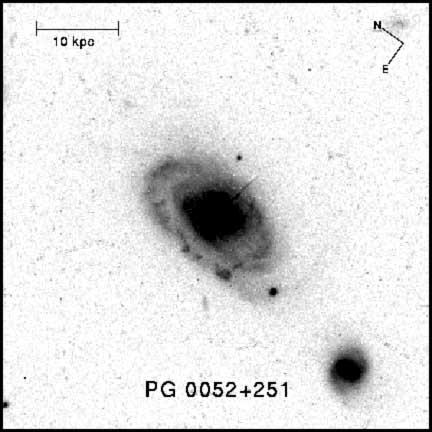
2007_07_09 HST Quasar 2
Credit: Hubble Space Telescope, John Bahcall
Caption: Quasar Looking Like a Galaxy

It took them years to realize that the spectra were weird because the quasars were humongously far away. They were farther away than anything that had ever been seen. (If you want to know how distance will change the spectra of stars and galaxies look up “redshift” in your favorite astronomy reference book or website). Also, as telescopes got better, astrophysicists noticed that quasars didn’t really look quite as much like stars as they had originally thought.

When scientists realized how far away quasars actually were (up to 13 billion light years away), they also realized that the quasars must be amazingly bright. We now know that they’re some of the brightest things out there: a halo of high-energy matter around a black hole at the center of a baby galaxy.

So, quasars are special because they’re some of the farthest-away things that we can detect.

Brain Games

Still having trouble keeping the words quasar and pulsar straight? Here’s my mnemonic: “Quasar means QUASi-stellAR, which is NOT a star, Pulsar means it pulses, flashing like a lighthouse.”

Want More?
Pulsars
http://imagine.gsfc.nasa.gov/docs/science/know_l1/pulsars.html
Related Topics: Neutron Stars, Black Holes, Magnetic Fields

Quasars
http://csep10.phys.utk.edu/astr162/lect/active/quasars.html
Related Topics: Active Galaxies, Active Galactic Nuclei (AGN), Redshift, Expansion of the Universe, Black Holes

Stellar Clusters

There are two classifications of star clusters: globular clusters and open clusters. You can see some examples of each with the naked eye in tonight’s night sky, but there are even more that can be seen with binoculars and low-power telescopes. There are also distinct differences between the two types.

Globular Clusters:

Globular clusters are full of the wizened old stars of the galaxy. These stars have been around for 12 to 20 billion years (edited to add: as Ken pointed out, this would make these stars older than the universe which isn’t true. This estimate was come up with by analyzing the spectra of the cluster, and it should be limited by the age of the universe, so 12-14 billion years is a better number to keep in mind), and they clump tightly together in groups of about 10,000 to 1 million stars.

Globular Clusters are the oldest stars in our galaxy (called “Population II” by astronomers). These are also pretty much the only stars in our galaxy that you’ll find orbiting above or below the main “disk” of the Milky Way. If you imagine our galaxy as a sphere, almost everything (including us, black holes, and most other stars) is in a Frisbee-shaped disk filling up the middle of the sphere – leaving most of the sphere empty. Globular clusters can be anywhere inside that sphere. This is also where we suspect most of the dark matter in our galaxy to be.

Age: 12-20 14 billion years old

Number: 10,000 to 1,000,000 stars

Size: A sphere 10-200 light-years in diameter

Good Cluster to See Tonight: The Hercules Globular Cluster (M13), in Hercules – rising a little north of due East around 11 p.m. You’ll see the dimmest little fuzzy patch near Hercules’ leg. You may have to look away and use your peripheral vision to see it.

Open Clusters:

Open clusters are the uppity young sprouts. They’re usually less than 100 million years old, and group together in gangs of about 100 stars. The spectacular thing about open cluster stars is that they’re all from the same “litter,” the stars usually all formed together out of the same diffuse nebula, which you can sometimes see – as in the Pleiades.

Age: Less than 100 million years old

Number: Commonly 100-ish stars (less than a few thousand)

Size: A sphere 3-20 light-years in diameter

Good Clusters to See Tonight: The Pleiades and the Hyades, in Taurus – setting near West around 11 p.m. The Pleiades are a tiny group of what looks to be 6-8 stars. The Hyades are a medium-sized V of stars that makes the “face” of Taurus the bull.

Where’d I Get My Info?

PSC’s 2007 March-April Starmap

http://en.wikipedia.org/wiki/Population_II

http://www.seds.org/messier/open.html

http://www.seds.org/messier/glob.html

Polaris: A Cepheid Variable

Polaris, the North Star, the 49th-brightest star in the sky, is a Cepheid variable star. Cepheid variables proved that galaxies are huge and far away instead of small and close by.

Why Stars Are Big:

A star stays star-sized the same way a balloon stays balloon-sized: competing forces. In the case of a Helium balloon the Helium is pushing out, trying to escape from the balloon. If it weren’t for the air around the balloon, it would explode – allowing the Helium to escape. The air (the atmosphere) is pushing back on the balloon, trying to flatten it.

In the case of a star, the energy from the fusion reaction at the core of the star is pushing out, keeping the star big, and gravity is pushing in, trying to collapse the star into a neutron star or black hole. As long as the fusion keeps going, the star stays “inflated.”

Pulsing:

Unfortunately, Cepheids have finished fusing all of their Hydrogen into Helium. The next step is to fuse Helium into Carbon, Nitrogen, and Oxygen – but that reaction is hotter and takes more energy to start – energy the star doesn’t have. Since there’s no longer fusion happening in the star, gravity begins to win. The star starts to collapse: squishing all the atoms in the star closer together.

But wait! Squishing releases heat and energy! Suddenly, the star has enough energy to fuse some Helium into other elements. Fusion begins. The energy from fusion pushes out on the star, and the star expands again – losing energy and heat. Sadly, there is no longer enough energy to keep fusing Helium so fusion stops. The star begins to collapse again – releasing heat, energy, and fusion! This pushes out – heat is lost – fusion stops – the star squishes – heat is gained – fusion starts – the star expands … etc, etc, etc.

What Does This Have to Do with Galaxies?

In Cepheids, the speed of the pulsing is related directly to how bright the star is (a period-luminosity relationship). So, if you know how fast a star is pulsing, you know how bright the star really is (not how bright it looks in the sky). Then, by measuring how bright the star looks you can figure out how far away it must be. It’s like a flashlight: if you hold the flashlight and shine it in your face it’s very bright; but if you have a friend hold the flashlight at the other end of a football field and shine the flashlight in your face, you can look right at it: it looks dim.

In 1912, Henrietta Leavitt measured a bunch of Cepheids in the Small Magellanic Cloud and realized that they were too far away to be within our galaxy. Astronomers realized this meant that some things they thought were small might be large and very far away: galaxies.

There are some problems with measuring the distance to galaxies this way, but it got us started.

Want More?

http://zebu.uoregon.edu/~soper/MilkyWay/cepheid.html

Where’d I Get My Info?

http://imagine.gsfc.nasa.gov/docs/science/mysteries_l1/cepheid.html

http://zebu.uoregon.edu/~soper/MilkyWay/cepheid.html